Drug lookup
Drug reference

Aceclofenac

NSAID (non-selective COX inhibitor) · Analgesic

Also known as (2-[2-[2-(2,6-dichlorophenyl)aminophenyl]acetyl]oxyacetic acid), Aclonac, Hifenac, Aceclofen, Zepol
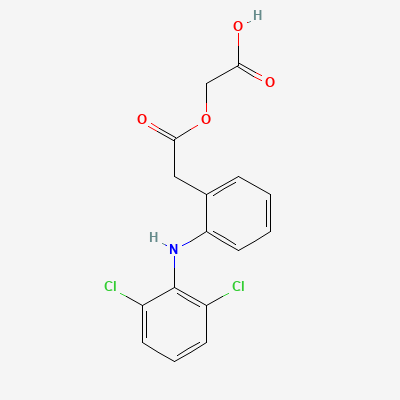
START
Start 100 mg BD with food; check baseline renal function and BP
TYPICAL MAX
200 mg/day maximum; do not exceed
STOP IF
GI bleeding, severe rash, jaundice, eGFR <30, or signs of heart failure
WATCH
BP, renal function, LFTs, GI symptoms
CDSCO approvedSchedule HJan AushadhiATC M01AB16
Dose laddermg/d
100start200ceiling
Renal dose adjustmenteGFR mL/min/1.73m²
FULLUse lowest effective dose; monitor re…60CAUTIONUse with caution; reduce dose and mo…30AVOIDAvoid - high risk of nephrotoxicity90

KDIGO 2024 + manufacturer label

Pharmacokineticsplasma · t hours
1hONSET2.5hPEAK4.5h8hDURATION
ONSET
1h · Onset of analgesia
PEAK
2.5h · Peak plasma concentration
4.5h · Elimination half-life
DURATION
8h · Duration of effect
EXCRETION
Renal (conjugated metabolites)
route + CYP
INTERACTIONS
12 major
incl. contraindicated
PREGNANCY
Avoid in third trimester; use only if clearly needed in first and second trimesters due to fetal risk
FDA category + note
Top interactionssee all 12
  • SulfasalazineContraindicatedTextbookG&G 14e · p1112
  • AminoglycosideSevereTextbookKDT 7e · p746
  • AminoglycosidesSevereTextbookKDT 7e
  • AnticoagulantsSevereTextbookKDT 7e
Available in India

773 branded formulations and 8,173 fixed-dose combinations. Look up specific brands in the Drugs workspace.

Jan Aushadhi — generic available at GoI pharmacies

Mechanism

Inhibits cyclo-oxygenase (COX-1 and COX-2), reducing prostaglandin synthesis, with additional scavenging of oxygen free radicals and inhibition of neutrophil adhesion

Indications

OsteoarthritisRheumatoid arthritisAnkylosing spondylitis

Dosing

Adult
100 mg twice daily
Pediatric
Not recommended in children under 18 years
Renal adjustment
Avoid if eGFR <30 mL/min; use lowest effective dose if eGFR 30-60 mL/min
Hepatic adjustment
Avoid in severe hepatic impairment; reduce dose and monitor LFTs in mild-moderate impairment
Geriatric
Start at lowest effective dose; increased risk of GI bleeding and renal impairment
Max dose
200 mg/day

Pharmacokinetics

Onset
1-2 hours
Peak effect
2-3 hours (Tmax); 4-6 hours (active metabolite diclofenac)
Duration
8-12 hours
Half-life
4-5 hours (parent); 12-15 hours (metabolite)
Bioavailability
~60%
Protein binding
>99%
Metabolism
Hepatic CYP2C9 to diclofenac (active), then hydroxylation and conjugation
Excretion
Primarily renal (conjugated metabolites); ~25% biliary/fecal

Contraindications

  • Active peptic ulcer disease
  • History of GI bleeding or perforation with NSAIDs
  • Severe heart failure
  • Severe hepatic impairment
  • Third trimester pregnancy
  • Hypersensitivity to aceclofenac or other NSAIDs

Side effects

Common
DyspepsiaAbdominal painNauseaDiarrheaFlatulenceHeadacheDizzinessElevated transaminases
Serious
  • GI bleeding or perforation
  • Hepatotoxicity
  • Nephrotoxicity
  • Hypersensitivity reactions
  • Cardiovascular thrombotic events
  • Stevens-Johnson syndrome

Pregnancy & lactation

Pregnancy

Avoid in third trimester; use only if clearly needed in first and second trimesters due to fetal risk

Lactation

Excreted in breast milk in small amounts; use with caution during breastfeeding

Drug interactions

Sulfasalazine
Contraindicated
Textbook

Exacerbation of inflammatory bowel disease (IBD).

Avoid combining sulfasalazine with traditional NSAIDs.

Source: G&G 14e · p1112

Aminoglycoside
Severe
Textbook

Increased risk of nephrotoxicity.

Avoid concurrent use.

Source: KDT 7e · p746

Aminoglycosides
Severe
Textbook

Increased aminoglycoside levels and potential toxicity.

Monitor aminoglycoside levels and renal function; adjust dosage as needed.

Source: KDT 7e

Anticoagulants
Severe
Textbook

Increased risk of gastrointestinal bleed.

Monitor for bleeding; consider alternative analgesics or gastroprotective agents.

Source: KDT 7e

Ciprofloxacin
Severe
Textbook

Enhanced CNS toxicity, seizures reported.

Source: KDT 7e

Citalopram
Severe
Textbook

Increased risk of gastrointestinal bleed.

Monitor for bleeding; consider gastroprotective agents or alternative analgesics.

Source: KDT 7e

Clopidogrel
Severe
Textbook

Increased bleeding risk.

Exercise extra caution and monitor for signs of bleeding.

Source: G&G 14e

Corticosteroids
Severe
Textbook

Increased risk of gastrointestinal bleed.

Monitor for bleeding; consider gastroprotective agents.

Source: KDT 7e

Dapoxetine
Severe
Textbook

Increased risk of gastrointestinal bleed.

Monitor for bleeding; consider gastroprotective agents or alternative analgesics.

Source: KDT 7e

Enalaprilat
Severe
Textbook

Reduced effectiveness of ACE inhibitors. Marked hyperkalemia, potentially leading to cardiac arrhythmia.

Use with caution, especially in the elderly and in patients with hypertension, diabetes mellitus, or ischemic heart disease.

Source: G&G 14e · p836

Escitalopram
Severe
Textbook

Increased risk of gastrointestinal bleed.

Monitor for bleeding; consider gastroprotective agents or alternative analgesics.

Source: KDT 7e

Escitalopram + Clonazepam
Severe
Textbook

Increased risk of gastrointestinal bleed.

Monitor for bleeding; consider gastroprotective agents or alternative analgesics.

Source: KDT 7e

Related guidelines

Ask House about Aceclofenac

Continue into a citation-backed clinical answer with the drug context already attached.

Sources: KD Tripathi 7e, BNF·Verified: 2026-05-19 · House clinical team·Cockpit curated: 2026-05-19