Drug lookup
Drug reference

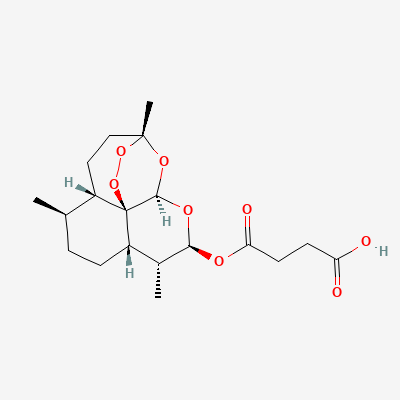
Artesunate

Antimalarial (artemisinin derivative / endoperoxide) · Antibiotic

Also known as Artesunate sodium, Artesun, Falcigo
START
Uncomplicated: Start ACT (artesunate + partner drug) immediately if malaria confirmed or strongly suspected. Severe: Start IV artesunate within 1 hour of diagnosis
TYPICAL MAX
Follow WHO weight-based dosing tables; do not deviate
STOP IF
Complete full 3-day course even if patient feels better; incomplete courses drive resistance
WATCH
Hemoglobin at days 7, 14, 21, 28 (delayed hemolysis), parasite clearance, blood glucose (hypoglycemia in severe malaria)
CDSCO approvedSchedule HJan AushadhiNPPA price-controlledATC P01BE03
Dose laddermg/d
2.4start4ceiling
Renal dose adjustmenteGFR mL/min/1.73m²
FULLNo renal adjustment needed090

KDIGO 2024 + manufacturer label

Pharmacokineticsplasma · t hours
6minONSET1hPEAK1h4hDURATION
ONSET
6min · Rapid antimalarial onset (minutes for IV)
PEAK
1h · Peak plasma concentration
1h · Very short half-life (needs partner drug)
DURATION
4h · Short duration - requires combination therapy
EXCRETION
Biliary/fecal and renal
route + CYP
INTERACTIONS
4 major
SEVERE in our sources
PREGNANCY
First trimester: avoid unless no alternative; Second/third trimester: safe and recommended for malaria treatment
FDA category + note
Top interactionssee all 12
  • EluxadolineSevereDatabaseDDInter
  • GrazoprevirSevereDatabaseDDInter
  • RifampicinSevereDatabaseDDInter
  • RitonavirSevereDatabaseDDInter
Available in India

484 branded formulations and 8 fixed-dose combinations. Look up specific brands in the Drugs workspace.

Jan Aushadhi — generic available at GoI pharmacies

Mechanism

The endoperoxide bridge is cleaved by intra-parasitic iron (heme), generating reactive oxygen species and carbon-centered free radicals that alkylate parasite proteins, disrupt membranes, and inhibit PfATP6 (SERCA-type calcium pump), leading to parasite death

Indications

Uncomplicated falciparum malaria (first-line, in ACT combinations)Severe falciparum malaria (IV artesunate - first-line per WHO)Malaria in pregnancy (second and third trimesters)Vivax malaria (when chloroquine resistance suspected)

Dosing

Adult
Uncomplicated malaria (oral, as ACT): 4 mg/kg/day x 3 days combined with partner drug. Severe malaria (IV): 2.4 mg/kg at 0, 12, 24 hours then daily until oral therapy possible
Pediatric
Same mg/kg dosing as adults; weight-based
Renal adjustment
No adjustment needed
Hepatic adjustment
No adjustment needed in acute malaria; caution in severe hepatic impairment
Geriatric
Standard weight-based dosing
Max dose
Follow weight-based dosing; do not exceed recommended mg/kg

Pharmacokinetics

Onset
Rapid (IV: minutes; oral: within 1 hour)
Peak effect
IV: immediate distribution; Oral: ~1 hour (Tmax)
Duration
Short (requires combination with longer-acting partner drug)
Half-life
~1 hour (parent compound); active metabolite DHA: 1-2 hours
Bioavailability
Oral: ~60-70%
Protein binding
~85%
Metabolism
Rapid hepatic hydrolysis to dihydroartemisinin (DHA, the primary active metabolite)
Excretion
Biliary/fecal and renal

Contraindications

  • First trimester of pregnancy (relative - use only if no alternative)
  • Hypersensitivity to artemisinin derivatives
  • History of severe allergic reaction to artesunate

Side effects

Common
HeadacheDizzinessNauseaVomitingAnorexiaFever clearance-related symptoms
Serious
  • Hemolytic anemia (delayed, 1-4 weeks post-treatment - blackwater fever)
  • Neutropenia
  • Elevated liver enzymes
  • Severe allergic reactions (rare)
  • QT prolongation (rare, usually with amodiaquine combination)

Pregnancy & lactation

Pregnancy

First trimester: avoid unless no alternative; Second/third trimester: safe and recommended for malaria treatment

Lactation

Excreted in breast milk in small amounts; compatible with breastfeeding; infant should receive own antimalarial treatment if indicated

Drug interactions

Eluxadoline
Severe
Database

Clinical effect not specified

Source: DDInter

Grazoprevir
Severe
Database

Clinical effect not specified

Source: DDInter

Rifampicin
Severe
Database

Significantly reduced exposure to dihydroartemisinin (DHA), the active metabolite of artesunate, leading to a high risk of treatment failure.

Avoid co-administration. If rifampicin is essential, consider alternative antimalarial regimens that are not significantly metabolized by these CYP enzymes or are less susceptible to induction. If artesunate must be used, monitor closely for treatment failure and consider increasing artesunate dose, though specific recommendations are lacking.

Source: DDInter

Ritonavir
Severe
Database

Reduced exposure to dihydroartemisinin (DHA), the active metabolite of artesunate, potentially leading to treatment failure. Ritonavir is a potent inducer of CYP2A6, CYP2B6, and CYP2C19, which are involved in artesunate metabolism. However, ritonavir is also a strong CYP3A4 inhibitor, and the net ef

Avoid co-administration if possible. If unavoidable, monitor for signs of treatment failure and consider alternative antimalarial regimens. Dose adjustment of artesunate is not well-established.

Source: DDInter

Amodiaquine
Moderate
Database

Additive hepatotoxicity risk; amodiaquine can cause neutropenia and hepatotoxicity

Monitor LFTs and CBC; do not repeat amodiaquine within 1 month

Source: Kimi deep-research + Cla

Carbamazepine
Moderate
Database

Reduced exposure to dihydroartemisinin (DHA), the active metabolite of artesunate, potentially leading to treatment failure.

Monitor for signs of treatment failure. Consider alternative antimalarial regimens if possible. Dose adjustment of artesunate is not well-established.

Source: DDInter

Efavirenz
Moderate
Database

Reduced exposure to dihydroartemisinin (DHA), the active metabolite of artesunate, potentially leading to treatment failure.

Monitor for signs of treatment failure. Consider alternative antimalarial regimens if possible. Dose adjustment of artesunate is not well-established.

Enzyme Inducers
Moderate
Database

Reduced artesunate exposure via CYP induction; may reduce efficacy

Monitor parasite clearance; consider alternative antimalarial if treatment failure

Source: Kimi deep-research + Cla

Itraconazole
Moderate
Database

Increased exposure to artesunate and dihydroartemisinin (DHA). While this might seem beneficial, excessive levels could theoretically increase the risk of dose-dependent adverse effects, though clinical significance is not fully established for artesunate.

Monitor for increased adverse effects. Dose adjustment of artesunate is generally not required unless adverse effects are observed.

Ketoconazole
Moderate
Database

Increased exposure to artesunate and dihydroartemisinin (DHA). While this might seem beneficial, excessive levels could theoretically increase the risk of dose-dependent adverse effects, though clinical significance is not fully established for artesunate.

Monitor for increased adverse effects. Dose adjustment of artesunate is generally not required unless adverse effects are observed.

Mefloquine
Moderate
Database

Increased risk of neuropsychiatric adverse effects when mefloquine follows artesunate

Monitor for dizziness, confusion, sleep disturbances

Source: Kimi deep-research + Cla · p1740

Nevirapine
Moderate
Database

Reduced exposure to dihydroartemisinin (DHA), the active metabolite of artesunate, potentially leading to treatment failure.

Monitor for signs of treatment failure. Consider alternative antimalarial regimens if possible. Dose adjustment of artesunate is not well-established.

Source: DDInter

Related guidelines

Ask House about Artesunate

Continue into a citation-backed clinical answer with the drug context already attached.

Sources: KD Tripathi 7e, Harrison 22e, Katzung, BNF·Verified: 2026-05-19 · House clinical team·Cockpit curated: 2026-05-19