Drug lookup
Drug reference

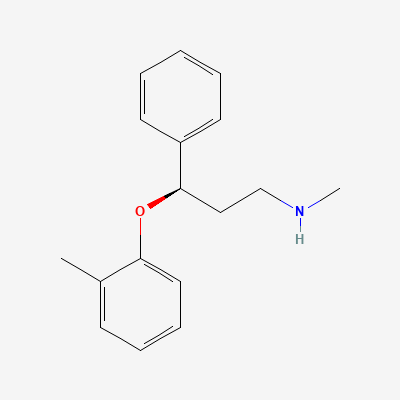
Atomoxetine

Selective noradrenaline reuptake inhibitor (non-stimulant ADHD) · Attention-Deficit Hyperactivity Disorder (ADHD) medication

Also known as Atomoxetine Hydrochloride, Strattera, Attentrol, Axura, Tomoxetin
START
Adults 40 mg/day ≥3 days → 80 mg/day; paeds 0.5 → 1.2 mg/kg/day
TYPICAL MAX
100 mg/day (or 1.4 mg/kg/day paeds)
STOP IF
Suicidal ideation, hepatotoxicity (jaundice/dark urine/↑LFTs), serious cardiac symptoms
WATCH
Mood/suicidality (esp. early, paeds), HR/BP, growth in children, hepatic symptoms
CDSCO approvedSchedule HATC N06BA09
Dose laddermg/d
40start/day80target/day100max/day
Renal dose adjustmenteGFR mL/min/1.73m²
FULLNo dose adjustment at any eGFR90

KDIGO 2024 + manufacturer label

Pharmacokineticsplasma · t hours
1.5hONSET1.5hPEAK5h1dDURATION
ONSET
1.5h · absorption
PEAK
1.5h · Cmax
5h · t½ (EM; ~22 h PM)
DURATION
1d · once-daily
EXCRETION
Hepatic CYP2D6; >80% renal metabolites
route + CYP
INTERACTIONS
12 major
incl. contraindicated
PREGNANCY
Use only if clearly needed — limited human data
FDA category + note
Top interactionssee all 12
  • MoclobemideContraindicatedTextbookKDT 7e · p487
  • MaoisContraindicatedDatabaseKimi deep-research + Cla
  • TapentadolSevereTextbookG&G 14e · p462
  • AmiodaroneSevereDatabaseDDInter
Available in India

46 branded formulations. Look up specific brands in the Drugs workspace.

Mechanism

Selective inhibition of the presynaptic noradrenaline transporter, increasing noradrenaline (and dopamine in prefrontal cortex) — improves attention/impulse control without classical stimulant abuse potential.

Indications

Attention-deficit/hyperactivity disorder (children ≥6 years, adolescents, adults)

Dosing

Adult
40 mg/day for ≥3 days then 80 mg/day; max 100 mg/day. Children/adolescents ≤70 kg: start 0.5 mg/kg/day, target ~1.2 mg/kg/day (max 1.4 mg/kg or 100 mg).
Pediatric
As above (≥6 years).
Renal adjustment
No adjustment.
Hepatic adjustment
Child-Pugh B: 50% of normal dose. Child-Pugh C: 25%.
Geriatric
Not established.
Max dose
100 mg/day (adult); 1.4 mg/kg/day (paeds ≤70 kg)

Pharmacokinetics

Onset
Clinical benefit over 2–4+ weeks
Peak effect
Cmax ~1–2 h
Duration
Once–twice daily dosing
Half-life
~5 h (extensive metabolisers); ~22 h (CYP2D6 poor metabolisers)
Bioavailability
~63% EM; ~94% PM
Protein binding
~98%
Metabolism
Hepatic CYP2D6 (major) to 4-hydroxyatomoxetine
Excretion
Renal (>80%, as conjugated metabolites)

Contraindications

  • MAOI use within 14 days
  • Narrow-angle glaucoma
  • Phaeochromocytoma
  • Severe cardiovascular disease (structural cardiac/serious arrhythmia)
  • Hypersensitivity to atomoxetine

Side effects

Common
Decreased appetite, nausea, dyspepsiaDry mouth (adults)Insomnia, somnolenceIncreased heart rate/BPErectile dysfunction (adults)
Serious
  • Suicidal ideation (children/adolescents — boxed)
  • Severe hepatotoxicity (rare)
  • Serious cardiovascular events (sudden death with structural cardiac disease)
  • Severe allergic reaction; priapism; psychotic/manic symptoms

Pregnancy & lactation

Pregnancy

Use only if clearly needed — limited human data

Lactation

Limited data; avoid or monitor infant

Drug interactions

Moclobemide
Contraindicated
Textbook

Increased risk of adverse effects due to potential synergistic actions on neurotransmitters.

Source: KDT 7e · p487

Maois
Contraindicated
Database

Risk of hypertensive crisis/serotonin-like reaction

Do not use within 14 days of an MAOI

Source: Kimi deep-research + Cla

Tapentadol
Severe
Textbook

Risk of serotonin syndrome.

Monitor closely for signs of serotonin syndrome. Avoid co-administration if possible.

Source: G&G 14e · p462

Amiodarone
Severe
Database

Drug interaction classified as: synergy

Source: DDInter

Amisulpride
Severe
Database

Drug interaction classified as: synergy

Source: DDInter

Anagrelide
Severe
Database

Drug interaction classified as: synergy

Source: DDInter

Arsenic Trioxide
Severe
Database

Drug interaction classified as: synergy

Source: DDInter

Bedaquiline
Severe
Database

Drug interaction classified as: synergy

Source: DDInter

Cabozantinib
Severe
Database

Drug interaction classified as: synergy

Source: DDInter

Ceritinib
Severe
Database

Drug interaction classified as: synergy

Source: DDInter

Chloroquine
Severe
Database

Drug interaction classified as: synergy

Source: DDInter

Cinacalcet
Severe
Database

Drug interaction classified as: metabolism

Source: DDInter

Related guidelines

Ask House about Atomoxetine

Continue into a citation-backed clinical answer with the drug context already attached.

Sources: Goodman & Gilman 14e, Katzung, BNF, Nelson·Verified: 2026-05-19 · House clinical team·Cockpit curated: 2026-05-19