Drug lookup
Drug reference

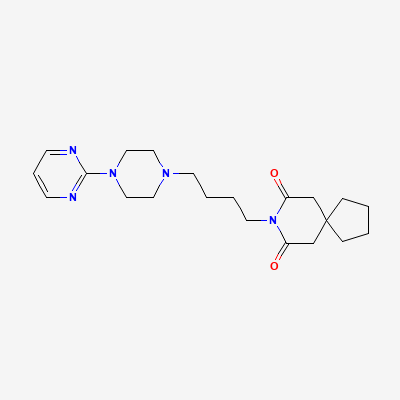
Buspirone

Azapirone anxiolytic (5-HT1A partial agonist) · Anxiety

Also known as Buspirone hydrochloride
START
7.5 mg PO twice daily; titrate every 2–3 days
TYPICAL MAX
60 mg/day
STOP IF
Serotonin syndrome features or hypersensitivity
WATCH
Anxiety response (delayed onset), avoid grapefruit
CDSCO approvedATC N05BE01
Dose laddermg/d
15start/day30usual60max/day
Renal dose adjustmenteGFR mL/min/1.73m²
FULLUsual dosing30AVOIDNot recommended (severe impairment)90

KDIGO 2024 + manufacturer label

Pharmacokineticsplasma · t hours
30minONSET1hPEAK2.5h7hDURATION
ONSET
30min · absorption
PEAK
1h · Tmax
2.5h ·
DURATION
7h · divided dosing
EXCRETION
Renal metabolites (~60%) and faecal
route + CYP
INTERACTIONS
12 major
incl. contraindicated
PREGNANCY
Limited data; use only if clearly needed.
FDA category + note
Top interactionssee all 12
  • Mao InhibitorsContraindicatedDatabaseKimi deep-research + Cla
  • AzolesSevereTextbookHarrison 22e · p1742
  • AlfentanilSevereDatabaseDDInter
  • AmitriptylineSevereDatabaseDDInter

Mechanism

Partial agonist at presynaptic/postsynaptic serotonin 5-HT1A receptors with minor dopamine-D2 effects; anxiolytic without sedation, muscle relaxation, dependence, or significant GABAergic activity.

Indications

Generalised anxiety disorderAnxiety symptoms (short-term)Augmentation in depression (off-label)

Dosing

Adult
7.5 mg PO twice daily; increase by 5 mg every 2–3 days; usual 20–30 mg/day in divided doses; max 60 mg/day.
Pediatric
Not established (limited paediatric use).
Renal adjustment
Severe renal impairment: not recommended (reduce/avoid).
Hepatic adjustment
Severe hepatic impairment: not recommended; reduce dose in milder disease.
Geriatric
Start low; titrate slowly.
Max dose
60 mg/day

Pharmacokinetics

Onset
Anxiolytic benefit over 1–2 weeks (not acute)
Peak effect
~0.7–1.5 h (plasma Tmax)
Duration
~6–8 h (divided dosing)
Half-life
~2–3 h
Bioavailability
Low (~4%, extensive first-pass)
Protein binding
~95%
Metabolism
Hepatic CYP3A4 (active 1-PP metabolite)
Excretion
Renal (~60% metabolites) and faecal

Contraindications

  • Concomitant MAO inhibitors (hypertensive reactions)
  • Hypersensitivity
  • Caution: severe hepatic/renal impairment

Side effects

Common
DizzinessHeadacheNauseaNervousnessLightheadedness
Serious
  • Serotonin syndrome (with serotonergic drugs)
  • Movement disorders (rare, prolonged use)
  • Hypersensitivity

Pregnancy & lactation

Pregnancy

Limited data; use only if clearly needed.

Lactation

Limited data; caution.

Drug interactions

Mao Inhibitors
Contraindicated
Database

Excess serotonergic/pressor effect

Avoid; separate by ≥14 days

Source: Kimi deep-research + Cla

Azoles
Severe
Textbook

Increased plasma levels of buspirone.

Source: Harrison 22e · p1742

Alfentanil
Severe
Database

Drug interaction classified as: synergy

Source: DDInter

Amitriptyline
Severe
Database

Drug interaction classified as: synergy.

Source: DDInter

Amoxapine
Severe
Database

Drug interaction classified as: synergy

Source: DDInter

Apalutamide
Severe
Database

Drug interaction classified as: metabolism

Source: DDInter

Benzhydrocodone
Severe
Database

Drug interaction classified as: synergy

Source: DDInter

Buprenorphine
Severe
Database

Drug interaction classified as: synergy.

Source: DDInter

Butorphanol
Severe
Database

Drug interaction classified as: synergy

Source: DDInter

Carbamazepine
Severe
Database

Drug interaction classified as: metabolism.

Source: DDInter

Citalopram
Severe
Database

Drug interaction classified as: synergy.

Source: DDInter

Clomipramine
Severe
Database

Drug interaction classified as: synergy.

Source: DDInter

Related guidelines

Ask House about Buspirone

Continue into a citation-backed clinical answer with the drug context already attached.

Sources: KD Tripathi 7e, Goodman & Gilman 14e, Katzung, BNF·Verified: 2026-05-20 · House clinical team·Cockpit curated: 2026-05-20