Drug lookup
Drug reference

capivasertib

AKT (protein kinase B) inhibitor (antineoplastic)
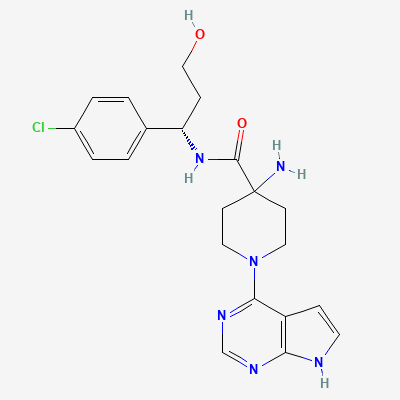
START
400 mg PO twice daily on 4-on-3-off schedule (with fulvestrant)
TYPICAL MAX
800 mg/day (400 mg BID)
STOP IF
Severe hyperglycaemia / DKA, severe SJS/TEN, or severe diarrhoea
WATCH
HbA1c / glucose, rash, diarrhoea management; PIK3CA/AKT1/PTEN status pre-start
CDSCO approvedATC L01EX27
Dose laddermg/d
200reduced320intermediate800max/day
Renal dose adjustmenteGFR mL/min/1.73m²
FULLNo adjustment (mild–moderate)30CAUTIONNot studied — caution90

KDIGO 2024 + manufacturer label

Pharmacokineticsplasma · t hours
1hONSET3hPEAK8h12hDURATION
ONSET
1h · absorption
PEAK
3h · Tmax
8h ·
DURATION
12h · twice-daily
EXCRETION
Mainly faecal (~50%); ~45% renal
route + CYP
INTERACTIONS
2 major
SEVERE in our sources
PREGNANCY
Can cause fetal harm — avoid; effective contraception during and 1 week after.
FDA category + note
Top interactionssee all 5
  • Strong Cyp3a4 InducersSevereDatabaseKimi deep-research + Cla
  • Strong Cyp3a4 InhibitorsSevereDatabaseKimi deep-research + Cla

Mechanism

Selective ATP-competitive inhibitor of all three AKT isoforms (AKT1/2/3), blocking PI3K/AKT/mTOR pathway signalling; combined with fulvestrant for HR-positive HER2-negative advanced breast cancer with PIK3CA/AKT1/PTEN alterations.

Indications

HR-positive HER2-negative advanced/metastatic breast cancer with PIK3CA/AKT1/PTEN alterations (with fulvestrant)

Dosing

Adult
400 mg PO twice daily for 4 days followed by 3 days off (within each 7-day cycle), continued until progression; reduce for toxicity.
Pediatric
Not established.
Renal adjustment
No adjustment for mild–moderate; severe (eGFR <30) not studied.
Hepatic adjustment
Mild: no adjustment; moderate–severe: not studied — caution.
Geriatric
No specific adjustment.
Max dose
800 mg/day (400 mg BID, 4-on-3-off schedule)

Pharmacokinetics

Onset
Tumour effect over weeks
Peak effect
~2–4 h (Tmax)
Duration
~12 h (twice-daily)
Half-life
~8 h
Bioavailability
Moderate (not significantly food-affected)
Protein binding
~25%
Metabolism
Hepatic CYP3A4 / UGT2B7
Excretion
Mainly faecal (~50%); ~45% renal

Contraindications

  • Severe hypersensitivity
  • Caution: diabetes, recent ketoacidosis, infection

Side effects

Common
DiarrhoeaRashHyperglycaemiaNausea/vomitingFatigue
Serious
  • Severe hyperglycaemia / DKA (rare)
  • Severe diarrhoea
  • Severe skin reactions (SJS, TEN)
  • Embryo-fetal toxicity

Pregnancy & lactation

Pregnancy

Can cause fetal harm — avoid; effective contraception during and 1 week after.

Lactation

Avoid breastfeeding during and 2 weeks after therapy.

Drug interactions

Strong Cyp3a4 Inducers
Severe
Database

Reduced exposure

Avoid combination

Source: Kimi deep-research + Cla

Strong Cyp3a4 Inhibitors
Severe
Database

Increased capivasertib exposure

Avoid; if essential reduce dose

Source: Kimi deep-research + Cla

Antidiabetic Drugs
Moderate
Database

Capivasertib induces hyperglycaemia (intentional pathway)

Optimise diabetes treatment; monitor HbA1c

Source: Kimi deep-research + Cla

Live Vaccines
Moderate
Database

Immunomodulation

Avoid live vaccines

Source: Kimi deep-research + Cla

Other Akt
Moderate
Database

Additive pathway toxicity

Avoid combination

Source: Kimi deep-research + Cla

Related guidelines

Ask House about capivasertib

Continue into a citation-backed clinical answer with the drug context already attached.

Sources: Harrison 22e·Verified: 2026-05-20 · House clinical team·Cockpit curated: 2026-05-20