Drug lookup
Drug reference

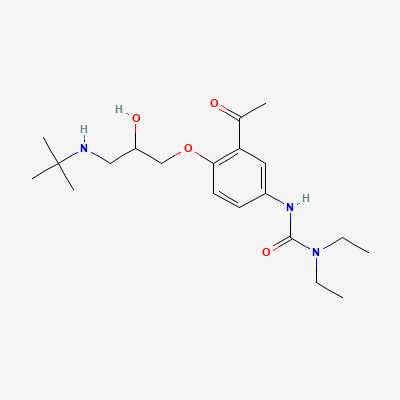
Celiprolol

Beta-1 selective adrenergic blocker with partial β2-agonist activity · Antihypertensive

Also known as Celiprolol hydrochloride

START
200 mg PO once daily; 200 mg twice daily for vEDS
TYPICAL MAX
400 mg/day
STOP IF
Severe bradycardia / heart block or asthma exacerbation
WATCH
HR, BP, asthmatic symptoms, electrolyte / glycaemia in diabetics
CDSCO approvedSchedule HATC C07AB08
Dose laddermg/d
100elderly start200usual400max/day
Renal dose adjustmenteGFR mL/min/1.73m²
FULLStandard dosing40REDUCEReduce dose 50%15AVOIDAvoid90

KDIGO 2024 + manufacturer label

Pharmacokineticsplasma · t hours
1hONSET3hPEAK5h1dDURATION
ONSET
1h · absorption
PEAK
3h · Tmax
5h ·
DURATION
1d · once-daily
EXCRETION
Renal — mainly unchanged
route + CYP
INTERACTIONS
10 major
incl. contraindicated
PREGNANCY
Use only if clearly needed; β-blocker class — IUGR risk.
FDA category + note
Top interactionssee all 12
  • DiltiazemContraindicatedTextbookG&G 14e · p617
  • RitodrineContraindicatedTextbookKDT 7e · p333
  • AdrenalineSevereTextbookKDT 7e · p133
  • AmilorideSevereTextbookKDT 7e

Mechanism

Cardio-selective β1-receptor antagonist with intrinsic sympathomimetic activity at β2 receptors → mild peripheral vasodilation; no negative effects on lipid profile and possibly favourable in vascular Ehlers-Danlos syndrome (vEDS).

Indications

HypertensionStable angina pectorisVascular Ehlers-Danlos syndrome (off-label / European; reduces arterial events)

Dosing

Adult
Hypertension/angina: 200 mg PO once daily; up to 400 mg once daily. vEDS: 200 mg PO twice daily.
Pediatric
Not established.
Renal adjustment
CrCl 15–40: reduce by 50%; CrCl <15: avoid.
Hepatic adjustment
Caution; reduce in significant hepatic impairment.
Geriatric
Start 100 mg/day; titrate slowly.
Max dose
400 mg/day (HTN/angina); 400 mg/day (vEDS in divided doses)

Pharmacokinetics

Onset
BP / HR effect over hours
Peak effect
~3 h (Tmax)
Duration
~24 h
Half-life
~5 h
Bioavailability
~30–70%
Protein binding
~25%
Metabolism
Minimal hepatic
Excretion
Renal (mainly unchanged)

Contraindications

  • Cardiogenic shock
  • Severe heart failure (untreated)
  • Second/third-degree AV block (no pacemaker)
  • Bradycardia / sick sinus syndrome
  • Severe asthma
  • Hypersensitivity

Side effects

Common
FatigueDizzinessHeadacheSleep disturbanceBradycardia
Serious
  • Severe bradycardia / heart block
  • Bronchospasm (less than non-selective)
  • Heart failure exacerbation
  • Masked hypoglycaemia signs in diabetics

Pregnancy & lactation

Pregnancy

Use only if clearly needed; β-blocker class — IUGR risk.

Lactation

Excreted in milk; monitor infant for bradycardia/hypoglycaemia.

Drug interactions

Diltiazem
Contraindicated
Textbook

Increased propensity for AV block, severe bradycardia, and decreased left ventricular function.

Avoid concurrent administration. The concurrent administration of diltiazem with a beta blocker is contraindicated.

Source: G&G 14e · p617

Ritodrine
Contraindicated
Textbook

Reduced efficacy of ritodrine and potential for adverse cardiovascular effects.

Ritodrine should not be used if the mother is receiving beta blockers.

Source: KDT 7e · p333

Adrenaline
Severe
Textbook

Marked rise in BP.

Adrenaline should not be given to patients receiving β blockers.

Source: KDT 7e · p133

Amiloride
Severe
Textbook

Hyperkalaemia more likely.

Source: KDT 7e

Epinephrine
Severe
Textbook

Severe hypertension and cerebral hemorrhage.

The use of epinephrine generally is contraindicated in patients who are receiving nonselective β receptor antagonists.

Source: G&G 14e · p258

Methacholine
Severe
Textbook

Exaggerated or prolonged bronchoconstriction and reduction in vital capacity in response to methacholine.

Emergency resuscitation equipment, oxygen, and medications to treat severe bronchospasm (e.g., β2 adrenergic receptor agonists for inhalation) should be available during testing.

Source: G&G 14e · p212

Sofosbuvir
Severe
Textbook

Severe bradycardia.

Extreme caution advised if amiodarone is co-administered with sofosbuvir and a beta blocker.

Source: Harrison 22e · unknown

Triamterene
Severe
Textbook

Hyperkalaemia more likely.

Source: KDT 7e

Verapamil
Severe
Textbook

Life-threatening bradyarrhythmias.

Particular caution is indicated.

Source: G&G 14e · p275

Non Dihydropyridine Ccbs
Severe
Database

Additive negative inotropy / conduction

Avoid or monitor closely

Source: Kimi deep-research + Cla

Aceclofenac + Paracetamol
Moderate
Textbook

Reduced antihypertensive effect.

Monitor blood pressure and consider alternative antihypertensive agents or NSAIDs if necessary.

Source: G&G 14e · p275
Aceclofenac
Moderate
Textbook

Reduced antihypertensive effect.

Monitor blood pressure and consider alternative antihypertensive agents or NSAIDs if necessary.

Source: G&G 14e · p275

Related guidelines

Ask House about Celiprolol

Continue into a citation-backed clinical answer with the drug context already attached.

Sources: KD Tripathi 7e, Goodman & Gilman 14e, Katzung, BNF·Verified: 2026-05-20 · House clinical team·Cockpit curated: 2026-05-20