Drug lookup
Drug reference

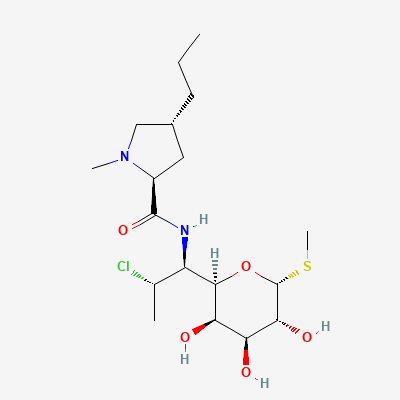
Clindamycin

Lincosamide · Antibiotic

Also known as Clindamycin Hydrochloride, Clindamycin Phosphate, Clindamycin Palmitate

START
Confirm serious bacterial infection where penicillin inappropriate. Rule out less toxic alternatives. Reserve for penicillin-allergic patients or serious anaerobic infections. NOT for viral URIs.
TYPICAL MAX
1.8 g/day oral; 4.8 g/day IV. Do not use for non-bacterial infections.
STOP IF
Severe/watery diarrhea (suspect CDAD), severe hypersensitivity (SJS/TEN/anaphylaxis), agranulocytosis
WATCH
Diarrhea pattern (frequency, character — watery/bloody), C. difficile PCR/toxin if diarrhea develops, LFTs if prolonged therapy, rash
CDSCO approvedSchedule HJan AushadhiATC J01FF01
Dose laddermg/d
150start300titrate450max600ceiling
Renal dose adjustmenteGFR mL/min/1.73m²
FULLNo adjustment required; not renally eliminated1590

KDIGO 2024 + manufacturer label

Pharmacokineticsplasma · t hours
1hONSET1hPEAK2.5h8hDURATION
ONSET
1h · 45-60 min (oral peak)
PEAK
1h · 45-60 min (oral); 1-3 h (IM)
2.5h · 2.4 h (range 2-3 h)
DURATION
8h · 6-8 h (q6-8h dosing)
EXCRETION
~10% renal unchanged; 3.6% fecal; hepatic metabolism; NOT
route + CYP
INTERACTIONS
4 major
incl. contraindicated
PREGNANCY
FDA PLLR: Animal studies showed no teratogenicity. Limited human data. Crosses placenta. Use only if clearly needed and benefit outweighs risk. Generally considered safe in pregnancy (old Category B).
FDA category + note
Top interactionssee all 12
  • Eikenella CorrodensContraindicatedTextbookHarrison 22e · p1054
  • Pasteurella MultocidaContraindicatedTextbookHarrison 22e · p1054
  • Neuromuscular Blockers (e.g., Vecuronium, Rocuronium)SevereDatabase
  • Neuromuscular Blocking Agents (e.g., Atracurium, Vecuronium)SevereDatabase
Available in India

408 branded formulations and 468 fixed-dose combinations. Look up specific brands in the Drugs workspace.

Jan Aushadhi — generic available at GoI pharmacies

Mechanism

Clindamycin is a lincosamide antibiotic that inhibits bacterial protein synthesis by binding to the 23S ribosomal RNA of the 50S subunit of the bacterial ribosome. This binding prevents peptide bond formation and translocation of the nascent peptide chain, effectively halting protein synthesis. It is primarily bacteriostatic but may be bactericidal against susceptible organisms at high concentrations. Its three-dimensional structure resembles the 3'-ends of L-Pro-Met-tRNA and deacylated-tRNA during the peptide elongation cycle, acting as a structural analog that impairs peptide chain initiation.

Indications

Serious anaerobic bacterial infections (Bacteroides, Clostridium, Peptostreptococcus)Serious respiratory tract infections (empyema, anaerobic pneumonitis, lung abscess)Serious skin and skin structure infections (Streptococcus pyogenes, Staphylococcus aureus, anaerobes)Intra-abdominal infections (peritonitis, intra-abdominal abscess)Gynecologic infections (endometritis, tubo-ovarian abscess, pelvic cellulitis)Septicemia (S. aureus, streptococci, anaerobes)Bone and joint infections (acute hematogenous osteomyelitis, adjunctive therapy)Acne vulgaris (topical)

Dosing

Adult
Oral: 150-450 mg PO q6-8h (max 1.8 g/day). IV/IM: 600-1200 mg/day divided q6-12h (max 4.8 g/day IV for severe infections). C. difficile infection: 300 mg PO QID x 10-14 days (alternative to metronidazole/vancomycin).
Pediatric
Oral: 8-25 mg/kg/day divided q6-8h (max 1.8 g/day). IV/IM: 20-40 mg/kg/day divided q6-8h (max 4.8 g/day). Neonates <1 month: 5 mg/kg IV q8-12h.
Renal adjustment
No adjustment required (not renally eliminated; hemodialysis and peritoneal dialysis are NOT effective in removing clindamycin).
Hepatic adjustment
Severe hepatic impairment: monitor serum levels if available; may need dose reduction. No adjustment for mild-moderate hepatic impairment.
Geriatric
No specific adjustment; monitor for C. difficile diarrhea and renal function if co-morbid.
Max dose
1.8 g/day (oral); 4.8 g/day (IV); 600 mg/dose (IV)

Pharmacokinetics

Onset
Rapid bacteriostatic effect; clinical improvement typically within 48-72 hours.
Peak effect
Oral: peak plasma at 45-60 minutes. IM: peak at 1-3 hours. IV: immediate distribution.
Duration
6-8 hours (supports q6-8h dosing).
Half-life
2.4 hours (range 2-3 hours; may be prolonged in severe hepatic impairment).
Bioavailability
~90% (oral).
Protein binding
60-94% (concentration-dependent; bound primarily to alpha-1-acid glycoprotein).
Metabolism
Hepatic via CYP3A4 (primary) and CYP3A5. Inactive metabolites: clindamycin sulfoxide (oxidative) and N-desmethylclindamycin (N-demethylated). Active metabolites also formed but primarily inactive forms predominate.
Excretion
Urine: ~10% unchanged + metabolites within 24 hours. Feces: ~3.6% unchanged. Remainder as inactive metabolites via biliary/enterohepatic route. Not dialyzable.

Contraindications

  • Hypersensitivity to clindamycin or lincomycin
  • History of pseudomembranous colitis or ulcerative colitis
  • Non-bacterial infections (e.g., most upper respiratory tract infections)
  • Meningitis (does not adequately penetrate CSF)

Side effects

Common
Diarrhea (mild, self-limited)Nausea, vomiting, abdominal painUnpleasant/metallic taste (oral/IV)Maculopapular rashEsophagitis/esophageal ulcer (oral capsules — take with water, remain upright)
Serious
  • Clostridioides difficile-associated diarrhea (CDAD) — FDA BLACK BOX WARNING: ranging from mild diarrhea to fatal pseudomembranous colitis. Can occur up to 2 months after discontinuation.
  • Severe hypersensitivity (anaphylaxis, angioedema)
  • Severe cutaneous adverse reactions (SJS, TEN, DRESS, AGEP)
  • Hepatotoxicity (jaundice, elevated transaminases)
  • Neutropenia, agranulocytosis, thrombocytopenia
  • Polyarthritis

Pregnancy & lactation

Pregnancy

FDA PLLR: Animal studies showed no teratogenicity. Limited human data. Crosses placenta. Use only if clearly needed and benefit outweighs risk. Generally considered safe in pregnancy (old Category B).

Lactation

Excreted in breast milk (0.5-1.5% of maternal dose). May cause diarrhea or candidiasis in nursing infant. Monitor infant for GI upset. Compatible per AAP with monitoring.

Drug interactions

Eikenella Corrodens
Contraindicated
Textbook

ineffective treatment

Eikenella corrodens is resistant to clindamycin but sensitive to trimethoprim-sulfamethoxazole and fluoroquinolones. Amoxicillin-clavulanate, ampicillin-sulbactam, and cefoxitin are good choices for human bite infections.

Source: Harrison 22e · p1054

Pasteurella Multocida
Contraindicated
Textbook

ineffective treatment

Pasteurella multocida is resistant to clindamycin; other β-lactam antimicrobial agents, quinolones, tetracycline, and erythromycin are sensitive. Amoxicillin-clavulanate, ampicillin-sulbactam, and cefoxitin are good choices.

Source: Harrison 22e · p1054

Neuromuscular Blockers (e.g., Vecuronium, Rocuronium)
Severe
Database

Prolonged respiratory depression, apnea, muscle weakness

Monitor closely for respiratory depression and muscle weakness. Reduce neuromuscular blocker dose if co-administration is unavoidable. Be prepared for respiratory support.

Neuromuscular Blocking Agents (e.g., Atracurium, Vecuronium)
Severe
Database

Prolonged respiratory depression and paralysis

Avoid concomitant use if possible. If unavoidable, monitor closely for respiratory depression and be prepared for ventilatory support. Adjust dose of neuromuscular blocker as needed.

Amoxicillin
Moderate
Textbook-cited

Reduced antibacterial efficacy; therapeutic failure.

Avoid concurrent use of bacteriostatic and bactericidal antibiotics

Source: KDT 7e · p949

Ampicillin
Moderate
Textbook-cited

Reduced antibacterial efficacy; therapeutic failure.

Avoid concurrent use of bacteriostatic and bactericidal antibiotics

Source: KDT 7e · p949

Azithromycin
Moderate
Textbook-cited

Reduced antibacterial efficacy.

Avoid concurrent use

Source: KDT 7e · p949

Cefixime
Moderate
Textbook-cited

Reduced antibacterial efficacy

Avoid concurrent use

Source: KDT 7e · p949

Cefpodoxime
Moderate
Textbook-cited

Reduced antibacterial efficacy

Avoid concurrent use

Source: KDT 7e · p949

Ceftriaxone
Moderate
Textbook-cited

Reduced antibacterial efficacy.

Avoid concurrent use

Source: KDT 7e · p949

Cefuroxime
Moderate
Textbook-cited

Reduced antibacterial efficacy.

Avoid concurrent use

Source: KDT 7e · p949

Cephalexin
Moderate
Textbook-cited

Reduced antibacterial efficacy.

Avoid concurrent use

Source: KDT 7e · p949

Related guidelines

Ask House about Clindamycin

Continue into a citation-backed clinical answer with the drug context already attached.

Sources: KD Tripathi 7e, Goodman & Gilman 14e, Harrison 22e, Katzung·Verified: 2026-05-18 · House clinical team·Cockpit curated: 2026-05-18