Drug lookup
Drug reference

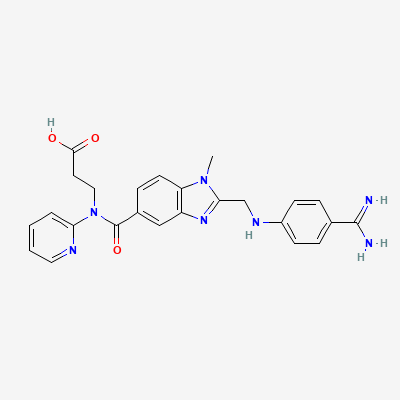
Dabigatran

Direct thrombin inhibitor (anticoagulant) · Antithrombotic

Also known as dabigatran etexilate
START
Verify indication, renal function (CrCl essential for dosing), check for active bleeding, review interacting drugs (P-gp inhibitors/inducers). Baseline CBC, creatinine. Capsules must be swallowed whole—do NOT open, crush, or chew.
TYPICAL MAX
150mg BID (AF/DVT). Dyspepsia can be reduced by taking with food. Do not open capsules (80% bioavailability increase if contents exposed).
STOP IF
Major bleeding, need for urgent surgery (stop 1-2 days before if CrCl ≥50; 3-5 days if CrCl <50), CrCl <15, severe hepatic impairment.
WATCH
Renal function at least annually (more frequently if elderly or CrCl <60). Bleeding signs. Idarucizumab (Praxbind) is the specific reversal agent—keep in mind for emergencies. P-gp inhibitors (ketoconazole, dronedarone, verapamil) increase levels. Dyspepsia is common—take with food or use PPI.
CDSCO approvedSchedule HATC B01AE07
Dose laddermg/d
75start110titrate150titrate220ceiling
Renal dose adjustmenteGFR mL/min/1.73m²
FULL150mg BID (AF); 150mg BID (DVT/PE)50REDUCE150mg BID; monitor rena…30REDUCE75mg BID (AF US …15AVOIDAvoid (contraind…90

KDIGO 2024 + manufacturer label

Pharmacokineticsplasma · t hours
1hONSET2hPEAK14h12hDURATION
ONSET
1h · Onset ~1 hour
PEAK
2h · Tmax 1-3 hours
14h · t½ ~12-17h (normal); up to 28h (renal impairment)
DURATION
12h · 12 hours (BID)
EXCRETION
Renal unchanged (~80%)
route + CYP
INTERACTIONS
6 major
incl. contraindicated
PREGNANCY
Limited data; avoid in pregnancy unless benefit clearly outweighs risk. Prodrug etexilate is teratogenic in animals.
FDA category + note
Top interactionssee all 12
  • Other AnticoagulantsContraindicatedDatabaseKimi deep-research + Cla
  • ItraconazoleSevereTextbookG&G 14e · p1592
  • Antiplatelets + NsaidsSevereDatabaseKimi deep-research + Cla
  • P Gp InducersSevereDatabaseKimi deep-research + Cla
Available in India

70 branded formulations. Look up specific brands in the Drugs workspace.

Mechanism

Reversibly binds to the active site of both free and clot-bound thrombin, inhibiting thrombin-catalyzed reactions including fibrin formation, activation of factors V, VIII, and XI, and platelet aggregation. Direct inhibition of the final common pathway of coagulation.

Indications

Stroke prevention in non-valvular atrial fibrillationTreatment and secondary prevention of DVT and PEPrimary prevention of VTE after hip or knee replacement surgeryPrevention of recurrent VTE

Dosing

Adult
AF: 150mg PO BID (CrCl >30); 75mg BID (CrCl 15-30—US only; not approved in EU). DVT/PE treatment: 150mg BID after 5-10 days of parenteral anticoagulation. VTE prophylaxis (hip/knee): 110mg 1-4h post-surgery then 220mg daily x 28-35 days (EU dosing); OR 75mg BID (US dosing).
Pediatric
≥8 years (EU): weight-based dosing for VTE treatment and prevention.
Renal adjustment
AF: CrCl >30: 150mg BID; CrCl 15-30: 75mg BID (US); CrCl <15: avoid. DVT/PE: CrCl >30: 150mg BID; CrCl ≤30: avoid or use 75mg BID (US).
Hepatic adjustment
Severe: contraindicated. Moderate: use caution.
Geriatric
No specific adjustment; increased bleeding risk with age and renal decline.
Max dose
300mg/day (150mg BID); 220mg/day (VTE prophylaxis)

Pharmacokinetics

Onset
Peak anticoagulant effect within 2-3 hours
Peak effect
Tmax 1-3 hours (fasted); 2-4 hours (with food); steady-state in 2-3 days
Duration
12-24 hours (BID or daily dosing)
Half-life
~12-17 hours (CrCl >50); up to 28 hours (CrCl 15-30)
Bioavailability
~6.5% (dabigatran etexilate is a prodrug; converted by esterases in liver/plasma to active dabigatran)
Protein binding
~35%
Metabolism
Dabigatran etexilate (prodrug) converted by plasma/carboxylesterases to active dabigatran; minimal further metabolism (conjugation only)
Excretion
~80% renal (unchanged); remainder fecal

Contraindications

  • Active major bleeding
  • Severe hepatic impairment (Child-Pugh C) or hepatic disease expected to affect survival
  • Lesion or condition with significant bleeding risk (e.g., recent GI ulcer, intracranial hemorrhage)
  • Concomitant strong P-gp inhibitors in patients with renal impairment (CrCl <30)
  • Mechanical prosthetic heart valves (RE-ALIGN trial showed harm)
  • Hypersensitivity to dabigatran

Side effects

Common
Bleeding (any site—most common)Dyspepsia / abdominal pain (~10-15%)NauseaDiarrheaUpper respiratory infection
Serious
  • Major bleeding (GI, intracranial)
  • Life-threatening bleeding
  • Epidural/spinal hematoma (with neuraxial anesthesia)
  • Anaphylaxis
  • Angioedema (rare)
  • Drug-induced hepatitis (rare)

Pregnancy & lactation

Pregnancy

Limited data; avoid in pregnancy unless benefit clearly outweighs risk. Prodrug etexilate is teratogenic in animals.

Lactation

Excretion in breast milk unknown; not recommended during breastfeeding.

Drug interactions

Other Anticoagulants
Contraindicated
Database

No additional benefit; substantially increased bleeding risk.

Do not combine. Transition with appropriate overlap.

Source: Kimi deep-research + Cla

Itraconazole
Severe
Textbook

dabigatran AUC increased 6.9-fold.

coadministration generally contraindicate[d] or at least require[s] dosage adjustment.

Source: G&G 14e · p1592

Antiplatelets + Nsaids
Severe
Database

Additive bleeding risk; triple therapy markedly increases GI and intracranial bleeding.

Avoid triple therapy if possible; use PPI gastroprotection; minimize NSAID use.

Source: Kimi deep-research + Cla

P Gp Inducers
Severe
Database

Reduces dabigatran exposure by 50-70%, increasing thrombosis risk.

Avoid combination; use alternative anticoagulant if these drugs are essential.

Source: Kimi deep-research + Cla

P Gp Inhibitors
Severe
Database

Increases dabigatran levels by 50-150%, significantly increasing bleeding risk.

Avoid dronedarone. Reduce dabigatran dose if verapamil used. Monitor for bleeding.

Source: Kimi deep-research + Cla

Verapamil
Severe
Database

Increased plasma dabigatran concentrations.

The text does not provide specific management guidance beyond identification of the interaction.

Aceclofenac + Paracetamol
Moderate
Textbook

Increased risk of bleeding.

The text does not provide specific management guidance beyond identification of the interaction.

Source: G&G 14e · p718

Aceclofenac
Moderate
Textbook

Increased risk of bleeding.

The text does not provide specific management guidance beyond identification of the interaction.

Source: G&G 14e · p718

Antiplatelet Agents
Moderate
Textbook

Increased risk of bleeding.

The text does not provide specific management guidance beyond identification of the interaction.

Source: G&G 14e · p718

Bromfenac
Moderate
Textbook

Increased risk of bleeding.

The text does not provide specific management guidance beyond identification of the interaction.

Source: G&G 14e · p718

Capsaicin
Moderate
Textbook

Increased risk of bleeding.

The text does not provide specific management guidance beyond identification of the interaction.

Source: G&G 14e · p718

Choline Salicylate
Moderate
Textbook

Increased risk of bleeding.

The text does not provide specific management guidance beyond identification of the interaction.

Source: G&G 14e · p718

Related guidelines

Ask House about Dabigatran

Continue into a citation-backed clinical answer with the drug context already attached.

Sources: Goodman & Gilman 14e, Harrison 22e, BNF·Verified: 2026-05-19 · House clinical team·Cockpit curated: 2026-05-19