Drug lookup
Drug reference

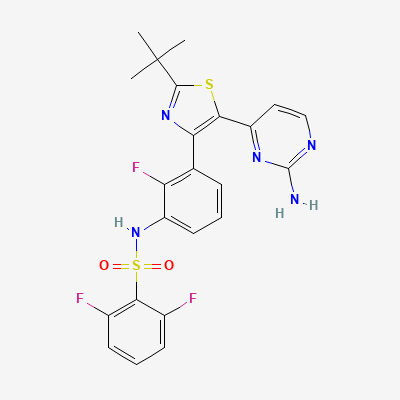
Dabrafenib

BRAF kinase inhibitor (antineoplastic) · Antineoplastic
START
150 mg PO twice daily fasting (with trametinib)
TYPICAL MAX
300 mg/day
STOP IF
Serious febrile reaction, new malignancy, or severe haemorrhage
WATCH
Temperature/pyrexia, skin surveillance, glucose, ECG, eyes
CDSCO approvedSchedule HATC L01EC02
Dose laddermg/d
100reduced200intermediate300standard/day
Renal dose adjustmenteGFR mL/min/1.73m²
FULLNo adjustment (mild–moderate)30CAUTIONNot studied — caution90

KDIGO 2024 + manufacturer label

Pharmacokineticsplasma · t hours
1hONSET2hPEAK8h12hDURATION
ONSET
1h · absorption
PEAK
2h · Tmax
8h ·
DURATION
12h · twice-daily
EXCRETION
Mainly faecal; ~23% renal metabolites
route + CYP
INTERACTIONS
12 major
incl. contraindicated
PREGNANCY
Can cause fetal harm — avoid; effective non-hormonal contraception (induces hormonal contraceptives).
FDA category + note
Top interactionssee all 12
  • Braf Wild Type TumourContraindicatedDatabaseKimi deep-research + Cla
  • Aminolevulinic AcidSevereDatabaseDDInter
  • AvapritinibSevereDatabaseDDInter
  • AvatrombopagSevereDatabaseDDInter

Mechanism

Selective ATP-competitive inhibitor of mutant BRAF V600 kinase, blocking constitutive MAPK pathway signalling; combined with a MEK inhibitor (trametinib) to delay resistance and reduce cutaneous toxicity.

Indications

BRAF V600-mutant melanoma (± trametinib)BRAF V600E NSCLC (with trametinib)BRAF V600E anaplastic thyroid cancer (with trametinib)BRAF V600E solid tumours (tissue-agnostic)

Dosing

Adult
150 mg PO twice daily (≥1 h before or 2 h after meals), usually with trametinib 2 mg once daily.
Pediatric
Weight-based (paediatric LGG/solid tumours, with trametinib).
Renal adjustment
No adjustment for mild–moderate; not studied in severe.
Hepatic adjustment
Mild: no adjustment; moderate–severe: not studied — caution.
Geriatric
No specific adjustment.
Max dose
300 mg/day (150 mg twice daily)

Pharmacokinetics

Onset
Tumour response over weeks
Peak effect
~2 h (Tmax)
Duration
~12 h (twice-daily)
Half-life
~8 h (active metabolites longer)
Bioavailability
~95% (reduced/variable with food)
Protein binding
~99.7%
Metabolism
Hepatic CYP2C8/CYP3A4 (active hydroxy/desmethyl metabolites)
Excretion
Mainly faecal; ~23% renal (metabolites)

Contraindications

  • BRAF wild-type tumours (paradoxical MAPK activation — possible tumour promotion)
  • Severe hypersensitivity
  • Caution: G6PD deficiency (haemolysis)

Side effects

Common
PyrexiaArthralgiaHyperkeratosisHeadacheFatigueNausea
Serious
  • Serious febrile reactions
  • Cutaneous squamous-cell carcinoma/new primary melanoma
  • Haemorrhage
  • Uveitis
  • QT prolongation
  • Hyperglycaemia
  • Severe pyrexia with hypotension/renal failure

Pregnancy & lactation

Pregnancy

Can cause fetal harm — avoid; effective non-hormonal contraception (induces hormonal contraceptives).

Lactation

Avoid breastfeeding during and 2 weeks after therapy.

Drug interactions

Braf Wild Type Tumour
Contraindicated
Database

Paradoxical MAPK activation

Confirm BRAF V600 mutation before use

Source: Kimi deep-research + Cla

Aminolevulinic Acid
Severe
Database

Drug interaction classified as: synergy

Source: DDInter

Avapritinib
Severe
Database

Drug interaction classified as: metabolism

Source: DDInter

Avatrombopag
Severe
Database

Drug interaction classified as: metabolism

Source: DDInter

Axitinib
Severe
Database

Drug interaction classified as: metabolism

Source: DDInter

Bedaquiline
Severe
Database

Drug interaction classified as: metabolism

Source: DDInter

Benzhydrocodone
Severe
Database

Drug interaction classified as: metabolism

Source: DDInter

Brigatinib
Severe
Database

Drug interaction classified as: metabolism

Source: DDInter

Butorphanol
Severe
Database

Drug interaction classified as: metabolism

Source: DDInter

Capmatinib
Severe
Database

Drug interaction classified as: metabolism

Source: DDInter

Cobimetinib
Severe
Database

Drug interaction classified as: metabolism

Source: DDInter

Daclatasvir
Severe
Database

Clinical effect not specified

Source: DDInter

Related guidelines

Ask House about Dabrafenib

Continue into a citation-backed clinical answer with the drug context already attached.

Sources: Goodman & Gilman 14e, Harrison 22e, BNF·Verified: 2026-05-20 · House clinical team·Cockpit curated: 2026-05-20