Drug lookup
Drug reference

Ethamsylate

Hemostatic agent / capillary stabilizer · Antihemorrhagic

Also known as Dicynene, Emsylate, Styptocid
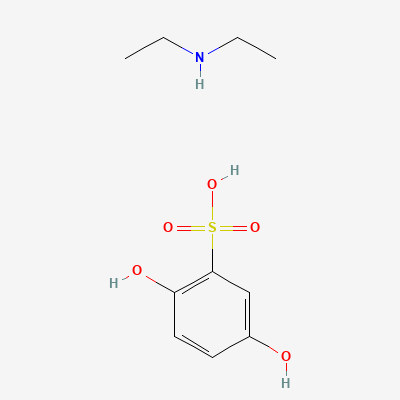
START
250-500 mg TDS-QDS for active bleeding; 250-500 mg 1h pre-op for surgical prophylaxis
TYPICAL MAX
2000 mg/day
STOP IF
Signs of thrombosis, severe allergic reaction
WATCH
Bleeding time, signs of thrombosis
CDSCO approvedSchedule HJan AushadhiNPPA price-controlledATC B02BX01
Dose laddermg/d
250start500titrate2kceiling
Renal dose adjustmenteGFR mL/min/1.73m²
FULLNo specific adjustment needed090

KDIGO 2024 + manufacturer label

Pharmacokineticsplasma · t hours
23minONSET1.5hPEAK4h8hDURATION
ONSET
23min · absorption onset
PEAK
1.5h · Peak plasma concentration
4h · Elimination half-life
DURATION
8h · Duration of effect
EXCRETION
Renal (metabolites)
route + CYP
INTERACTIONS
none in our sources
PREGNANCY
Avoid in first trimester; use with caution in second and third trimesters
FDA category + note
Available in India

258 branded formulations and 149 fixed-dose combinations. Look up specific brands in the Drugs workspace.

Jan Aushadhi — generic available at GoI pharmacies

Mechanism

Reduces capillary permeability and stabilizes vascular endothelium; promotes platelet aggregation and adhesion by increasing cyclic-AMP in platelets; may also enhance prostacyclin synthesis

Indications

Prevention and treatment of capillary bleedingMenorrhagiaPerioperative bleeding prophylaxisEpistaxisBleeding after dental extraction

Dosing

Adult
250-500 mg 2-4 times daily; perioperative: 250-500 mg 1 hour before surgery then every 6 hours for 24-48 hours
Pediatric
Not recommended in children
Renal adjustment
No specific adjustment needed; limited data
Hepatic adjustment
No specific adjustment needed; limited data
Geriatric
Standard dosing; monitor for thrombotic events
Max dose
2000 mg/day

Pharmacokinetics

Onset
4-6 hours (hemostatic effect)
Peak effect
1-2 hours (Tmax)
Duration
8 hours
Half-life
3-5 hours
Bioavailability
~90%
Protein binding
~80%
Metabolism
Hepatic glucuronidation and sulfation
Excretion
Renal (primarily as metabolites)

Contraindications

  • Hypersensitivity to ethamsylate
  • Acute porphyria

Side effects

Common
NauseaHeadacheRashPyrexia
Serious
  • Thromboembolic events (theoretical)
  • Severe allergic reactions
  • Acute porphyria exacerbation

Pregnancy & lactation

Pregnancy

Avoid in first trimester; use with caution in second and third trimesters

Lactation

Excretion in breast milk unknown; use with caution during breastfeeding

Drug interactions

Aminocaproic Acid
Moderate
Database

Increased risk of thrombosis or hypercoagulability, especially in patients with underlying thrombotic risk factors.

Use with caution. Monitor for signs and symptoms of thrombosis. Consider lower doses of one or both agents if co-administration is necessary.

Anticoagulants
Moderate
Database

Theoretical antagonism of anticoagulant effect; may increase thrombosis risk

Monitor coagulation parameters; use with caution

Source: Kimi deep-research + Cla

Thrombolytics
Moderate
Database

Potential reduction of thrombolytic efficacy

Avoid concurrent use if possible

Source: Kimi deep-research + Cla

Aspirin
Mild
Database

Uncertain, but theoretical possibility of altered bleeding profile. No direct evidence of significant interaction.

Monitor for bleeding or thrombosis. No strong evidence for significant interaction, but caution is prudent.

Clopidogrel
Mild
Database

Uncertain, but theoretical possibility of altered bleeding profile. No direct evidence of significant interaction.

Monitor for bleeding or thrombosis. No strong evidence for significant interaction, but caution is prudent.

Nsaids
Mild
Database

May have additive effects on platelet function

Monitor for bleeding or clotting abnormalities

Source: Kimi deep-research + Cla

Oxytocin
Mild
Database

Both used in obstetric bleeding; no direct interaction

Can be used together in postpartum hemorrhage

Source: Kimi deep-research + Cla

Tranexamic Acid
Mild
Database

Complementary hemostatic mechanisms; no adverse interaction

Can be combined in severe bleeding protocols

Source: Kimi deep-research + Cla

Warfarin
Mild
Database

Uncertain, but theoretical possibility of reduced anticoagulant effect or altered bleeding profile. No direct evidence of significant interaction.

Monitor INR more closely if co-administered, especially at initiation or discontinuation of ethamsylate. No strong evidence for significant interaction, but caution is prudent.

Related guidelines

Ask House about Ethamsylate

Continue into a citation-backed clinical answer with the drug context already attached.

Sources: KD Tripathi 7e·Verified: 2026-05-19 · House clinical team·Cockpit curated: 2026-05-19