Drug lookup
Drug reference

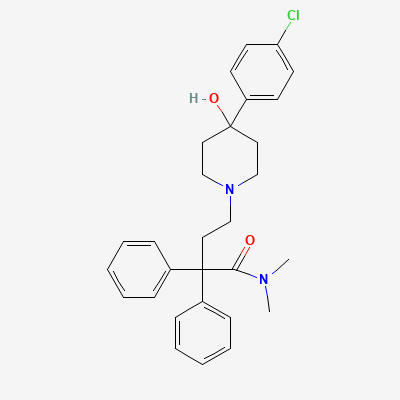
Loperamide

Peripherally-acting mu-opioid receptor agonist (antidiarrheal) · Antidiarrheal

Also known as Loperamide Hydrochloride, Imodium

START
Rule out infectious/bloody diarrhea (contraindicated). Ensure adequate hydration. Do NOT use as sole therapy in dysentery or C. difficile.
TYPICAL MAX
16mg/day (adults). Do not exceed—high-dose misuse can cause fatal cardiac arrhythmias (QT prolongation, torsades de pointes).
STOP IF
Bloody diarrhea, fever, abdominal distension, constipation >48 hours, signs of C. difficile, symptoms persisting >48 hours.
WATCH
Never use in acute colitis or C. difficile (risk of toxic megacolon). Cardiac toxicity at high doses (>16mg) or in CYP2D6 poor metabolizers. FDA black box warning for serious cardiac events with high doses.
CDSCO approvedOTCJan AushadhiATC A07DA03
Dose laddermg/d
2start4titrate8titrate16Max daily
Renal dose adjustmenteGFR mL/min/1.73m²
FULLNo adjustment15FULLNo adjustment90

KDIGO 2024 + manufacturer label

Pharmacokineticsplasma · t hours
1hONSET3.5hPEAK11h12hDURATION
ONSET
1h · Onset within 1 hour
PEAK
3.5h · Tmax 2.5-5 hours
11h · t½ ~10.8 hours
DURATION
12h · 10-14 hours
EXCRETION
Fecal as metabolites (~40%)
route + CYP
INTERACTIONS
12 major
incl. contraindicated
PREGNANCY
Limited data; minimal systemic absorption suggests low risk. Use only if clearly needed—prefer dietary measures and hydration first.
FDA category + note
Top interactionssee all 12
  • C Difficile InfectionContraindicatedDatabaseKimi deep-research + Cla
  • AbirateroneSevereDatabaseDDInter
  • AmiodaroneSevereDatabaseDDInter
  • AmprenavirSevereDatabaseDDInter
Available in India

85 branded formulations and 6 fixed-dose combinations. Look up specific brands in the Drugs workspace.

Jan Aushadhi — generic available at GoI pharmacies

Mechanism

Binds to mu-opioid receptors on myenteric plexus of intestinal wall, inhibiting acetylcholine and prostaglandin release, reducing peristalsis, increasing intestinal transit time, and enhancing water and electrolyte absorption. Poor CNS penetration due to P-gp efflux—minimal opioid CNS effects at therapeutic doses.

Indications

Acute diarrhea (non-infectious, adjunctive)Chronic diarrhea (IBS-D, inflammatory bowel disease—adjunctive)Travelers' diarrhea (adjunctive to antibiotics)Fecal incontinenceIleostomy output reduction

Dosing

Adult
Acute diarrhea: 4mg PO initially, then 2mg after each loose stool; max 16mg/day (OTC) or 8mg/day (some regions). Chronic diarrhea: 4-8mg/day in divided doses; max 16mg/day.
Pediatric
≥2 years: 0.08-0.24mg/kg/day divided BID-TID (max 2mg/dose, 6mg/day for 2-5 years; max 8mg/day for 6-12 years).
Renal adjustment
No adjustment needed (minimal renal excretion, poor bioavailability).
Hepatic adjustment
Use caution in severe hepatic impairment (reduced first-pass metabolism may increase levels).
Geriatric
No specific adjustment; increased risk of constipation and ileus.
Max dose
16mg/day (adults); 8mg/day (children 6-12 years); 6mg/day (children 2-5 years)

Pharmacokinetics

Onset
Antidiarrheal effect within 1 hour
Peak effect
Tmax 2.5-5 hours (capsule); 1.6-2.8 hours (liquid)
Duration
10-14 hours per dose
Half-life
~10.8 hours (range 9.1-14.4h); longer with hepatic impairment
Bioavailability
~40% (extensive first-pass metabolism; P-gp efflux from CNS)
Protein binding
~97%
Metabolism
Extensive hepatic via CYP3A4 and CYP2C8 to inactive N-demethylated and hydroxylated metabolites
Excretion
~30-40% fecal (unchanged + metabolites); <2% renal (unchanged)

Contraindications

  • Acute dysentery (bloody diarrhea with fever—may worsen infection)
  • Acute colitis (pseudomembranous colitis, C. difficile)
  • Ileus or intestinal obstruction
  • Hypersensitivity to loperamide
  • Abdominal distension without diarrhea in children

Side effects

Common
ConstipationDizzinessNauseaAbdominal cramps / bloatingDry mouth
Serious
  • Cardiac arrhythmias / QT prolongation / torsades de pointes (overdose/misuse)
  • Ileus / toxic megacolon (especially in C. difficile or IBD)
  • CNS depression (overdose—crosses BBB at high doses)
  • Respiratory depression (overdose)
  • Severe hypersensitivity

Pregnancy & lactation

Pregnancy

Limited data; minimal systemic absorption suggests low risk. Use only if clearly needed—prefer dietary measures and hydration first.

Lactation

Excreted in breast milk in very small amounts; infant exposure negligible. Compatible with breastfeeding per AAP.

Drug interactions

C Difficile Infection
Contraindicated
Database

Slows gut motility, increasing toxin absorption and risk of toxic megacolon.

ABSOLUTELY contraindicated in C. difficile; treat C. difficile with appropriate antibiotics first.

Source: Kimi deep-research + Cla

Abiraterone
Severe
Database

Drug interaction classified as: metabolism

Source: DDInter
Amiodarone
Severe
Database

Increased plasma concentrations of loperamide, potentially leading to enhanced opioid-like effects and CNS depression.

Monitor for signs of CNS depression. Consider reducing loperamide dose if adverse effects occur. Use with caution.

Source: DDInter

Amprenavir
Severe
Database

Drug interaction classified as: metabolism

Source: DDInter

Atazanavir
Severe
Database

Drug interaction classified as: metabolism.

Source: DDInter

Bepridil
Severe
Database

Drug interaction classified as: absorption

Source: DDInter

Boceprevir
Severe
Database

Drug interaction classified as: metabolism

Source: DDInter

Cimetidine
Severe
Database

Modestly increased plasma concentrations of loperamide, potentially leading to enhanced opioid-like effects and CNS depression, especially at higher loperamide doses.

Monitor for signs of CNS depression. Consider reducing loperamide dose if adverse effects occur. Use with caution.

Source: DDInter

Clarithromycin
Severe
Database

Increased plasma concentrations of loperamide, potentially leading to enhanced opioid-like effects and CNS depression.

Monitor for signs of CNS depression. Consider reducing loperamide dose if adverse effects occur. Use with caution.

Source: DDInter

Clopidogrel
Severe
Database

Drug interaction classified as: metabolism.

Source: DDInter

Cobicistat
Severe
Database

Drug interaction classified as: metabolism

Source: DDInter

Conivaptan
Severe
Database

Drug interaction classified as: metabolism

Source: DDInter

Related guidelines

Ask House about Loperamide

Continue into a citation-backed clinical answer with the drug context already attached.

Sources: KD Tripathi 7e, Goodman & Gilman 14e, Harrison 22e, Katzung·Verified: 2026-05-19 · House clinical team·Cockpit curated: 2026-05-19