Drug lookup
Drug reference

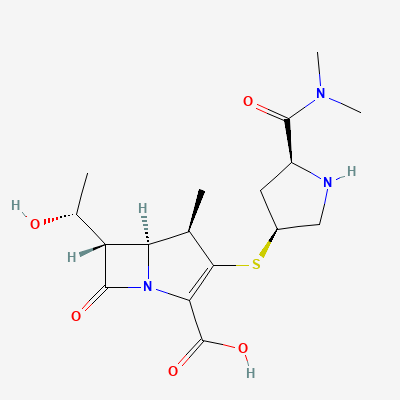
Meropenem

Carbapenem · Antibiotic

Also known as Meropenem Trihydrate
START
Confirm infection and source; obtain cultures before first dose if feasible. Baseline renal function, CBC, LFTs. Check beta-lactam allergy history (cross-reactivity ~1% with penicillin anaphylaxis).
TYPICAL MAX
2 g IV q8h (6 g/day) for meningitis/severe sepsis. Do not exceed in patients with CrCl <50 without dose adjustment.
STOP IF
Severe hypersensitivity (anaphylaxis), seizures unresponsive to anticonvulsants, severe CDAD, persistent neutropenia, lack of clinical response after 72 hours with susceptible organism
WATCH
Renal function (adjust dose if CrCl <50), seizure threshold (especially meningitis/renal impairment/CNS disease), CDAD (diarrhea), CBC (neutropenia with prolonged use), LFTs
CDSCO approvedSchedule HJan AushadhiATC J01DH02
Dose laddermg/d
500start1ktitrate2kmax6kceiling
Renal dose adjustmenteGFR mL/min/1.73m²
FULLFull dose: 0.5-2 g IV q8h (based on indication)51CAUTIONFull dose q12h26REDUCE50% dose q12h10REDUCE50% dose q…90

KDIGO 2024 + manufacturer label

Pharmacokineticsplasma · t hours
30minONSET30minPEAK1h8hDURATION
ONSET
30min · Immediate (IV); 48-72 h (clinical)
PEAK
30min · End of 30-min infusion (Cmax ~25 μg/mL)
1h · ~1 h (normal); 6-10 h (ESRD)
DURATION
8h · 8 h (q8h dosing); extended infusion 3-4 h preferred
EXCRETION
~70% renal unchanged; 20% as inactive metabolite
route + CYP
INTERACTIONS
7 major
SEVERE in our sources
PREGNANCY
FDA PLLR: Animal studies showed no teratogenic effects. Limited human data. Crosses placenta. Use during pregnancy only if clearly needed. Generally considered safe in pregnancy (Category B in old system).
FDA category + note
Top interactionssee all 12
  • BupropionSevereDatabaseDDInter
  • DivalproexSevereDatabase
  • IohexolSevereDatabaseDDInter
  • IopamidolSevereDatabaseDDInter
Available in India

1,000 branded formulations and 118 fixed-dose combinations. Look up specific brands in the Drugs workspace.

Jan Aushadhi — generic available at GoI pharmacies

Mechanism

Meropenem is a broad-spectrum carbapenem antibiotic that exerts bactericidal activity by inhibiting bacterial cell wall synthesis. It binds with high affinity to penicillin-binding proteins (PBPs), particularly PBP-2 and PBP-3, preventing cross-linking of peptidoglycan chains and leading to osmotic lysis of the bacterial cell. Its zwitterionic structure (1β-methyl substitution) confers stability against most beta-lactamases (including extended-spectrum beta-lactamases, ESBLs) and renal dehydropeptidase-I (DHP-I), eliminating the need for a DHP-I inhibitor like cilastatin.

Indications

Complicated intra-abdominal infections (with metronidazole for anaerobic coverage)Complicated skin and skin structure infections (cSSSI)Bacterial meningitis (pediatric and adult)Hospital-acquired/ventilator-associated pneumonia (HAP/VAP)Complicated urinary tract infections (including pyelonephritis)Septicemia/bacteremiaFebrile neutropenia (empiric monotherapy)Polymicrobial infections (broad anaerobic + aerobic gram-negative/positive coverage except MRSA and Enterococcus)

Dosing

Adult
cSSSI: 500 mg IV q8h. Intra-abdominal: 1 g IV q8h (with metronidazole). Meningitis: 2 g IV q8h. HAP/VAP: 1-2 g IV q8h. Febrile neutropenia: 1 g IV q8h. UTI: 500 mg-1 g IV q8h. Infuse over 15-30 min (or bolus 3-5 min for doses ≤1 g). Extended infusion (3-4 hours) may improve outcomes in critically ill/sepsis.
Pediatric
≥3 months: cSSSI 10 mg/kg IV q8h; intra-abdominal 20 mg/kg IV q8h; meningitis 40 mg/kg IV q8h (max 2 g/dose). >50 kg: adult dosing.
Renal adjustment
CrCl >50: full dose q8h. CrCl 26-50: full dose q12h. CrCl 10-25: 50% dose q12h. CrCl <10: 50% dose q24h. HD: give dose after dialysis (meropenem is dialyzable). CRRT: 1-2 g q8-12h depending on effluent rate.
Hepatic adjustment
No dosage adjustment necessary in hepatic impairment.
Geriatric
No adjustment for age alone if renal function normal. Adjust based on CrCl. Monitor for CNS effects (seizures) in elderly with renal impairment.
Max dose
2 g/dose; 6 g/day (meningitis, severe sepsis)

Pharmacokinetics

Onset
Rapid bactericidal activity; clinical response typically within 48-72 hours for susceptible infections.
Peak effect
IV infusion: Cmax ~25 μg/mL (1 g dose). Peak at end of 30-min infusion.
Duration
Time-dependent killing — %fT>MIC is the PK/PD parameter predicting efficacy. Prolonged/extended infusion (3-4 hours) optimizes %fT>MIC.
Half-life
~1 hour in normal renal function; 2-4 hours in moderate renal impairment; 6-10 hours in severe renal impairment/ESRD.
Bioavailability
Not absorbed orally (IV only).
Protein binding
Very low: ~2% (non-saturable, concentration-independent).
Metabolism
Minimal hepatic metabolism (~20% via hydrolysis of beta-lactam ring by dehydropeptidase-I to open-ring metabolite, which is microbiologically inactive).
Excretion
Primarily renal: ~70% excreted unchanged in urine within 12 hours; ~20% as inactive open-ring metabolite. Fecal: ~2%.

Contraindications

  • Hypersensitivity to meropenem, other carbapenems (imipenem, doripenem, ertapenem), or beta-lactam antibiotics (cross-reactivity risk ~1-5% with penicillin allergy)
  • Patients who experienced anaphylaxis to penicillins or cephalosporins (relative — evaluate risk-benefit; cross-reactivity ~1% with IgE-mediated reactions)
  • No other absolute contraindications

Side effects

Common
Injection site phlebitis/thrombophlebitisDiarrhea, nausea, vomitingHeadacheRash (maculopapular, urticarial)Elevated liver enzymes (transient)Thrombocytosis
Serious
  • Seizures (0.7% in immunocompetent adults; higher in meningitis, renal impairment, CNS lesions, or doses >6 g/day)
  • Clostridioides difficile-associated diarrhea (CDAD) — all broad-spectrum antibiotics
  • Severe hypersensitivity reactions (anaphylaxis, angioedema, SJS/TEN — rare)
  • Acute interstitial nephritis
  • Hematologic: neutropenia, thrombocytopenia, eosinophilia, positive Coombs test
  • Hepatotoxicity (transient increases in ALT/AST, bilirubin)
  • Neutropenia (prolonged use >2 weeks)

Pregnancy & lactation

Pregnancy

FDA PLLR: Animal studies showed no teratogenic effects. Limited human data. Crosses placenta. Use during pregnancy only if clearly needed. Generally considered safe in pregnancy (Category B in old system).

Lactation

Excreted in breast milk in low concentrations (~0.5% of maternal dose). Compatible with breastfeeding per AAP. Monitor infant for diarrhea, candidiasis, or rash.

Drug interactions

Bupropion
Severe
Database

Drug interaction classified as: synergy

Source: DDInter

Divalproex
Severe
Database

Rapid and significant decrease in valproate levels, leading to loss of seizure control.

Avoid co-administration. If meropenem is essential, consider alternative anticonvulsants or closely monitor valproate levels and increase valproate dose significantly. Monitor for seizure recurrence.

Iohexol
Severe
Database

Clinical effect not specified

Source: DDInter

Iopamidol
Severe
Database

Clinical effect not specified

Source: DDInter

Sodium Valproate
Severe
Database

Rapid and significant decrease in valproate plasma concentrations, leading to loss of seizure control and increased risk of breakthrough seizures.

Avoid concomitant use if possible. If meropenem is essential, consider alternative antiepileptic drugs. If co-administration is unavoidable, monitor valproate levels closely and consider increasing valproate dose significantly or switching to an alternative antiepileptic drug. Monitor for seizure recurrence.

Tramadol
Severe
Database

.

Source: DDInter

Valproic Acid
Severe
Database

Carbapenems (including meropenem) significantly reduce valproic acid serum concentrations by 50-100% within 24-48 hours via inhibition of intestinal absorption and possibly increased hepatic clearance. This can precipitate breakthrough seizures in patients controlled on valproate.

Avoid combination if possible in seizure patients. If unavoidable, monitor valproic acid levels every 1-2 days; increase valproate dose or add alternative anticonvulsant. Consider alternative antibiotic (e.g., piperacillin-tazobactam, cefepime).

Source: Kimi deep-research + Cla

Ganciclovir
Moderate
Database

Additive risk of seizures. Both drugs can lower seizure threshold; concurrent use may increase CNS toxicity.

Use caution in patients with CNS disorders or renal impairment. Monitor for signs of CNS toxicity (tremors, myoclonus, seizures). Have anticonvulsant readily available.

Source: Kimi deep-research + Cla

Live Oral Typhoid Vaccine
Moderate
Database

Antibiotics may reduce efficacy of live bacterial vaccines by killing the attenuated vaccine organisms.

Defer live oral typhoid vaccine until ≥24 hours after completing meropenem course. Use alternative vaccination timing.

Source: Kimi deep-research + Cla

Methotrexate
Moderate
Database

Increased risk of methotrexate toxicity, including myelosuppression, mucositis, and nephrotoxicity.

Monitor methotrexate levels and for signs of toxicity. Dose adjustment of methotrexate may be necessary. Consider alternative antibiotics if possible.

Mycophenolate Mofetil
Moderate
Database

Decreased mycophenolic acid levels, potentially leading to reduced immunosuppression and increased risk of transplant rejection.

Monitor mycophenolic acid levels closely. Adjust MMF dose as needed. Consider alternative antibiotics if possible.

Source: DDInter

Oral Anticoagulants
Moderate
Database

Meropenem may reduce vitamin K synthesis by gut flora and/or affect platelet function, potentiating warfarin's anticoagulant effect.

Monitor INR closely (every 2-3 days) when starting or stopping meropenem. Anticipate warfarin dose adjustment.

Source: Kimi deep-research + Cla

Related guidelines

Other Carbapenem drugs

Ask House about Meropenem

Continue into a citation-backed clinical answer with the drug context already attached.

Sources: KD Tripathi 7e, Goodman & Gilman 14e, Harrison 22e, Katzung·Verified: 2026-05-18 · House clinical team·Cockpit curated: 2026-05-18