Drug lookup
Drug reference

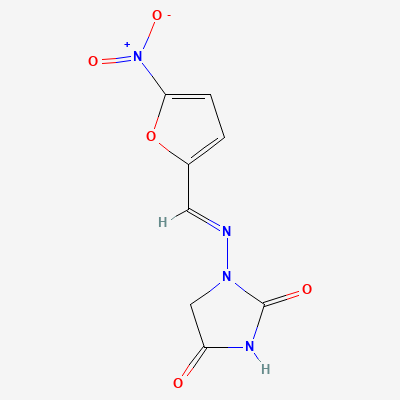
Nitrofurantoin

Nitrofuran antibacterial agent · Antibiotic

Also known as Furadantin, Macrodantin, Macrobid, Niftran, Urifast, Uvamin
START
Verify CrCl ≥30. Screen for G6PD deficiency if risk factors. Confirm uncomplicated lower UTI (not pyelonephritis—does not achieve tissue/tissue concentrations). Baseline LFTs if prolonged use.
TYPICAL MAX
Do not exceed 400mg/day. Prophylaxis max 100mg/day. Duration >6 months increases pulmonary and hepatic toxicity risk.
STOP IF
CrCl <30, new pulmonary symptoms (cough, dyspnea), jaundice/LFT elevation >3x ULN, signs of peripheral neuropathy, severe rash.
WATCH
Pulmonary toxicity can occur acutely (hypersensitivity pneumonitis) or chronically (pulmonary fibrosis)—monitor for new cough/dyspnea. Hepatotoxicity risk increases with age and duration. Take with food to reduce GI upset.
CDSCO approvedSchedule HJan AushadhiATC J01XE01
Dose laddermg/d
50start100titrate400Max daily dose
Renal dose adjustmenteGFR mL/min/1.73m²
FULLStandard dosing30AVOIDContraindicated90

KDIGO 2024 + manufacturer label

Pharmacokineticsplasma · t hours
30minONSET1hPEAK20min6hDURATION
ONSET
30min · Urine therapeutic in 30 min
PEAK
1h · Tmax ~1 hour
20min · Plasma t½ ~20 minutes
DURATION
6h · 6-8 hours per dose
EXCRETION
Renal unchanged (~40%)
route + CYP
INTERACTIONS
7 major
SEVERE in our sources
PREGNANCY
Contraindicated at term (38-42 weeks)—risk of hemolytic anemia in newborn. Earlier in pregnancy, generally considered safe for UTI treatment (Category B).
FDA category + note
Top interactionssee all 12
  • LeflunomideSevereDatabaseDDInter
  • LomitapideSevereDatabaseDDInter
  • MipomersenSevereDatabaseDDInter
  • Nitrous AcidSevereDatabaseDDInter
Available in India

134 branded formulations and 1 fixed-dose combination. Look up specific brands in the Drugs workspace.

Jan Aushadhi — generic available at GoI pharmacies

Mechanism

Bacterial flavoproteins reduce nitrofurantoin to reactive intermediates that inactivate or alter ribosomal proteins and other macromolecules, inhibiting protein, DNA, RNA, and cell wall synthesis

Indications

Uncomplicated lower urinary tract infection (cystitis)UTI prophylaxis (recurrent UTIs)

Dosing

Adult
Uncomplicated UTI: 50-100mg QID or 100mg BID (macrocrystal) x 5-7 days. UTI prophylaxis: 50-100mg once daily at bedtime. Take with food to improve tolerance.
Pediatric
>1 month: 5-7mg/kg/day divided QID (max 400mg/day). Prophylaxis: 1-2mg/kg once daily.
Renal adjustment
FDA label: CONTRAINDICATED in anuria, oliguria, or significant renal impairment (CrCl <60 mL/min) — sub-therapeutic urinary levels + systemic accumulation/toxicity. (Note: AGS Beers 2019 / IDSA consider short courses acceptable at CrCl ≥30; the FDA label is the conservative bound.)
Hepatic adjustment
Contraindicated in active hepatic disease; use caution in hepatic impairment.
Geriatric
Use caution; increased risk of peripheral neuropathy and pulmonary toxicity in elderly; ensure adequate renal function.
Max dose
400mg/day (divided); 100mg/day (prophylaxis)

Pharmacokinetics

Onset
Rapid; therapeutic urine concentrations within 30 minutes
Peak effect
Tmax ~1 hour (microcrystals), slower with macrocrystals; peak urine concentrations 50-150 mcg/mL
Duration
6-8 hours per dose
Half-life
~20 minutes (plasma); elimination from urine ~4-6 hours
Bioavailability
~90% (microcrystals); ~94% (macrocrystals)
Protein binding
60%
Metabolism
Partial hepatic metabolism (minimal); reduced by bacterial flavoproteins at infection site
Excretion
~40% unchanged in urine via glomerular filtration and tubular secretion

Contraindications

  • Anuria, oliguria, or significant renal impairment (CrCl <60 mL/min) — FDA label contraindication
  • Known hypersensitivity to nitrofurantoin
  • Pregnancy at term (38-42 weeks gestation)
  • Infants <1 month old (risk of hemolytic anemia)
  • G6PD deficiency (risk of hemolytic anemia)
  • History of cholestatic jaundice or hepatic dysfunction with nitrofurantoin

Side effects

Common
Nausea and vomitingHeadacheFlatulenceAnorexiaRashDark yellow/brown urine discoloration (harmless)Dyspepsia
Serious
  • Pulmonary toxicity (acute, subacute, chronic—potentially fatal)
  • Hepatotoxicity (including acute cholestatic hepatitis, chronic active hepatitis)
  • Peripheral neuropathy (especially with renal impairment, diabetes, anemia)
  • Hemolytic anemia (G6PD deficiency)
  • Severe cutaneous adverse reactions (SJS/TEN, DRESS)
  • Clostridioides difficile colitis

Pregnancy & lactation

Pregnancy

Contraindicated at term (38-42 weeks)—risk of hemolytic anemia in newborn. Earlier in pregnancy, generally considered safe for UTI treatment (Category B).

Lactation

Compatible with breastfeeding for full-term infants >1 month; excreted in milk in low concentrations. Avoid in infants with G6PD deficiency or <1 month old.

Drug interactions

Leflunomide
Severe
Database

Clinical effect not specified

Source: DDInter

Lomitapide
Severe
Database

Clinical effect not specified

Source: DDInter

Mipomersen
Severe
Database

Clinical effect not specified

Source: DDInter

Nitrous Acid
Severe
Database

Clinical effect not specified

Source: DDInter

Pexidartinib
Severe
Database

Clinical effect not specified

Source: DDInter

Prilocaine
Severe
Database

Clinical effect not specified

Source: DDInter

Teriflunomide
Severe
Database

Clinical effect not specified

Source: DDInter

Antacids
Moderate
Textbook

Decreased absorption and reduced efficacy of nitrofurantoin.

Stagger administration of antacids and nitrofurantoin by 2 hours.

Source: KDT 7e · p656

Aluminium Hydroxide
Moderate
Database

Decreased efficacy of nitrofurantoin, potentially leading to treatment failure for urinary tract infections.

Separate administration by at least 2-3 hours. Consider alternative antacids if frequent use is required.

Calcium Carbonate
Moderate
Database

Decreased efficacy of nitrofurantoin, potentially leading to treatment failure for urinary tract infections.

Separate administration by at least 2-3 hours. Consider alternative antacids if frequent use is required.

Magnesium Trisilicate
Moderate
Database

Decreased efficacy of nitrofurantoin, potentially leading to treatment failure for urinary tract infections.

Separate administration by at least 2-3 hours. Consider alternative antacids if frequent use is required.

Nalidixic Acid
Moderate
Database

Antagonism of antibacterial effect

Avoid combination

Source: Kimi deep-research + Cla · p699

Related guidelines

Ask House about Nitrofurantoin

Continue into a citation-backed clinical answer with the drug context already attached.

Sources: KD Tripathi 7e, Goodman & Gilman 14e, Harrison 22e, Katzung·Verified: 2026-05-19 · House clinical team·Cockpit curated: 2026-05-19