Drug lookup
Drug reference

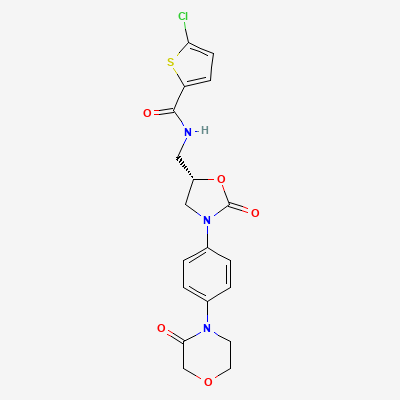
Rivaroxaban

Direct Factor Xa inhibitor (anticoagulant) · Anticoagulant

Also known as Xarelto, Rivaroxa

START
Verify indication, renal function (CrCl), check for active bleeding, review concurrent antiplatelets/NSAIDs. Assess fall risk. No routine coagulation monitoring needed.
TYPICAL MAX
20mg daily for AF; do not exceed. 15mg BID only for initial DVT/PE treatment (first 21 days).
STOP IF
Major bleeding, need for urgent surgery (stop 24h before if CrCl ≥30; 36-48h if CrCl <30), CrCl <15, severe hepatic impairment.
WATCH
Signs of bleeding, renal function decline (dose reduction needed if CrCl drops), concurrent drugs affecting CYP3A4/P-gp (ketoconazole, ritonavir, phenytoin, rifampicin).
CDSCO approvedATC B01AF01
Dose laddermg/d
2.5start10titrate15titrate20ceiling
Renal dose adjustmenteGFR mL/min/1.73m²
FULLStandard dosing50REDUCEAF: 15mg daily; DVT/PE:…30AVOIDAF: avoid; DVT/P…15AVOIDAvoid (contraind…90

KDIGO 2024 + manufacturer label

Pharmacokineticsplasma · t hours
2hONSET3hPEAK7h1dDURATION
ONSET
2h · Onset 2-4 hours
PEAK
3h · Tmax ~2-4 hours
7h · t½ 5-9h (young), 11-13h (elderly)
DURATION
1d · 24 hours (QD)
EXCRETION
One-third renal unchanged, one-third fecal
route + CYP
INTERACTIONS
12 major
incl. contraindicated
PREGNANCY
Contraindicated in pregnancy—crosses placenta, risk of fetal bleeding, placental abruption. Switch to LMWH if pregnancy occurs.
FDA category + note
Top interactionssee all 12
  • Strong Cyp3a4 + P Gp InhibitorsContraindicatedDatabaseKimi deep-research + Cla
  • WarfarinContraindicatedDatabaseKimi deep-research + Cla
  • Antiplatelet AgentsSevereTextbookG&G 14e
  • Nonsteroidal Anti Inflammatory AgentsSevereTextbookG&G 14e
Available in India

142 branded formulations. Look up specific brands in the Drugs workspace.

Mechanism

Selective, direct, reversible inhibition of free and clot-bound Factor Xa, blocking the conversion of prothrombin to thrombin and thereby inhibiting thrombin generation and clot formation

Indications

Stroke prevention in non-valvular atrial fibrillationTreatment and secondary prevention of DVT and PEVTE prophylaxis after hip or knee replacement surgeryVTE prophylaxis in acutely ill medical patientsCAD/PAD risk reduction (2.5mg BID with aspirin)

Dosing

Adult
AF: 20mg daily with evening meal. DVT/PE treatment: 15mg BID x 21 days, then 20mg daily. VTE prophylaxis (hip/knee): 10mg daily x 12-35 days. CAD/PAD: 2.5mg BID with aspirin 75-100mg daily.
Pediatric
≥2 years: weight-based dosing 10-20mg equivalent once daily (after initial BID phase for thrombosis treatment).
Renal adjustment
AF: Avoid if CrCl <30; 15mg daily if CrCl 15-49. DVT/PE: avoid if CrCl <15. CAD/PAD: avoid if CrCl <15.
Hepatic adjustment
Mild (Child-Pugh A): no adjustment. Moderate (Child-Pugh B): use caution, consider dose reduction. Severe (Child-Pugh C): contraindicated if coagulopathic.
Geriatric
No specific adjustment; increased bleeding risk with age—use lowest effective dose.
Max dose
20mg/day (AF/DVT prophylaxis); 30mg/day (DVT/PE acute phase 15mg BID)

Pharmacokinetics

Onset
Peak anticoagulant effect within 2-4 hours
Peak effect
Tmax ~2-4 hours (fasted), ~3 hours (fed)
Duration
12-24 hours (dose-dependent); anticoagulant effect persists ~24 hours after 20mg
Half-life
5-9 hours (young adults); 11-13 hours (elderly); terminal t½ ~5-9h
Bioavailability
~80% (10mg); ~66% (20mg with food); dose-dependent
Protein binding
~92-95% (albumin)
Metabolism
Hepatic via CYP3A4/5 (18%), CYP2J2 (14%), and amide hydrolysis; no active metabolites
Excretion
~33% unchanged in urine; ~28% fecal; remainder as metabolites

Contraindications

  • Active major bleeding
  • Severe hepatic impairment (Child-Pugh C) with coagulopathy
  • Pregnancy and breastfeeding
  • Lesions at risk of bleeding (e.g., recent GI ulcer, intracranial hemorrhage)
  • Concomitant strong CYP3A4 and P-gp inhibitors (in AF/DVT dosing)
  • Mechanical heart valves (not studied)

Side effects

Common
Bleeding (any site)NauseaDyspepsiaHeadacheFatiguePeripheral edema
Serious
  • Major bleeding (GI, intracranial)
  • Spinal/epidural hematoma (with neuraxial anesthesia)
  • Hepatotoxicity (rare)
  • Anaphylaxis
  • Stevens-Johnson syndrome

Pregnancy & lactation

Pregnancy

Contraindicated in pregnancy—crosses placenta, risk of fetal bleeding, placental abruption. Switch to LMWH if pregnancy occurs.

Lactation

Excretion in breast milk unknown; potential for infant anticoagulation. Not recommended during breastfeeding.

Drug interactions

Strong Cyp3a4 + P Gp Inhibitors
Contraindicated
Database

Markedly increases rivaroxaban AUC (~2.5-fold), significantly increasing bleeding risk.

Contraindicated in AF/DVT dosing. If used for VTE prophylaxis, monitor closely. Use alternative antifungal or anticoagulant.

Source: Kimi deep-research + Cla

Warfarin
Contraindicated
Database

Dual anticoagulation with no additional benefit but substantially increased bleeding risk.

Do not combine. Transition with appropriate overlap (start rivaroxaban when INR <3.0).

Source: Kimi deep-research + Cla

Antiplatelet Agents
Severe
Textbook

Increased risk of bleeding.

Exercise caution and monitor closely.

Source: G&G 14e

Nonsteroidal Anti Inflammatory Agents
Severe
Textbook

Increased risk of bleeding.

Exercise caution and monitor closely.

Source: G&G 14e

Abciximab
Severe
Database

Drug interaction classified as: synergy

Source: DDInter

Acalabrutinib
Severe
Database

Drug interaction classified as: synergy

Source: DDInter

Alteplase
Severe
Database

Drug interaction classified as: synergy

Source: DDInter

Anagrelide
Severe
Database

Drug interaction classified as: synergy

Source: DDInter

Anisindione
Severe
Database

Drug interaction classified as: synergy

Source: DDInter

Anistreplase
Severe
Database

Drug interaction classified as: synergy

Source: DDInter

Antithrombin Alfa
Severe
Database

Drug interaction classified as: synergy

Source: DDInter

Antithrombin Iii Human
Severe
Database

Drug interaction classified as: synergy

Source: DDInter

Related guidelines

Ask House about Rivaroxaban

Continue into a citation-backed clinical answer with the drug context already attached.

Sources: KD Tripathi 7e, Goodman & Gilman 14e, Harrison 22e, Katzung·Verified: 2026-05-19 · House clinical team·Cockpit curated: 2026-05-19