Aliskiren
Contraindicated
Textbook
Increased risk of hypotension, hyperkalemia, and renal impairment.
Avoid concomitant use.
Source: G&G 14e · p603
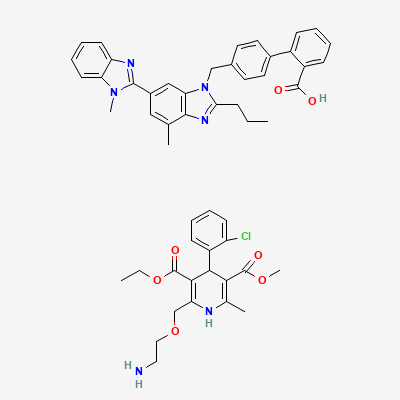
Antihypertensive fixed-dose combination (ARB + DHP calcium channel blocker) · Antihypertensive
Also known as Telma AM, Telmikind AM, Telsartan AM, Amtel
KDIGO 2024 + manufacturer label
Telmisartan blocks AT1 angiotensin II receptors (reducing vasoconstriction and aldosterone); amlodipine blocks L-type calcium channels in vascular smooth muscle (peripheral arteriolar vasodilation) — complementary BP-lowering mechanisms with strong evidence base.
Contraindicated (ARB component).
Limited combination data; alternatives preferred.
Increased risk of hypotension, hyperkalemia, and renal impairment.
Avoid concomitant use.
Source: G&G 14e · p603
Potentially excessive hypotension, increased risk of adverse effects.
Do not use in conjunction with other ARBs.
Source: G&G 14e · p602
Dual RAAS blockade
Avoid combination
Source: Kimi deep-research + Cla
Greater incidence of acute kidney injury (AKI) and adverse cardiac events.
The combination of these two classes should be avoided.
Source: Harrison 22e · p2396
Increased worsening of renal function, hypotension, syncope, and hyperkalemia without increased efficacy.
Not recommended for the treatment of hypertension. Previous studies indicate more harm than benefit.
Source: G&G 14e
Increased worsening of renal function, hypotension, syncope, and hyperkalemia without increased efficacy.
Not recommended for the treatment of hypertension. Previous studies indicate more harm than benefit.
Source: G&G 14e
Increased worsening of renal function, hypotension, syncope, and hyperkalemia without increased efficacy.
Not recommended for the treatment of hypertension. Previous studies indicate more harm than benefit.
Source: G&G 14e
Increased worsening of renal function, hypotension, syncope, and hyperkalemia without increased efficacy.
Not recommended for the treatment of hypertension. Previous studies indicate more harm than benefit.
Source: G&G 14e
Increased worsening of renal function, hypotension, syncope, and hyperkalemia without increased efficacy.
Not recommended for the treatment of hypertension. Previous studies indicate more harm than benefit.
Source: G&G 14e
Greater incidence of acute kidney injury (AKI) and adverse cardiac events.
The combination of these two classes should be avoided.
Source: Harrison 22e · p2396
Increased worsening of renal function, hypotension, syncope, and hyperkalemia without increased efficacy.
Not recommended for the treatment of hypertension. Previous studies indicate more harm than benefit.
Source: G&G 14e
Increased worsening of renal function, hypotension, syncope, and hyperkalemia without increased efficacy.
Not recommended for the treatment of hypertension. Previous studies indicate more harm than benefit.
Source: G&G 14e
Continue into a citation-backed clinical answer with the drug context already attached.
Unreviewed·Updated: 2026-05-20