Moclobemide
Contraindicated
Textbook
Increased risk of serotonin syndrome and potentiated sympathomimetic effects.
Should not be used concurrently with MAOIs or within 14 days of stopping MAOIs.
Source: G&G 14e
TCA · Antidepressant
Also known as Amitriptyline hydrochloride, Laroxyl, Tryptanol
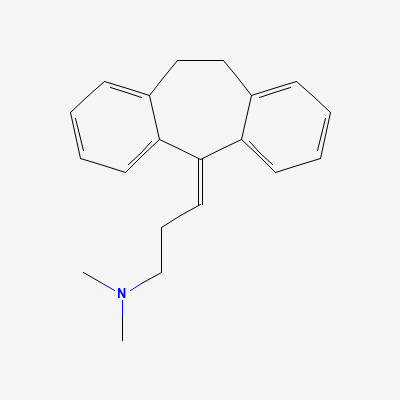
KDIGO 2024 + manufacturer label
356 branded formulations and 220 fixed-dose combinations. Look up specific brands in the Drugs workspace.
Jan Aushadhi — generic available at GoI pharmacies
Amitriptyline is a tricyclic antidepressant (TCA) that exerts its therapeutic effects through multiple mechanisms. Its primary antidepressant action involves inhibition of serotonin (5-HT) and norepinephrine (NE) reuptake transporters (SERT and NET), increasing synaptic concentrations of these monoamines. Additionally, it is a potent antagonist at muscarinic acetylcholine receptors (M1-M5), histamine H1 receptors, and alpha-1 adrenergic receptors. It also has sodium channel blocking activity (class IA antiarrhythmic-like effect) and antagonizes NMDA receptors. This broad receptor profile accounts for both its antidepressant efficacy and its extensive side effect profile (anticholinergic, sedative, orthostatic hypotension, and cardiotoxicity in overdose).
FDA PLLR: Animal studies showed adverse effects. Limited human data. Use only if benefit clearly outweighs risk. May cause neonatal withdrawal symptoms if used in third trimester.
Excreted in breast milk (infant dose ~1-3% of maternal). May cause infant sedation, poor feeding. Monitor infant closely. Consider alternative antidepressant if breastfeeding.
Increased risk of serotonin syndrome and potentiated sympathomimetic effects.
Should not be used concurrently with MAOIs or within 14 days of stopping MAOIs.
Source: G&G 14e
MAOIs + TCAs can precipitate serotonin syndrome, hypertensive crisis, hyperpyrexia, convulsions, and death. Both increase monoamine availability through different mechanisms.
Do NOT use within 14 days of MAOI discontinuation. Wait at least 2 weeks after stopping MAOI before starting amitriptyline.
Source: Kimi deep-research + Cla
Exaggerated hypertensive response
Use local anaesthetic without adrenaline in patients on TCAs
Source: KDT 7e · p950
Potentiation of adrenaline's effects.
Vasoconstrictor (adrenaline) containing LA should be avoided in patients receiving tricyclic antidepressants.
Source: KDT 7e · p365
Increased risk of cardiac conduction defects.
Source: KDT 7e · p816-835
Increased cardiotoxicity (e.g., QT prolongation).
Source: Harrison 22e · p1740
Additive CNS depression — enhanced sedation, respiratory depression, impaired cognition, increased fall risk (especially in elderly).
Counsel patient to avoid alcohol. Monitor level of consciousness. Fall precautions in elderly.
Source: Kimi deep-research + Cla
Drug interaction classified as: synergy.
Source: DDInter
Drug interaction classified as: synergy
Source: DDInter
Drug interaction classified as: synergy
Source: DDInter
Drug interaction classified as: synergy
Source: DDInter
1 additional unreviewed or low-confidence interaction hidden because their provenance or source detail is insufficient.
Continue into a citation-backed clinical answer with the drug context already attached.
Textbook-sourced·Sources: KD Tripathi 7e, Goodman & Gilman 14e, Harrison 22e, Katzung·Updated: 2026-05-18·Cockpit curated: 2026-05-18