Drug lookup
Drug reference

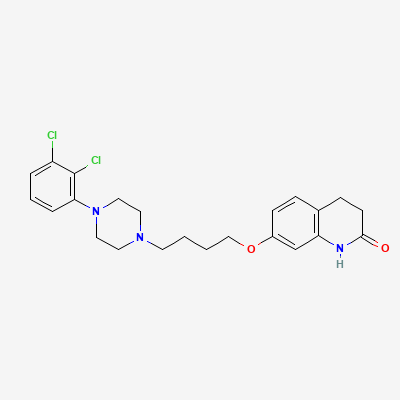
Aripiprazole

Atypical (second-generation) antipsychotic (dopamine partial agonist) · Antipsychotic

Also known as Abilify, Arpizol, Arip, Aripiprex, Arpimune
START
Schizophrenia/bipolar: 10-15 mg OD. MDD adjunct: 2 mg OD. Check baseline weight, BMI, fasting glucose, lipids, BP; counsel on akathisia risk
TYPICAL MAX
30 mg/day
STOP IF
NMS, severe akathisia not responsive to dose reduction or propranolol, TD, agranulocytosis, metabolic syndrome
WATCH
Weight/BMI at 4, 8, 12 weeks then quarterly, fasting glucose and lipids at 12 weeks then annually, BP, movement disorders (AIMS, SAS), mood/suicidality
CDSCO approvedSchedule HJan AushadhiATC N05AX12
Dose laddermg/d
2start5titrate10titrate15titrate30ceiling
Renal dose adjustmenteGFR mL/min/1.73m²
FULLNo renal adjustment needed090

KDIGO 2024 + manufacturer label

Pharmacokineticsplasma · t hours
1hONSET4hPEAK3.1d1dDURATION
ONSET
1h · absorption onset
PEAK
4h · Peak plasma concentration
3.1d · Very long half-life (75h parent)
DURATION
1d · 24-hour coverage with once-daily dosing
EXCRETION
Fecal (55%); renal (25%)
route + CYP
INTERACTIONS
12 major
SEVERE in our sources
PREGNANCY
Use only if benefits outweigh risks; third trimester exposure may cause EPS and withdrawal in neonates; limited data
FDA category + note
Top interactionssee all 12
  • Cyp2d6 Inhibitors And Cyp3a4 InhibitorsSevereTextbookG&G 14e · p366
  • AlfentanilSevereDatabaseDDInter
  • BenzhydrocodoneSevereDatabaseDDInter
  • BuprenorphineSevereDatabaseDDInter
Available in India

227 branded formulations. Look up specific brands in the Drugs workspace.

Jan Aushadhi — generic available at GoI pharmacies

Mechanism

Partial agonist at dopamine D2 and D3 receptors, and serotonin 5-HT1A receptors; antagonist at 5-HT2A receptors. The 'dopamine system stabilizer' concept - reduces dopaminergic activity in hyperdopaminergic states (mesolimbic pathway, antipsychotic effect) and enhances activity in hypodopaminergic states (mesocortical pathway, procognitive effect). Also has partial agonism at 5-HT1A.

Indications

Schizophrenia (acute and maintenance)Bipolar I disorder (acute manic/mixed episodes and maintenance)Major depressive disorder (adjunctive therapy)Irritability associated with autistic disorder (pediatric)Tourette's disorder (pediatric)Agitation associated with schizophrenia/bipolar mania (IM)Bipolar depression

Dosing

Adult
Schizophrenia: 10-15 mg OD (start 10-15 mg, max 30 mg). Bipolar mania: 15 mg OD (start 15 mg, max 30 mg). MDD adjunct: 2-5 mg OD (start 2 mg). Agitation (IM): 9.75 mg (may repeat)
Pediatric
Autism irritability: 6-17 years: 2-5 mg OD (start 2 mg). Tourette's: 6-18 years: 2.5-10 mg OD. Bipolar mania: 10-17 years: 2.5-10 mg OD
Renal adjustment
No adjustment needed
Hepatic adjustment
No dose adjustment for any degree of hepatic impairment (Child-Pugh 5–15) or renal impairment (FDA §8.7).
Geriatric
Start 2 mg; increased sensitivity; dementia-related psychosis contraindicated
Max dose
30 mg/day (oral); 30 mg/day IM

Pharmacokinetics

Onset
Days to weeks (antipsychotic effect)
Peak effect
3-5 hours (oral); 1-3 hours (IM solution); 1 hour (orodispersible)
Duration
24 hours
Half-life
75 hours (parent); active metabolite dehydro-aripiprazole: 94 hours
Bioavailability
87% (oral); 100% (IM)
Protein binding
>99%
Metabolism
Hepatic CYP2D6 and CYP3A4 (dehydrogenation, hydroxylation, N-dealkylation)
Excretion
Fecal (55%); renal (25%)

Contraindications

  • Hypersensitivity to aripiprazole
  • Dementia-related psychosis (black box warning - increased mortality in elderly)
  • Severe hepatic impairment

Side effects

Common
Akathisia (most common - dose-dependent)InsomniaHeadacheNauseaVomitingConstipationAnxietyRestlessnessWeight gain (less than other atypicals)Sedation
Serious
  • Neuroleptic malignant syndrome (rare)
  • Tardive dyskinesia
  • Metabolic syndrome (diabetes, dyslipidemia, weight gain)
  • Orthostatic hypotension
  • Seizures (rare)
  • Agranulocytosis / leukopenia (rare)
  • Suicidal ideation
  • Pathological gambling / impulse control disorders (rare)

Pregnancy & lactation

Pregnancy

Use only if benefits outweigh risks; third trimester exposure may cause EPS and withdrawal in neonates; limited data

Lactation

Excreted in breast milk; use with caution during breastfeeding; monitor infant for sedation and developmental delays

Drug interactions

Cyp2d6 Inhibitors And Cyp3a4 Inhibitors
Severe
Textbook

Increased AUC 4.8- to 5.1-fold.

Reduce aripiprazole dose by 75%.

Source: G&G 14e · p366

Alfentanil
Severe
Database

Drug interaction classified as: synergy

Source: DDInter

Benzhydrocodone
Severe
Database

Drug interaction classified as: synergy

Source: DDInter

Buprenorphine
Severe
Database

Drug interaction classified as: synergy.

Source: DDInter

Bupropion
Severe
Database

Increased AUC of parent drug (up to double AUC of parent drug).

Reduce aripiprazole dose by 50%.

Source: DDInter

Butorphanol
Severe
Database

Drug interaction classified as: synergy

Source: DDInter

Clozapine
Severe
Database

Drug interaction classified as: synergy.

Source: DDInter

Codeine
Severe
Database

Drug interaction classified as: synergy.

Source: DDInter

Deutetrabenazine
Severe
Database

Drug interaction classified as: synergy

Source: DDInter

Dextropropoxyphene
Severe
Database

Drug interaction classified as: synergy, metabolism

Source: DDInter

Dezocine
Severe
Database

Drug interaction classified as: synergy

Source: DDInter

Dihydrocodeine
Severe
Database

Drug interaction classified as: synergy

Source: DDInter

Related guidelines

Ask House about Aripiprazole

Continue into a citation-backed clinical answer with the drug context already attached.

Sources: KD Tripathi 7e, Goodman & Gilman 14e, Katzung, BNF·Verified: 2026-05-19 · House clinical team·Cockpit curated: 2026-05-19