Drug lookup
Drug reference

Doxycycline

Tetracycline · Antibiotic

Also known as Doxycycline hyclate, Doxycycline monohydrate
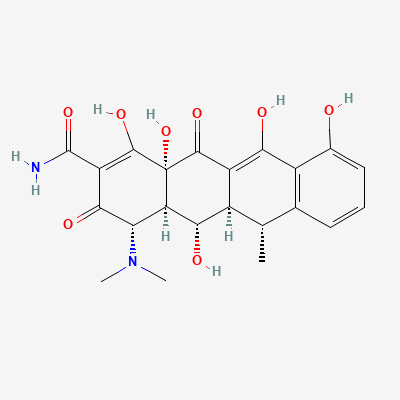
START
100 mg PO BID × D1 then 100 mg once daily
TYPICAL MAX
200 mg/day
STOP IF
Pregnancy · children <8y · esophagitis history
WATCH
Photosensitivity · pill esophagitis · candidal overgrowth
CDSCO approvedSchedule HJan AushadhiATC J01AA02
Dose laddermg/d
100start200titrate200max daily
Renal dose adjustmenteGFR mL/min/1.73m²
FULLNo adjustment (negligible renal clearance)90

KDIGO 2024 + manufacturer label

Pharmacokineticsplasma · t hours
1hONSET2hPEAK18h1dDURATION
ONSET
1h · GI absorption
PEAK
2h · Cmax
18h · plasma t½
DURATION
1d · once-daily dosing window
EXCRETION
Biliary + fecal · minimal renal/CYP
route + CYP
INTERACTIONS
12 major
incl. contraindicated
PREGNANCY
Category D — fetal tooth/bone deposition
FDA category + note
Top interactionssee all 12
  • IsotretinoinContraindicatedDatabaseDDInter
  • CarbamazepineSevereTextbook-citedKDT 7e · p949
  • DesogestrelSevereTextbook-citedKDT 7e · p949
  • EthinylestradiolSevereTextbook-citedKDT 7e · p949
Available in India

215 branded formulations and 191 fixed-dose combinations. Look up specific brands in the Drugs workspace.

Jan Aushadhi — generic available at GoI pharmacies

Mechanism

Doxycycline is a bacteriostatic antibiotic that inhibits bacterial protein synthesis by reversibly binding to the 30S ribosomal subunit. This action prevents the attachment of aminoacyl-tRNA to the mRNA-ribosome complex, thereby inhibiting peptide chain elongation. Its broad-spectrum activity targets various gram-positive and gram-negative bacteria, as well as atypical organisms like Rickettsia, Chlamydia, and Mycoplasma.

Indications

Bacterial infections (e.g., respiratory tract, urinary tract, skin and soft tissue, rickettsial infections, chlamydia, mycoplasma)Acne vulgaris (moderate to severe)RosaceaMalaria prophylaxis and treatmentLyme diseaseAnthrax (prophylaxis and treatment)CholeraBrucellosisFilariasis (as an adjunct to eliminate Wolbachia endosymbionts)Syphilis (alternative treatment)Legionnaires' diseasePeriodontitis (adjunct to scaling and root planing) (off-label)Small intestinal bacterial overgrowth (SIBO)short-term chemoprophylaxis in areas with chloroquine- and mefloquine-resistant malariacombined with quinine/quinidine for p. falciparum and p. vivax from chloroquine-resistant areasfilarial infection (Wuchereria bancrofti, Onchocerca volvulus)reducing severe eyelid inflammationblepharitis (due to anti–matrix metalloproteinase activity)Malaria (prophylaxis for travellers to endemic areas)Plague (prophylaxis for contacts during an epidemic)Prevention of acute exacerbations in chronic obstructive lung disease (doubtful value)Prevention of acute exacerbations in chronic bronchitis (doubtful value)Leptospirosis (curative, second choice to penicillin)Leptospirosis prophylaxis (in subjects at risk during an epidemic)nonpenicillinase producing gonorrhoea (alternative)early syphilis (alternative)late syphilis (alternative)chlamydia trachomatislymphogranuloma venereumgranuloma inguinale/donovanosischancroid (alternative)prophylaxis (alternative regimen for CQ-resistant P. falciparum for short-term visitors)uncomplicated vivax malaria (in occasional chloroquine resistance, with quinine)uncomplicated CQ-resistant falciparum malaria (as an alternative regimen with quinine)Treatment of CQ-resistant falciparum as well as vivax malaria (only in combination with quinine)Treatment of mefloquine/chloroquine/S/P-resistant falciparum malaria (in combination with artesunate)Prophylaxis for short-term travellers to CQ-resistant P. falciparum areascommunity-acquired methicillin-resistant S. aureus (CA-MRSA) strainsNongonococcal Urethritis (NGU)Chlamydia trachomatis infectionEpididymitis (caused by N. gonorrhoeae or C. trachomatis)Pelvic Inflammatory Disease (PID)Lymphogranuloma Venereum (LGV) proctitisProctitis (empirical treatment)HIV-1 acquisition prevention (Doxycycline PEP in MSM and transgender women)Oral therapy for skin and soft tissue infections sensitive to methicillinOral therapy for skin and soft tissue infections resistant to methicillinAdjunctive antibiotic for patients with moderate or severe dehydration due to cholera (in areas with confirmed susceptibility)Moderate or severe Vibrio parahaemolyticus–associated gastrointestinal illnessVibrio vulnificus primary sepsis (combined with a third-generation cephalosporin)Brucellosis (acute nonfocal)Brucella endocarditisAntimicrobial prophylaxis for Brucella exposure (monotherapy or combined with rifampin for 3 weeks)Primary syphilis (for penicillin-allergic patients, nonpregnant, CSF normal or not examined)Secondary syphilis (for penicillin-allergic patients, nonpregnant, CSF normal or not examined)Early latent syphilis (for penicillin-allergic patients, nonpregnant, CSF normal or not examined)Late latent syphilis (for penicillin-allergic patients, nonpregnant, HIV-uninfected, CSF normal)Post-exposure prophylaxis (PEP) within 72h of exposure for prevention of syphilis in MSMNeurosyphilis (possible alternative, limited data)Mild leptospirosisModerate/severe leptospirosisChemoprophylaxis of leptospirosisLymphatic filariasis (targeting Wolbachia, with macrofilaricidal activity and improvement in filarial lymphedema)Onchocerciasis (macrofilaristatic, rendering female adult worms sterile)Mansonella perstans infection

Dosing

Adult
Most susceptible infections: 100 mg orally every 12 hours on day 1, then 100 mg orally once daily. Severe infections (e.g., anthrax): 100 mg orally every 12 hours. Acne/Rosacea (anti-inflammatory dose): 20 mg orally twice daily or 40 mg once daily (modified-release formulation).…
Pediatric
For children >8 years and >45 kg: adult dose. For children >8 years and <45 kg: 2.2 mg/kg orally every 12 hours on day 1, then 2.2 mg/kg orally once daily (max 100 mg/dose).
Renal adjustment
No dose adjustment generally required in renal impairment as it is primarily eliminated via feces.
Hepatic adjustment
Use with caution in patients with severe hepatic impairment; monitor liver function. Consider lower doses if severe.
Geriatric
No specific dose adjustment needed. Use with caution due to potential for multiple comorbidities and polypharmacy; monitor for adverse effects.
Max dose
Generally 200 mg/day for most indications, though up to 400 mg/day for severe life-threatening infections (e.g., anthrax, cholera).

Pharmacokinetics

Onset
Rapid absorption
Peak effect
1.5-4 hours
Duration
18-24 hours
Half-life
12-22 hours
Bioavailability
90-100% after oral administration
Protein binding
80-95%
Metabolism
Partially metabolized in the liver to inactive metabolites; significant enterohepatic recirculation.
Excretion
Primarily via feces (biliary excretion and direct gut secretion of unchanged drug); a smaller proportion is excreted via urine.

Contraindications

  • Hypersensitivity to doxycycline or other tetracyclines
  • Children under 8 years of age (due to risk of permanent tooth discoloration and bone growth inhibition)
  • Pregnancy (especially during the second and third trimesters)
  • Severe hepatic impairment (use with caution)
  • Patients with impaired esophageal transit (risk of esophageal ulceration)
  • Concurrent use with isotretinoin (increased risk of pseudotumor cerebri)
  • Young children (not routinely recommended)
  • children less than 8 years of age
  • pregnant women
  • known hypersensitivity to tetracyclines
  • Below 6 years (deposits in developing teeth and bone, discolors and weakens them)
  • Pregnancy (acute yellow atrophy of liver, pancreatitis and kidney damage in mother; teeth and bone deformities in offspring)
  • Young children
  • pregnant women (for prophylaxis)
  • children < 8 years (for prophylaxis)
  • Children

Side effects

Common
NauseaVomitingDiarrheaAbdominal discomfortPhotosensitivity (sunburn-like reaction)Esophageal irritation/ulceration (especially if taken without adequate fluid or lying down)Candidiasis (oral/vaginal)HeadacheGI disturbancesAbdominal paindizzinessphotosensitivityesophagitisodynophagiaLocal irritancySuperinfection risk (especially diarrhoea)Pseudomembranous enterocolitisJarisch-Herxheimer-like reaction (approx 15% of patients during the first 24h of therapy)
Serious
  • Pseudotumor cerebri (idiopathic intracranial hypertension)
  • Severe cutaneous adverse reactions (e.g., SJS, TEN, DRESS)
  • Clostridioides difficile-associated diarrhea (CDAD)
  • Hepatotoxicity
  • Blood dyscrasias (rare)
  • Anaphylaxis
  • hepatotoxicity (rarely)
  • pancreatitis (rarely)
  • benign intracranial hypertension (rarely)
  • Liver and kidney damage
  • Antianabolic effect
  • Fetal bone-growth abnormalities (avoid in pregnancy and children <8 years old)

Pregnancy & lactation

Pregnancy

Category D — fetal tooth/bone deposition

Lactation

Doxycycline is excreted into breast milk. Although the amount is generally small and infant systemic absorption is limited due to chelation with calcium in milk, it is generally recommended to avoid during prolonged use or high doses due to theoretical risk of dental staining or inhibition of bone growth. Short-term use (e.g., 7-10 days) may be considered with careful infant monitoring.

Drug interactions

Isotretinoin
Contraindicated
Database

Pseudotumor cerebri.

Contraindicated.

Source: DDInter

Carbamazepine
Severe
Textbook-cited

Sub-therapeutic doxycycline levels; treatment failure.

Avoid concurrent use or increase dose

Source: KDT 7e · p949

Desogestrel
Severe
Textbook-cited

Contraceptive failure

Advise alternative contraception

Source: KDT 7e · p949

Ethinylestradiol
Severe
Textbook-cited

Contraceptive failure

Advise alternative contraception

Source: KDT 7e · p949

Levonorgestrel
Severe
Textbook-cited

Contraceptive failure.

Advise alternative contraception

Source: KDT 7e · p949

Lithium
Severe
Textbook-cited

Lithium toxicity

Avoid tetracycline or monitor lithium levels and reduce dose

Source: KDT 7e · p949

Norethisterone
Severe
Textbook-cited

Contraceptive failure

Advise alternative contraception

Source: KDT 7e · p949

Phenobarbital
Severe
Textbook-cited

Sub-therapeutic doxycycline levels; treatment failure

Avoid concurrent use or increase dose

Source: KDT 7e · p949

Phenytoin
Severe
Textbook-cited

Sub-therapeutic doxycycline levels; treatment failure.

Avoid concurrent use or increase dose

Source: KDT 7e · p949

Rifampicin
Severe
Textbook-cited

Sub-therapeutic doxycycline levels; treatment failure.

Avoid concurrent use or increase dose

Source: KDT 7e · p949

Acitretin
Severe
Database

Drug interaction classified as: synergy

Source: DDInter

Aminolevulinic Acid
Severe
Database

Drug interaction classified as: synergy

Source: DDInter

Related guidelines

Other Tetracycline drugs

Ask House about Doxycycline

Continue into a citation-backed clinical answer with the drug context already attached.

Sources: KD Tripathi 7e, Goodman & Gilman 14e, Harrison 22e, Katzung·Verified: 2026-05-16 · House clinical team·Cockpit curated: 2026-05-16