Disodium Edetate
Contraindicated
Database
Disodium EDTA causes severe hypocalcaemia
Do NOT confuse calcium-disodium edetate with disodium edetate
Source: Kimi deep-research + Cla
Heavy-metal chelator (calcium EDTA) · Heavy Metal Chelator Pediatric Lead Poisoning Antidote Adult Lead Poisoning Antidote Metal Chelation Therapy Acute Lead Poisoning Treatment Acute Metal Intoxication Treatment Acute Lead Intoxication T
KDIGO 2024 + manufacturer label
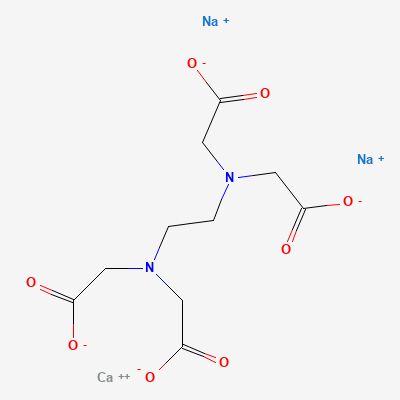
Calcium disodium EDTA exchanges calcium for divalent / trivalent heavy metals (lead, zinc, chromium) forming stable water-soluble chelates excreted renally — selective for extracellular lead; pre-loaded with calcium to avoid hypocalcaemia.
Use in life-threatening lead poisoning when benefit outweighs risk.
Generally avoid; weigh benefit/risk.
Disodium EDTA causes severe hypocalcaemia
Do NOT confuse calcium-disodium edetate with disodium edetate
Source: Kimi deep-research + Cla
Increases urinary excretion of chromium.
Reductants such as ascorbate, glutathione, or N-acetylcysteine, and ethylenediaminetetraacetic acid (EDTA), can be used to increase urinary excretion of chromium after high-dose exposure, particularly if given soon enough to prevent uptake into cells.
Source: G&G 14e · p1521
Synergistic chelation in severe lead poisoning (intended)
Use together for lead encephalopathy
Source: Kimi deep-research + Cla
Additive renal injury
Avoid; monitor renal function
Source: Kimi deep-research + Cla
Chelates zinc (intended in zinc toxicity; depletion in chronic use)
Monitor zinc levels
Source: Kimi deep-research + Cla
Theoretical zinc-insulin binding interaction
Routine glycaemic monitoring
Source: Kimi deep-research + Cla
Continue into a citation-backed clinical answer with the drug context already attached.
Textbook-sourced·Sources: Goodman & Gilman 14e·Updated: 2026-05-20·Cockpit curated: 2026-05-20