Drug lookup
Drug reference

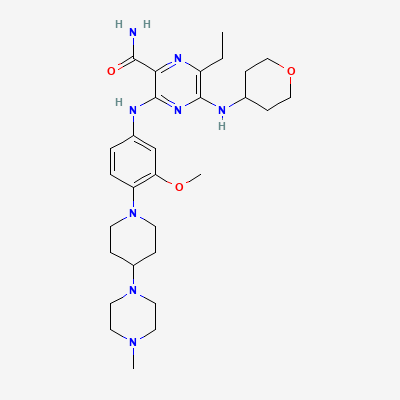
Gilteritinib

FLT3 tyrosine kinase inhibitor (antineoplastic) · Unknown

Also known as Xospata
START
120 mg PO once daily; ECG/LFT/lipase baseline
TYPICAL MAX
120 mg/day
STOP IF
Differentiation syndrome, PRES, severe pancreatitis, or QTc >500 ms
WATCH
ECG/QTc, LFTs, lipase, fever/dyspnoea (diff syndrome), neuro
CDSCO approvedATC L01EX13
Dose laddermg/d
40reduced80intermediate120standard/day
Renal dose adjustmenteGFR mL/min/1.73m²
FULLNo adjustment (mild–moderate)30CAUTIONNot studied — caution90

KDIGO 2024 + manufacturer label

Pharmacokineticsplasma · t hours
2hONSET5hPEAK4.7d1dDURATION
ONSET
2h · absorption
PEAK
5h · Tmax
4.7d · t½ ~5 d
DURATION
1d · once-daily
EXCRETION
Mainly faecal (~65%); ~17% renal
route + CYP
INTERACTIONS
12 major
SEVERE in our sources
PREGNANCY
Can cause fetal harm — avoid; effective contraception during and 2 months after.
FDA category + note
Top interactionssee all 12
  • AmiodaroneSevereDatabaseDDInter
  • AmisulprideSevereDatabaseDDInter
  • AmprenavirSevereDatabaseDDInter
  • AnagrelideSevereDatabaseDDInter

Mechanism

Selective FLT3 (both ITD and TKD mutants) and AXL kinase inhibitor, blocking proliferation/survival signalling in FLT3-mutated AML.

Indications

Relapsed/refractory FLT3-mutated acute myeloid leukaemia (R/R FLT3+ AML)

Dosing

Adult
120 mg PO once daily (with or without food); response usually requires ≥4 weeks; reduce for toxicity.
Pediatric
Not established.
Renal adjustment
No adjustment for mild–moderate; severe (eGFR <30): not studied.
Hepatic adjustment
Mild: no adjustment; moderate–severe: not studied — caution.
Geriatric
No specific adjustment; monitor closely.
Max dose
120 mg/day

Pharmacokinetics

Onset
Antileukaemic effect over weeks
Peak effect
~4–6 h (Tmax)
Duration
~24 h (once-daily)
Half-life
~113 h (~4.7 days)
Bioavailability
Not significantly food-affected
Protein binding
~94%
Metabolism
Hepatic CYP3A4 (primary); P-gp/BCRP substrate
Excretion
Mainly faecal (~65%); ~17% renal

Contraindications

  • Severe hypersensitivity
  • Caution: QT prolongation, posterior reversible encephalopathy history, pancreatitis

Side effects

Common
Transaminase elevationMyalgiaFatiguePyrexiaDiarrhoeaHypotension
Serious
  • Differentiation syndrome (boxed)
  • Posterior reversible encephalopathy (PRES, boxed)
  • QT prolongation
  • Pancreatitis
  • Pulmonary toxicity / ARDS

Pregnancy & lactation

Pregnancy

Can cause fetal harm — avoid; effective contraception during and 2 months after.

Lactation

Avoid breastfeeding during and 2 months after therapy.

Drug interactions

Amiodarone
Severe
Database

Drug interaction classified as: synergy

Source: DDInter

Amisulpride
Severe
Database

Drug interaction classified as: synergy

Source: DDInter

Amprenavir
Severe
Database

Drug interaction classified as: metabolism

Source: DDInter

Anagrelide
Severe
Database

Drug interaction classified as: synergy

Source: DDInter

Apalutamide
Severe
Database

Drug interaction classified as: metabolism

Source: DDInter

Arsenic Trioxide
Severe
Database

Drug interaction classified as: synergy

Source: DDInter

Atazanavir
Severe
Database

Drug interaction classified as: metabolism

Source: DDInter

Bedaquiline
Severe
Database

Drug interaction classified as: synergy

Source: DDInter

Bepridil
Severe
Database

Drug interaction classified as: synergy

Source: DDInter

Bexarotene
Severe
Database

Drug interaction classified as: synergy

Source: DDInter

Boceprevir
Severe
Database

Drug interaction classified as: metabolism

Source: DDInter

Cabozantinib
Severe
Database

Drug interaction classified as: synergy

Source: DDInter

Related guidelines

Ask House about Gilteritinib

Continue into a citation-backed clinical answer with the drug context already attached.

Sources: Goodman & Gilman 14e, Harrison 22e, Katzung, BNF·Verified: 2026-05-20 · House clinical team·Cockpit curated: 2026-05-20