Drug lookup
Drug reference

Oxcarbazepine

Antiepileptic / dibenzazepine carboxamide derivative · Antiepileptic
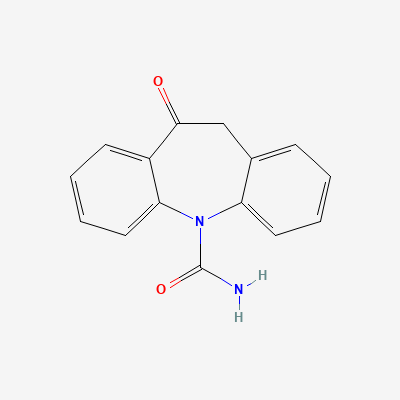
START
300 mg BD; check baseline sodium, LFTs, CBC; counsel on dizziness and hyponatremia risk
TYPICAL MAX
2400 mg/day; 3000 mg/day exceptional
STOP IF
Na+ <125 mmol/L, severe rash (SJS/TEN), anaphylaxis, hepatic failure, suicidality
WATCH
Sodium at baseline, 2 weeks, then monthly x 3 (hyponatremia), seizure frequency, LFTs, mood/suicide ideation, rash
CDSCO approvedSchedule HATC N03AF02
Dose laddermg/d
300start600titrate1.2kmax1.5kceiling
Renal dose adjustmenteGFR mL/min/1.73m²
FULLStandard dosing60REDUCEStart at 50% dose; titrate slowly30REDUCEStart at 50% dose; titrate very slow…90

KDIGO 2024 + manufacturer label

Pharmacokineticsplasma · t hours
1.3hONSET5hPEAK9h12hDURATION
ONSET
1.3h · absorption onset
PEAK
5h · MHD peak (active metabolite)
9h · MHD: 8-10 hours
DURATION
12h · 12-hour coverage (BD dosing)
EXCRETION
Renal (95%, as MHD glucuronide)
route + CYP
INTERACTIONS
12 major
SEVERE in our sources
PREGNANCY
Compatible with pregnancy; folic acid supplementation recommended; monotherapy preferred; risk of neural tube defects with AEDs
FDA category + note
Top interactionssee all 12
  • BenzhydrocodoneSevereDatabaseDDInter
  • BictegravirSevereDatabaseDDInter
  • BuprenorphineSevereDatabaseDDInter
  • ButorphanolSevereDatabaseDDInter
Available in India

256 branded formulations. Look up specific brands in the Drugs workspace.

Mechanism

Prodrug metabolized to 10-monohydroxy derivative (MHD), the active metabolite. MHD blocks voltage-gated sodium channels in their inactive state, stabilizing neuronal membranes and inhibiting repetitive neuronal firing. Unlike carbamazepine, oxcarbazepine has minimal effect on CYP enzymes and does not auto-induce metabolism.

Indications

Partial (focal) seizures with or without secondary generalization (monotherapy or adjunctive)Generalized tonic-clonic seizures (adjunctive)Trigeminal neuralgia (off-label, when carbamazepine fails or not tolerated)

Dosing

Adult
Monotherapy: start 300 mg BD (600 mg/day); increase by 300 mg/day every 3 days to 1200 mg/day. Usual: 600-1200 mg BD (1200-2400 mg/day). Max: 2400 mg/day (3000 mg/day in exceptional cases)
Pediatric
4-16 years: start 8-10 mg/kg/day divided BD; titrate to 900-1800 mg/day. <4 years: limited data
Renal adjustment
eGFR <30: start 50% of usual dose and titrate slowly
Hepatic adjustment
No adjustment needed; active metabolite is not hepatically metabolized
Geriatric
Start 300 mg/day; titrate slowly; monitor sodium and cognitive effects
Max dose
2400 mg/day (adults); 3000 mg/day (exceptional)

Pharmacokinetics

Onset
Days to weeks (antiepileptic effect)
Peak effect
Oxcarbazepine: 1.5 hours; MHD: 4-6 hours (Tmax)
Duration
8-12 hours (BD dosing)
Half-life
Oxcarbazepine: 2 hours; MHD: 8-10 hours
Bioavailability
~100%
Protein binding
Oxcarbazepine: 60%; MHD: 40%
Metabolism
Rapid hepatic reduction to active MHD (10-monohydroxy metabolite); MHD undergoes glucuronidation
Excretion
Renal (95%, primarily as MHD glucuronide); fecal (<1%)

Contraindications

  • Hypersensitivity to oxcarbazepine or eslicarbazepine
  • Hypersensitivity to carbamazepine (cross-reactivity ~25-30%)
  • Atrioventricular block
  • Hyponatremia (severe)

Side effects

Common
DizzinessDrowsinessHeadacheNauseaVomitingDiplopiaAtaxiaFatigueHyponatremiaRash
Serious
  • Severe hyponatremia (SIADH; 20-40% of patients, usually mild)
  • Stevens-Johnson syndrome / TEN
  • Hepatotoxicity
  • Blood dyscrasias (rare)
  • Anaphylaxis / multi-organ hypersensitivity (DRESS)
  • Suicidal ideation (class effect of AEDs)
  • Thyroid dysfunction (reduced T4, increased TSH)

Pregnancy & lactation

Pregnancy

Compatible with pregnancy; folic acid supplementation recommended; monotherapy preferred; risk of neural tube defects with AEDs

Lactation

Excreted in breast milk (MHD); infant exposure ~5% of maternal dose; generally compatible with breastfeeding; monitor infant for sedation

Drug interactions

Benzhydrocodone
Severe
Database

Drug interaction classified as: metabolism

Source: DDInter

Bictegravir
Severe
Database

Drug interaction classified as: metabolism

Source: DDInter

Buprenorphine
Severe
Database

Drug interaction classified as: synergy.

Source: DDInter

Butorphanol
Severe
Database

Drug interaction classified as: metabolism

Source: DDInter

Cabotegravir
Severe
Database

Drug interaction classified as: metabolism

Source: DDInter

Citalopram
Severe
Database

Drug interaction classified as: metabolism.

Source: DDInter

Desogestrel
Severe
Database

Clinical effect not specified

Source: DDInter

Dextropropoxyphene
Severe
Database

Clinical effect not specified

Source: DDInter

Dienogest
Severe
Database

Clinical effect not specified

Source: DDInter

Dolutegravir
Severe
Database

Clinical effect not specified

Source: DDInter

Doravirine
Severe
Database

Clinical effect not specified

Source: DDInter

Drospirenone
Severe
Database

Clinical effect not specified

Source: DDInter

Related guidelines

Ask House about Oxcarbazepine

Continue into a citation-backed clinical answer with the drug context already attached.

Sources: KD Tripathi 7e, Goodman & Gilman 14e, BNF·Verified: 2026-05-19 · House clinical team·Cockpit curated: 2026-05-19