Drug lookup
Drug reference

Ranolazine

Anti-anginal agent (late sodium current inhibitor) · Antianginal
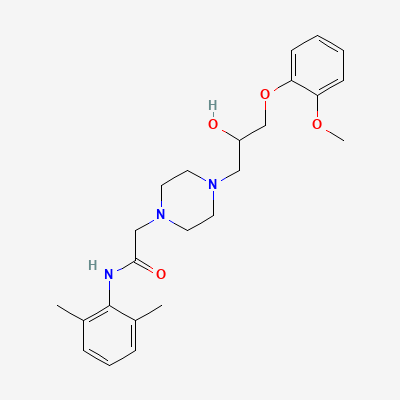
START
Baseline ECG (QTc), creatinine, LFTs. Verify no CYP3A4 inhibitors/inducers or diltiazem/verapamil use. Counsel on taking WITH food.
TYPICAL MAX
1000mg BID. QT prolongation is dose-related—do not exceed. Monitor ECG at baseline and after dose increase.
STOP IF
QTc >500ms, syncope, severe constipation, signs of torsades de pointes, anaphylaxis, hepatotoxicity (jaundice, LFTs >3x ULN).
WATCH
QTc interval at baseline and during titration (dose-related QT prolongation). Dizziness and constipation are most common side effects. Renal impairment increases levels—use caution if CrCl <30. Does NOT reduce BP or HR—useful when these are already optimized.
CDSCO approvedATC C01EB18
Dose laddermg/d
500Start BID1kMax BID
Renal dose adjustmenteGFR mL/min/1.73m²
FULLStandard dosing30CAUTIONUse caution; monitor QTc and levels90

KDIGO 2024 + manufacturer label

Pharmacokineticsplasma · t hours
30minONSET3.5hPEAK7h12hDURATION
ONSET
30min · Onset ~30 min
PEAK
3.5h · Tmax 2-5 hours
7h · t½ ~7 hours
DURATION
12h · 12 hours (BID)
EXCRETION
Renal as metabolites (~75%)
route + CYP
INTERACTIONS
12 major
incl. contraindicated
PREGNANCY
Limited data; use only if clearly needed. Animal studies show no teratogenicity at therapeutic doses.
FDA category + note
Top interactionssee all 12
  • Class I AntiarrhythmicsContraindicatedTextbookKDT 7e · p554
  • Class Iii AntiarrhythmicsContraindicatedTextbookKDT 7e · p554
  • Hiv Protease InhibitorsContraindicatedTextbookG&G 14e · p619
  • Imidazole AntibioticsContraindicatedTextbookG&G 14e · p619
Available in India

76 branded formulations. Look up specific brands in the Drugs workspace.

Mechanism

Inhibits the late inward sodium current (INa) in cardiac myocytes, reducing intracellular sodium accumulation. This decreases calcium overload via the sodium-calcium exchanger, improving myocardial relaxation and reducing wall tension and oxygen demand. Does NOT significantly affect heart rate, blood pressure, or contractility at therapeutic doses.

Indications

Chronic stable angina (add-on therapy when angina inadequately controlled with beta-blockers, calcium channel blockers, and/or nitrates)

Dosing

Adult
500mg PO BID initially with meals; increase to 1000mg BID after 1-2 weeks if tolerated and angina persists. Max 1000mg BID.
Pediatric
Not established in children.
Renal adjustment
CrCl 30-80: no adjustment. CrCl <30: use caution; limited data; increased levels.
Hepatic adjustment
Mild: no adjustment. Moderate-severe cirrhosis: contraindicated.
Geriatric
No specific adjustment; monitor for dizziness, constipation, and QT prolongation.
Max dose
1000mg BID (2000mg/day)

Pharmacokinetics

Onset
Angina reduction within 1-2 weeks
Peak effect
Tmax 2-5 hours; steady-state in 2-3 days
Duration
12 hours (BID dosing)
Half-life
~7 hours
Bioavailability
~35-50% (food increases by ~20-30%)
Protein binding
~62%
Metabolism
Extensive hepatic via CYP3A4 (major) and CYP2D6 (minor) to active and inactive metabolites
Excretion
~75% renal (metabolites); ~25% fecal

Contraindications

  • Concomitant strong CYP3A4 inhibitors (ketoconazole, itraconazole, clarithromycin, ritonavir, nefazodone)
  • Concomitant CYP3A4 inducers (rifampicin, phenytoin, phenobarbital, carbamazepine, St. John's wort)
  • Concomitant diltiazem or verapamil (moderate CYP3A4 inhibitors)
  • Hepatic cirrhosis
  • QT prolongation / congenital long QT syndrome
  • Hypersensitivity to ranolazine

Side effects

Common
DizzinessHeadacheConstipationNauseaAsthenia / fatigueQT prolongation (dose-related)
Serious
  • QT prolongation / torsades de pointes
  • Severe constipation / intestinal obstruction
  • Acute renal failure (rare)
  • Hepatotoxicity (rare)
  • Anaphylaxis
  • Syncope

Pregnancy & lactation

Pregnancy

Limited data; use only if clearly needed. Animal studies show no teratogenicity at therapeutic doses.

Lactation

Excretion in breast milk unknown; use with caution during breastfeeding.

Drug interactions

Class I Antiarrhythmics
Contraindicated
Textbook

Increased risk of significant Q-T interval prolongation.

Should not be used along with other Q-T prolonging drugs.

Source: KDT 7e · p554

Class Iii Antiarrhythmics
Contraindicated
Textbook

Increased risk of significant Q-T interval prolongation.

Should not be used along with other Q-T prolonging drugs.

Source: KDT 7e · p554

Hiv Protease Inhibitors
Contraindicated
Textbook

Enhanced ranolazine exposure and potential for increased ranolazine toxicity.

Ranolazine should not be used together with strong CYP3A4 inhibitors.

Source: G&G 14e · p619

Imidazole Antibiotics
Contraindicated
Textbook

Enhanced ranolazine exposure and potential for increased ranolazine toxicity.

Ranolazine should not be used together with strong CYP3A4 inhibitors.

Source: G&G 14e · p619

Lopinavir
Contraindicated
Textbook

Increased plasma levels and toxicity of ranolazine, including QT prolongation.

Should not be given to patients taking CYP3A4 inhibitors.

Source: KDT 7e · p554

Macrolide Antibiotics
Contraindicated
Textbook

Enhanced ranolazine exposure and potential for increased ranolazine toxicity.

Ranolazine should not be used together with strong CYP3A4 inhibitors.

Source: G&G 14e · p619

Diltiazem
Contraindicated
Database

Moderate CYP3A4 inhibitors; increase ranolazine levels and QT prolongation risk; also additive AV nodal effects.

Contraindicated. Consider amlodipine or beta-blocker instead.

Source: Kimi deep-research + Cla

Ketoconazole
Contraindicated
Database

Increased plasma levels and toxicity of ranolazine, including QT prolongation.

Should not be given to patients taking CYP3A4 inhibitors.

Source: DDInter

Cyp3a4 Inducers
Contraindicated
Database

Reduces ranolazine levels by >95%, eliminating efficacy.

Contraindicated. Use alternative anti-anginal.

Source: Kimi deep-research + Cla

Strong Cyp3a4 Inhibitors
Contraindicated
Database

Increases ranolazine levels 2-3 fold; marked QT prolongation risk.

Contraindicated. Use alternative anti-anginal if these drugs needed.

Source: Kimi deep-research + Cla

Aminoglutethimide
Severe
Database

Drug interaction classified as: metabolism

Source: DDInter

Amiodarone
Severe
Database

Drug interaction classified as: synergy

Source: DDInter

Related guidelines

Ask House about Ranolazine

Continue into a citation-backed clinical answer with the drug context already attached.

Sources: KD Tripathi 7e, Goodman & Gilman 14e, Harrison 22e, Katzung·Verified: 2026-05-19 · House clinical team·Cockpit curated: 2026-05-19