Drug lookup
Drug reference

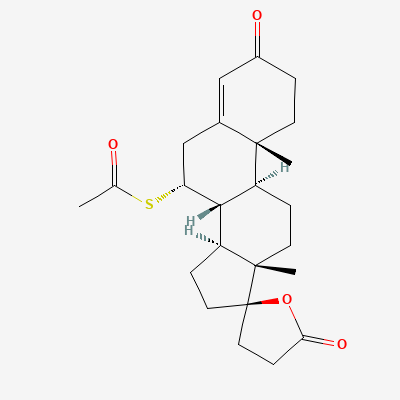
Spironolactone

Potassium-Sparing Diuretic · Antihypertensive

Also known as Aldactone, Spiractin, Spironol, Canrenone (active metabolite)
START
12.5-25 mg PO once daily (HF) · 50-100 mg/day (HTN, ascites)
TYPICAL MAX
400 mg/day (cirrhosis ascites)
STOP IF
Hyperkalemia (>5.5) · severe CKD · Addison's · anuria
WATCH
K⁺ + Cr at 1 week then monthly · gynecomastia
CDSCO approvedJan AushadhiATC C03DA01
Dose laddermg/d
12.5HF start25HF maintenance50titrate100titrate400ascites max
Renal dose adjustmenteGFR mL/min/1.73m²
FULLStandard dose; monitor K⁺ 1 week45CAUTIONReduce / monitor c…30AVOIDAvoid — hyperkalemia risk90

KDIGO 2024 + manufacturer label

Pharmacokineticsplasma · t hours
1dONSET3dPEAK16h2dDURATION
ONSET
1d · natriuretic effect (1-2 days)
PEAK
3d · max diuretic effect (3 days)
16h · active metabolite canrenone t½
DURATION
2d · post-stop effect (slow off)
EXCRETION
Hepatic CYP3A4 to canrenone · renal/biliary metabolites
route + CYP
INTERACTIONS
12 major
incl. contraindicated
PREGNANCY
Category C — antiandrogenic risk, avoid
FDA category + note
Top interactionssee all 12
  • PotassiumContraindicatedDatabaseDDInter
  • DigoxinSevereTextbook-citedKDT 7e · p949
  • LithiumSevereTextbook-citedKDT 7e · p949
  • ImidaprilSevereTextbookKDT 7e
Available in India

20 branded formulations and 83 fixed-dose combinations. Look up specific brands in the Drugs workspace.

Jan Aushadhi — generic available at GoI pharmacies

Mechanism

Spironolactone acts as a competitive antagonist of aldosterone at mineralocorticoid receptors primarily in the distal renal tubules and collecting ducts. This blockade inhibits aldosterone's effects, leading to increased excretion of sodium and water, while conserving potassium and hydrogen ions. It also possesses antiandrogenic activity by inhibiting androgen synthesis and binding to androgen receptors.

Indications

Heart failure (NYHA Class III-IV)Hypertension (especially resistant hypertension)Edema associated with heart failureEdema associated with cirrhosis (with ascites)Edema associated with nephrotic syndromePrimary hyperaldosteronism (Conn's syndrome)Hypokalemia (prevention/treatment)Hirsutism (off-label)Acne (off-label)Polycystic Ovary Syndrome (PCOS) (off-label)edema (coadministered with thiazide or loop diuretics)hypertension (coadministered with thiazide or loop diuretics)primary hyperaldosteronismrefractory edema associated with secondary aldosteronism (cardiac failure, hepatic cirrhosis, nephrotic syndrome, severe ascites)hepatic cirrhosis (diuretic of choice)heart failure with reduced ejection fraction (as adjunct to standard therapy)proteinuria in chronic kidney diseaseheart failurehypertensionhyperaldosteronismhypokalemiaasciteshirsutism (blocking androgen action)antiandrogen in male-to-female gender transitionResistant hypertensionadd-on therapy to ACE inhibitors + other drugs in moderate-to-severe CHFretard disease progression in CHFreduce episodes of decompensation and death due to heart failurereduce sudden cardiac deathshelp restoration of diuretic response to furosemide when refractoriness has developedTo counteract K+ loss due to thiazide and loop diureticsEdema (cirrhotic and nephrotic edema, refractory edema)Hypertension (as adjuvant to thiazide, attenuate renal fibrosis and ventricular/vascular hypertrophy)Moderate to severe CHF (retard disease progression, lower mortality)Long-term mineralocorticoid receptor inhibition for STEMI patients already receiving therapeutic ACE inhibitor doses, with LV ejection fraction ≤40%, and either symptomatic HF or diabetes mellitus.

Dosing

Adult
Heart Failure: Initial 12.5-25 mg PO daily, titrate up to 50 mg daily based on patient response and potassium levels. Hypertension: Initial 25-50 mg PO daily, may be increased up to 100 mg daily. Edema (cirrhosis/ascites): Initial 50-100 mg PO daily, can be gradually increased up to 400 mg/day, often with a loop diuretic.…
Pediatric
Edema/Hypertension: Initial 1-3 mg/kg/day PO in 1-2 divided doses. Maximum 100 mg/day.
Renal adjustment
CrCl 30-50 mL/min: Consider starting at lower doses (e.g., 12.5 mg every other day or 12.5 mg daily) and monitor potassium and renal function closely. CrCl <30 mL/min or serum creatinine >2 mg/dL: Contraindicated due to high risk of severe hyperkalemia.
Hepatic adjustment
Use with caution in severe hepatic impairment, as it may exacerbate hepatic encephalopathy. No specific dose adjustment guidelines, but consider lower starting doses and vigilant monitoring.
Geriatric
Start with lower doses (e.g., 12.5 mg daily) due to increased risk of hyperkalemia and age-related decline in renal function. Monitor serum potassium and renal function closely.
Max dose
For heart failure, typically 50 mg/day. For hypertension, typically 100 mg/day. For severe edema/hyperaldosteronism, up to 400 mg/day.

Pharmacokinetics

Onset
Diuretic effect: 2-3 days. Antihypertensive effect: 2-3 weeks. Aldosterone antagonism: 24-48 hours.
Peak effect
Peak plasma concentration for spironolactone: 1-2 hours. For active metabolites (e.g., canrenone): 2-4 hours.
Duration
Diuretic effects persist for 2-3 days due to active metabolites.
Half-life
Spironolactone: 1.3 hours. Canrenone (active metabolite): 13-24 hours.
Bioavailability
60-90% (variable, increased with food)
Protein binding
Spironolactone: >90%. Canrenone: >95%.
Metabolism
Rapidly and extensively metabolized in the liver to active metabolites including canrenone, 7-alpha-thiomethylspironolactone, and 6-beta-hydroxy-7-alpha-thiomethylspironolactone.
Excretion
Primarily renal (metabolites) and biliary/fecal.

Contraindications

  • Hyperkalemia (serum potassium >5.0 mEq/L)
  • Addison's disease
  • Anuria
  • Acute renal insufficiency
  • Significant renal impairment (e.g., CrCl <30 mL/min or serum creatinine >2 mg/dL)
  • Concomitant use with eplerenone or other potassium-sparing diuretics
  • Known hypersensitivity to spironolactone or any component
  • hyperkalemia
  • patients at increased risk of developing hyperkalemia (e.g., renal failure)
  • peptic ulcers
  • renal insufficiency with creatinine clearance <30 mL/min
  • combination with other K+-sparing diuretics
  • pregnancy (for hirsutism, due to potential impaired virilization of male fetus)
  • Serum creatinine >2.5 mg/dL in men
  • Serum creatinine >2.0 mg/dL in women
  • renal insufficiency
  • Peptic ulcer
  • K+ supplements
  • Toxaemia of pregnancy
  • Significant renal dysfunction (creatinine ≥2.5 mg/dL in men and ≥2.0 mg/dL in women)
  • Hyperkalemia (potassium ≥5.0 mEq/L)

Side effects

Common
GynecomastiaBreast pain/tendernessHyperkalemiaNauseaVomitingDiarrheaAbdominal crampsHeadacheDizzinessFatigueMenstrual irregularitiesPost-menopausal bleedingImpotenceDecreased libidogastritisgastric bleedingdrowsinesslethargyataxiaconfusionskin rashesgynecomastia (10% of men)dysmenorrhea (in women)Erectile dysfunction (in men)Gynecomastia (in men)Benign prostatic hyperplasia (in men)gynaecomastiaMental confusionEpigastric distressLoose motionsBreast tendernessErectile dysfunctionLoss of libidohyponatremiapainful gynecomastiaHyperkalemia, especially in CKD and with potassium-sparing agentsTender breastsErectile dysfunction in men
Serious
  • Severe hyperkalemia (potentially fatal)
  • Acute renal failure
  • Hyponatremia
  • Metabolic acidosis
  • Agranulocytosis
  • Leukopenia
  • Thrombocytopenia
  • Steven-Johnson Syndrome (SJS)
  • Toxic Epidermal Necrolysis (TEN)
  • Drug reaction with eosinophilia and systemic symptoms (DRESS)
  • Gastrointestinal bleeding
  • Gastric ulceration
  • hyperkalemia
  • metabolic acidosis (in cirrhotic patients)
  • peptic ulcers
  • Stevens-Johnson syndrome
  • toxic epidermal necrolysis
  • drug rash with eosinophilia and systemic symptoms (DRESS)
  • blood dyscrasias
  • Hyperkalaemia (especially if renal function inadequate)
  • Acidosis (especially in cirrhotics)

Pregnancy & lactation

Pregnancy

Category C — antiandrogenic risk, avoid

Lactation

Spironolactone metabolites are excreted in breast milk. Due to the potential for serious adverse effects on the infant, including electrolyte disturbances and antiandrogenic effects, a decision should be made whether to discontinue nursing or discontinue the drug, taking into account the importance of the drug to the mother. Generally not recommended during breastfeeding.

Drug interactions

Potassium
Contraindicated
Database

Life-threatening hyperkalemia, cardiac arrest.

Do not give potassium supplements with spironolactone unless closely monitored.

Source: DDInter

Digoxin
Severe
Textbook-cited

Digoxin toxicity (arrhythmias, nausea, visual disturbances).

Co-prescribe potassium-sparing diuretic or potassium supplements

Source: KDT 7e · p949

Lithium
Severe
Textbook-cited

Lithium toxicity.

Reduce lithium dose and monitor serum levels

Source: KDT 7e · p949

Imidapril
Severe
Textbook

More pronounced hyperkalaemia can occur.

Source: KDT 7e

Amiloride
Severe
Database

Drug interaction classified as: synergy.

Source: DDInter

Azilsartan Medoxomil
Severe
Database

Hyperkalemia.

Monitor K+ levels.

Source: DDInter

Benazepril
Severe
Database

Hyperkalemia.

Monitor K+ levels.

Source: DDInter

Berotralstat
Severe
Database

Drug interaction classified as: absorption

Source: DDInter

Betrixaban
Severe
Database

Drug interaction classified as: others

Source: DDInter

Captopril
Severe
Database

Hyperkalemia.

Monitor K+ levels.

Source: DDInter

Colchicine
Severe
Database

Drug interaction classified as: excretion.

Source: DDInter

Edoxaban
Severe
Database

Clinical effect not specified

Source: DDInter

Related guidelines

Other Potassium-Sparing Diuretic drugs

Ask House about Spironolactone

Continue into a citation-backed clinical answer with the drug context already attached.

Sources: KD Tripathi 7e, Goodman & Gilman 14e, Harrison 22e, Katzung·Verified: 2026-05-17 · House clinical team·Cockpit curated: 2026-05-16