Drug lookup
Drug reference

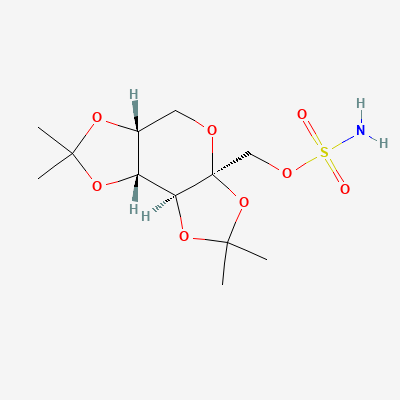
Topiramate

Sulfamate-substituted monosaccharide antiepileptic · Antiepileptic
START
Baseline bicarbonate (metabolic acidosis risk), creatinine, counsel on kidney stone prevention (adequate hydration). Check for history of glaucoma. Verify not pregnant.
TYPICAL MAX
Do not exceed 400mg/day. Dose-related cognitive impairment and paresthesia are common—titrate slowly.
STOP IF
Acute visual changes/myopia (angle-closure glaucoma), severe metabolic acidosis (HCO3- <15), hyperammonemic encephalopathy, SJS/TEN, suicidal ideation.
WATCH
Bicarbonate at baseline and periodically (metabolic acidosis). Weight loss (beneficial for some, concerning for others). Cognitive effects—word-finding difficulty is common. Kidney stones—increase fluid intake. Do not stop abruptly (seizure risk).
CDSCO approvedSchedule HATC N03AX11
Dose laddermg/d
25Start week 150titrate100Migraine target200titrate400Max (epilepsy)
Renal dose adjustmenteGFR mL/min/1.73m²
FULLNo adjustment70REDUCEReduce dose by 50%30REDUCEReduce by 50-75%; exten…10AVOIDAvoid if p…90

KDIGO 2024 + manufacturer label

Pharmacokineticsplasma · t hours
1hONSET2.5hPEAK21h12hDURATION
ONSET
1h · Onset ~1 hour
PEAK
2.5h · Tmax ~2-3 hours
21h · t½ ~21 hours
DURATION
12h · 12 hours (BID)
EXCRETION
Renal unchanged (~70%)
route + CYP
INTERACTIONS
12 major
SEVERE in our sources
PREGNANCY
Teratogenic—dose-dependent risk of oral clefts (cleft lip/palate) and low birth weight. Pregnancy registry data show 1.2-1.4% risk of oral clefts vs 0.4% baseline. Minimum effective dose advised if treatment essential.
FDA category + note
Top interactionssee all 12
  • AcetazolamideSevereDatabaseDDInter
  • AcrivastineSevereDatabaseDDInter
  • AlimemazineSevereDatabaseDDInter
  • AmitriptylineSevereDatabaseDDInter
Available in India

135 branded formulations. Look up specific brands in the Drugs workspace.

Mechanism

Multiple mechanisms: blocks voltage-gated sodium channels, enhances GABA-A receptor activity, inhibits AMPA/kainate glutamate receptors, and weakly inhibits carbonic anhydrase isoenzymes II and IV

Indications

Epilepsy (focal onset and primary generalized tonic-clonic seizures)Lennox-Gastaut syndromeMigraine prophylaxis (adults and adolescents ≥12 years)Weight management (phentermine/topiramate ER—Qsymia)

Dosing

Adult
Epilepsy/migraine: 25mg daily x 1 week, then 25mg BID, then increase by 25-50mg/week to target 100-200mg BID (max 400mg/day). Migraine prophylaxis: titrate to 50mg BID (100mg/day). Titrate slowly to minimize CNS side effects.
Pediatric
≥2 years (epilepsy): 1-3mg/kg/day initially, titrate over 6 weeks to 5-9mg/kg/day BID. ≥12 years (migraine): same as adult dosing.
Renal adjustment
Reduce dose by 50% if CrCl <70; avoid if CrCl <10. Clearance reduced 42% in moderate renal impairment.
Hepatic adjustment
No specific guidance; use caution in severe impairment.
Geriatric
Start at 25mg daily; slower titration; increased risk of cognitive impairment and metabolic acidosis.
Max dose
400mg/day (epilepsy); 200mg/day (migraine prophylaxis)

Pharmacokinetics

Onset
Seizure control: 2-4 weeks; migraine benefit: 4-8 weeks
Peak effect
Tmax 2-3 hours; steady-state in ~4-5 days
Duration
12 hours (BID dosing)
Half-life
~21 hours (adults); ~16 hours (children); shorter with enzyme inducers
Bioavailability
>80%
Protein binding
15-41% (concentration-dependent)
Metabolism
Minimal hepatic metabolism (~30%); primarily excreted unchanged. Not CYP-dependent.
Excretion
~70% unchanged in urine; minimal metabolism

Contraindications

  • Hypersensitivity to topiramate
  • Metabolic acidosis (pregnancy—Qsymia only)
  • Pregnancy (for weight loss indication—Qsymia)
  • Glaucoma (acute secondary angle-closure from ciliochoroidal effusion)

Side effects

Common
Paresthesia (tingling in extremities)Weight loss / anorexiaCognitive slowing / difficulty with concentrationSomnolence / fatigueDizzinessDysgeusia (metallic taste)DiarrheaNephrolithiasis (kidney stones—2-4x increased risk)
Serious
  • Acute myopia and secondary angle-closure glaucoma (ciliochoroidal effusion)
  • Metabolic acidosis (hyperchloremic, non-anion gap)
  • Oligohidrosis and hyperthermia (children)
  • Suicidal ideation
  • Hyperammonemia with encephalopathy (especially with valproate)
  • Stevens-Johnson syndrome
  • Nephrolithiasis

Pregnancy & lactation

Pregnancy

Teratogenic—dose-dependent risk of oral clefts (cleft lip/palate) and low birth weight. Pregnancy registry data show 1.2-1.4% risk of oral clefts vs 0.4% baseline. Minimum effective dose advised if treatment essential.

Lactation

Excreted in breast milk (milk:plasma ratio ~0.6-1.1); infant exposure ~10-20% of maternal dose. Sedation and diarrhea reported in infants. Use with caution during breastfeeding.

Drug interactions

Acetazolamide
Severe
Database

Severe metabolic acidosis, nephrolithiasis.

Avoid combination.

Source: DDInter

Acrivastine
Severe
Database

Drug interaction classified as: synergy

Source: DDInter

Alimemazine
Severe
Database

Drug interaction classified as: synergy

Source: DDInter

Amitriptyline
Severe
Database

Drug interaction classified as: synergy.

Source: DDInter

Amoxapine
Severe
Database

Drug interaction classified as: synergy

Source: DDInter

Aripiprazole
Severe
Database

Drug interaction classified as: synergy.

Source: DDInter

Asenapine
Severe
Database

Drug interaction classified as: synergy

Source: DDInter

Atropine
Severe
Database

Drug interaction classified as: synergy

Source: DDInter

Azatadine
Severe
Database

Drug interaction classified as: synergy

Source: DDInter

Belladonna
Severe
Database

Drug interaction classified as: synergy

Source: DDInter

Benzatropine
Severe
Database

Drug interaction classified as: synergy

Source: DDInter

Biperiden
Severe
Database

Drug interaction classified as: synergy.

Source: DDInter

Related guidelines

Ask House about Topiramate

Continue into a citation-backed clinical answer with the drug context already attached.

Sources: KD Tripathi 7e, Goodman & Gilman 14e, BNF·Verified: 2026-05-19 · House clinical team·Cockpit curated: 2026-05-19