Drug lookup
Drug reference

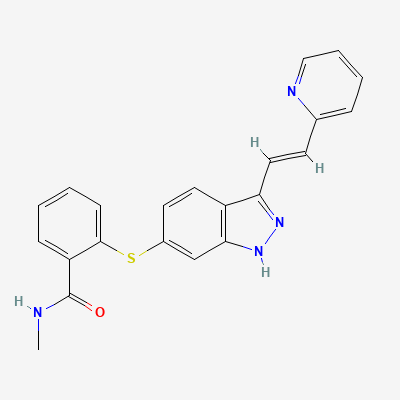
Axitinib

Selective VEGFR tyrosine kinase inhibitor (antineoplastic) · Antineoplastic agent

Also known as Inlyta
START
5 mg PO twice daily; up-titrate to 7 or 10 mg BID if BP/AEs allow
TYPICAL MAX
20 mg/day
STOP IF
Severe BP / hypertensive crisis, thrombotic event, perforation, or hepatotoxicity
WATCH
BP weekly × 6 weeks then monthly, TSH, urine protein, LFTs
CDSCO approvedSchedule HATC L01EK01
Dose laddermg/d
4hepatic/red10standard20max/day
Renal dose adjustmenteGFR mL/min/1.73m²
FULLNo dose adjustment at any eGFR90

KDIGO 2024 + manufacturer label

Pharmacokineticsplasma · t hours
1hONSET3hPEAK4h12hDURATION
ONSET
1h · absorption
PEAK
3h · Tmax
4h ·
DURATION
12h · twice-daily
EXCRETION
Mainly faecal (~41%); ~23% renal
route + CYP
INTERACTIONS
12 major
SEVERE in our sources
PREGNANCY
Can cause fetal harm — avoid; effective contraception during and 1 week after.
FDA category + note
Top interactionssee all 12
  • AmprenavirSevereDatabaseDDInter
  • ApalutamideSevereDatabaseDDInter
  • AtazanavirSevereDatabaseDDInter
  • BoceprevirSevereDatabaseDDInter

Mechanism

Selective ATP-competitive inhibitor of VEGFR-1/2/3 tyrosine kinases, blocking VEGF-mediated tumour angiogenesis; less off-target activity (PDGFR, c-KIT) than first-gen TKIs.

Indications

Advanced renal cell carcinoma (after failure of one prior systemic therapy; or first-line combinations with pembrolizumab/avelumab)

Dosing

Adult
5 mg PO twice daily; titrate after 2 weeks if BP controlled and no AEs to 7 or 10 mg twice daily (max 20 mg/day); reduce for toxicity.
Pediatric
Not established.
Renal adjustment
No adjustment for any eGFR (limited data ESRD).
Hepatic adjustment
Moderate impairment: halve starting dose (2 mg twice daily). Severe: not recommended.
Geriatric
No specific adjustment.
Max dose
20 mg/day (10 mg twice daily)

Pharmacokinetics

Onset
Tumour response over weeks
Peak effect
~2.5–4.1 h (Tmax)
Duration
~12 h (twice-daily)
Half-life
~2.5–6 h
Bioavailability
~58% (food does not significantly affect)
Protein binding
>99%
Metabolism
Hepatic CYP3A4/5 (primary), CYP1A2/2C19 (minor)
Excretion
Mainly faecal (~41%); ~23% renal (metabolites)

Contraindications

  • Severe hypersensitivity
  • Caution: poorly-controlled hypertension, recent CV event, untreated thyroid disease

Side effects

Common
HypertensionDiarrhoeaFatigueHand-foot syndromeHypothyroidismProteinuria
Serious
  • Severe hypertension / hypertensive crisis
  • Arterial / venous thromboembolism
  • Haemorrhage (incl. ICH)
  • GI perforation / fistula
  • Posterior reversible encephalopathy
  • Severe hepatotoxicity

Pregnancy & lactation

Pregnancy

Can cause fetal harm — avoid; effective contraception during and 1 week after.

Lactation

Avoid breastfeeding during and 2 weeks after therapy.

Drug interactions

Amprenavir
Severe
Database

Drug interaction classified as: metabolism

Source: DDInter

Apalutamide
Severe
Database

Drug interaction classified as: metabolism

Source: DDInter

Atazanavir
Severe
Database

Drug interaction classified as: metabolism

Source: DDInter

Boceprevir
Severe
Database

Drug interaction classified as: metabolism

Source: DDInter

Bosentan
Severe
Database

Drug interaction classified as: metabolism

Source: DDInter

Carbamazepine
Severe
Database

Drug interaction classified as: metabolism

Source: DDInter

Cenobamate
Severe
Database

Drug interaction classified as: metabolism

Source: DDInter

Ceritinib
Severe
Database

Drug interaction classified as: metabolism

Source: DDInter

Clarithromycin
Severe
Database

Drug interaction classified as: metabolism

Source: DDInter

Cobicistat
Severe
Database

Drug interaction classified as: metabolism

Source: DDInter

Conivaptan
Severe
Database

Drug interaction classified as: metabolism

Source: DDInter

Dabrafenib
Severe
Database

Drug interaction classified as: metabolism

Source: DDInter

Related guidelines

Ask House about Axitinib

Continue into a citation-backed clinical answer with the drug context already attached.

Sources: Goodman & Gilman 14e, Katzung, BNF·Verified: 2026-05-20 · House clinical team·Cockpit curated: 2026-05-20