Drug lookup
Drug reference

Azithromycin

Macrolide · Antibiotic

Also known as Azithromycin Dihydrate, Zithromax, Azithral, Azee, Zmax
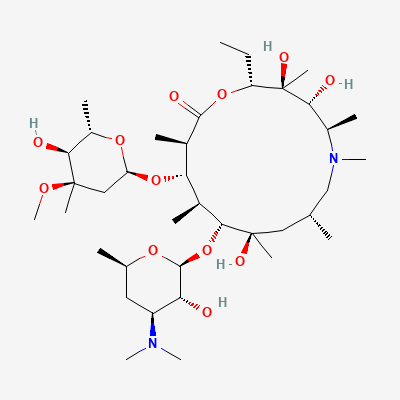
Azithromycin 2D molecular structure
START
500 mg PO once daily × 3 days OR 500 mg D1 then 250 mg D2-5
TYPICAL MAX
1,500 mg total course (CAP / typhoid)
STOP IF
QT prolongation · liver disease
WATCH
QTc · LFTs · hearing
CDSCO approvedSchedule HJan AushadhiATC J01FA10
Dose laddermg/d
250D2-5 follow-up500standard daily1ktitrate2kmax
Renal dose adjustmenteGFR mL/min/1.73m²
FULLNo renal adjustment (predominantly biliary)90

KDIGO 2024 + manufacturer label

Pharmacokineticsplasma · t hours
2hONSET3hPEAK2.8d5dDURATION
ONSET
2h · tissue distribution
PEAK
3h · Cmax plasma
2.8d · terminal t½ (tissue depot)
DURATION
5d · post-dose tissue activity (5 days)
EXCRETION
Biliary unchanged · low CYP involvement
route + CYP
INTERACTIONS
12 major
incl. contraindicated
PREGNANCY
Category B — preferred macrolide in pregnancy
FDA category + note
Top interactionssee all 12
  • CisaprideContraindicatedDatabaseDDInter
  • PimozideContraindicatedDatabaseDDInter
  • AmiodaroneSevereDatabaseDDInter
  • AmisulprideSevereDatabaseDDInter
Available in India

4,455 branded formulations and 703 fixed-dose combinations. Look up specific brands in the Drugs workspace.

Jan Aushadhi — generic available at GoI pharmacies

Mechanism

Azithromycin, a macrolide antibiotic, inhibits bacterial protein synthesis by binding to the 50S ribosomal subunit of susceptible microorganisms. This binding prevents the translocation of peptides, thereby blocking the growth and replication of bacteria. Its prolonged tissue half-life allows for shorter treatment durations and once-daily dosing.

Indications

Community-acquired pneumonia (CAP)Acute bacterial exacerbation of chronic bronchitis (ABECB)Pharyngitis/Tonsillitis (Streptococcus pyogenes)Acute otitis mediaSkin and skin structure infectionsUrethritis and cervicitis (due to Chlamydia trachomatis)Genital ulcer disease (Chancroid)Mycobacterium avium complex (MAC) infection (prophylaxis and treatment)Travellers' diarrhea (off-label)Uncomplicated gonorrhoea (off-label, less preferred due to resistance)Traveler's diarrheamycobacterium avium complex infectiondisseminated mycobacterium avium complex prophylaxis in hivdisseminated mycobacterium avium complex treatmentMild-moderate babesiosis (in combination with atovaquone)Toxoplasmosis (alternative regimen, less effective)conjunctivitisblepharitissuperficial ocular infectionsProphylaxis against Mycobacterium avium complex (MAC) in HIV/AIDS patients with low CD4 countSurgical prophylaxis (for penicillin allergic patients)legionnaires’ pneumoniachlamydia trachomatis (nonspecific urethritis, genital infections, chlamydial pneumonia, trachoma)donovanosis (calymmatobacterium granulomatis)chancroidppng urethritispharyngitistonsillitissinusitisotitis mediapneumoniasacute exacerbations of chronic bronchitisstreptococcal skin and soft tissue infectionsstaphylococcal skin and soft tissue infectionsprophylaxis and treatment of MAC in AIDS patients (in combination with at least one other drug)multidrug resistant typhoid fever (in patients allergic to cephalosporins)toxoplasmosisTreatment of MAC infection in immunocompromized (HIV-AIDS) patientsProphylaxis of MAC infection in HIV-AIDS patientsM. fortuitum infectionM. kansasii infectionM. marinum infectionNongonococcal Urethritis (NGU)Mycoplasma genitalium infection (efficacy declining, especially if resistant)Lymphogranuloma Venereum (LGV) proctitis (alternative therapy)Shigellosis (second-line)Adjunctive antibiotic for patients with moderate or severe dehydration due to choleraChemoprophylaxis for leptospirosisReduced exacerbation frequency and longer time to first exacerbation in subjects with a history of exacerbation in the past 6 months, particularly effective in older patients, former smokers, and milder COPD

Dosing

Adult
For CAP, pharyngitis/tonsillitis, skin/skin structure infections: 500 mg orally once daily for 3 days, or 500 mg orally once on Day 1 followed by 250 mg once daily on Days 2-5. For urethritis/cervicitis (C. trachomatis) or genital ulcer disease (Chancroid): 1 g orally as a single dose.
Pediatric
For Acute Otitis Media: 30 mg/kg orally as a single dose, or 10 mg/kg once daily for 3 days, or 10 mg/kg once daily on Day 1 followed by 5 mg/kg once daily on Days 2-5. For Pharyngitis/Tonsillitis: 12 mg/kg orally once daily for 5 days.
Renal adjustment
No dosage adjustment is necessary for mild to moderate renal impairment (creatinine clearance > 10 mL/min). Data are insufficient for severe renal impairment (creatinine clearance < 10 mL/min), so caution is advised.
Hepatic adjustment
Use with caution in patients with mild to moderate hepatic impairment. Azithromycin is primarily excreted by the liver; therefore, avoid use in severe hepatic impairment due to risk of increased systemic exposure and hepatic dysfunction.
Geriatric
No specific dosage adjustment is recommended for elderly patients. However, caution should be exercised due to potential for QT prolongation and comorbidities, particularly cardiac issues.
Max dose
Typically 500 mg/day orally for multi-day regimens or 1g as a single dose for specific indications. Intravenous maximum doses depend on the indication (e.g., 500 mg IV once daily).

Pharmacokinetics

Onset
Rapid absorption after oral administration.
Peak effect
Oral: 2-3 hours.
Duration
Due to extensive tissue distribution and slow release from tissues, its effects persist for several days after the last dose, enabling short courses of therapy.
Half-life
Terminal elimination half-life is approximately 68-72 hours.
Bioavailability
Approximately 37% (oral suspension/tablet).
Protein binding
Variable, approximately 7% to 50% depending on plasma concentration.
Metabolism
Undergoes minor hepatic metabolism via demethylation; not extensively metabolized by CYP450 enzymes.
Excretion
Primarily excreted unchanged in the bile and feces (major route). A small percentage (<10%) is excreted via urine.

Contraindications

  • Hypersensitivity to azithromycin, erythromycin, any macrolide, or ketolide antibiotic
  • History of cholestatic jaundice/hepatic dysfunction associated with prior azithromycin use
  • Concurrent use with pimozide (due to QT prolongation risk)
  • Severe hepatic impairment
  • Prolonged QTc interval

Side effects

Common
NauseaVomitingDiarrheaAbdominal painHeadacheDizzinessFlatulenceRashGI toxicityOtotoxicityPseudomembranous colitismild gastric upsetHearing lossDevelopment of macrolide-resistant organisms
Serious
  • QT interval prolongation
  • Torsades de Pointes
  • Clostridium difficile-associated diarrhea (CDAD)
  • Hepatotoxicity (including cholestatic jaundice and hepatic failure)
  • Severe allergic reactions (e.g., angioedema, anaphylaxis)
  • Stevens-Johnson syndrome (SJS)
  • Toxic epidermal necrolysis (TEN)
  • Drug Reaction with Eosinophilia and Systemic Symptoms (DRESS) syndrome
  • Exacerbation of myasthenia gravis
  • QT prolongation
  • Sudden death
  • Induction of resistant strains of bacteria
  • QTc interval prolongation (increased risk of death from cardiovascular causes, especially in patients with underlying heart disease)
  • Tinnitus and reversible deafness (especially in elderly)

Pregnancy & lactation

Pregnancy

Category B — preferred macrolide in pregnancy

Lactation

Azithromycin is excreted in human milk. While generally considered compatible, caution should be exercised. Monitor breastfed infants for gastrointestinal side effects (such as diarrhea, vomiting, or feeding intolerance) and candidiasis.

Drug interactions

Cisapride
Contraindicated
Database

No significant change in plasma levels of cisapride is expected.

Caution may be exercised despite unlikelihood of interaction.

Source: DDInter

Pimozide
Contraindicated
Database

Significantly increased risk of severe QT prolongation and Torsades de Pointes (TdP).

Concomitant use is contraindicated. Choose an alternative antibiotic or antipsychotic.

Source: DDInter

Amiodarone
Severe
Database

QT prolongation, arrhythmia risk.

Monitor ECG if combining.

Source: DDInter

Amisulpride
Severe
Database

Drug interaction classified as: synergy

Source: DDInter

Anagrelide
Severe
Database

Drug interaction classified as: synergy

Source: DDInter

Arsenic Trioxide
Severe
Database

Drug interaction classified as: synergy

Source: DDInter

Bedaquiline
Severe
Database

Drug interaction classified as: synergy

Source: DDInter

Bepridil
Severe
Database

Drug interaction classified as: synergy

Source: DDInter

Berotralstat
Severe
Database

Drug interaction classified as: absorption

Source: DDInter

Betrixaban
Severe
Database

Drug interaction classified as: others

Source: DDInter

Cabozantinib
Severe
Database

Drug interaction classified as: synergy

Source: DDInter

Ceritinib
Severe
Database

Drug interaction classified as: synergy

Source: DDInter

Related guidelines

Other Macrolide drugs

Ask House about Azithromycin

Continue into a citation-backed clinical answer with the drug context already attached.

Sources: KD Tripathi 7e, Goodman & Gilman 14e, Harrison 22e, Katzung·Verified: 2026-05-16 · House clinical team·Cockpit curated: 2026-05-16