Drug lookup
Drug reference

Clarithromycin

Macrolide · Antibacterials

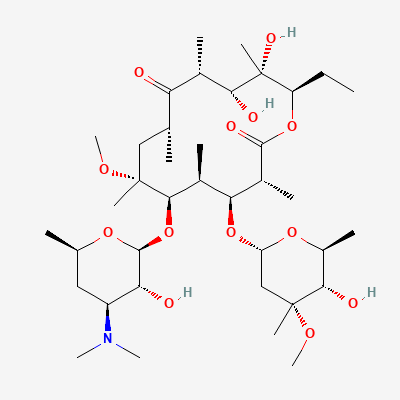
Clarithromycin 2D molecular structure
START
500 mg PO BID × 7-14 days
TYPICAL MAX
1,000 mg/day
STOP IF
QT prolongation · history of cholestatic jaundice · pregnancy
WATCH
QTc · LFTs · CYP3A4 drug interactions
CDSCO approvedSchedule H
Dose laddermg/d
250mild infection500standard BID1kmax
Renal dose adjustmenteGFR mL/min/1.73m²
FULLFull dose30REDUCEReduce 50% (250 mg BID)90

KDIGO 2024 + manufacturer label

Pharmacokineticsplasma · t hours
1hONSET2hPEAK5h12hDURATION
ONSET
1h · tissue distribution
PEAK
2h · Cmax
5h · plasma t½ (parent)
DURATION
12h · BID dosing window
EXCRETION
CYP3A4 hepatic + 30% renal
route + CYP
INTERACTIONS
12 major
incl. contraindicated
PREGNANCY
Category C — avoid first trimester; azithromycin preferred
FDA category + note
Top interactionssee all 12
  • AstemizoleContraindicatedTextbook-citedKDT 7e · p948
  • CisaprideContraindicatedTextbook-citedKDT 7e · p948
  • TerfenadineContraindicatedTextbook-citedKDT 7e · p948
  • CilostazoleContraindicatedTextbookKDT 7e · p555

Mechanism

Clarithromycin binds reversibly to the 23S rRNA component of the bacterial 50S ribosomal subunit, blocking the translocation step of protein synthesis where the elongated peptide is moved from the aminoacyl (A) site to the peptidyl (P) site. This produces primarily bacteriostatic activity against gram-positive cocci, atypical organisms, and H. pylori. Clarithromycin is also a potent inhibitor of cytochrome P450 3A4 (CYP3A4), producing clinically significant drug interactions with substrates such as statins, calcineurin inhibitors, and HIV protease inhibitors.

Indications

Bacterial oral infectionsmycobacterium avium complex infectiondisseminated mycobacterium avium complex prophylaxis in hivdisseminated mycobacterium avium complex treatmentmycobacterium abscessus (in combination)mycobacterium haemophilum (in combination)mycobacterium marinummycobacterium malmoenseH. pylori eradication therapyProphylaxis against Mycobacterium avium complex (MAC) in HIV/AIDS patients with low CD4 countSurgical prophylaxis (for penicillin allergic patients)upper respiratory tract infectionslower respiratory tract infectionssinusitisotitis mediawhooping coughatypical pneumoniaskin infections (due to Strep. pyogenes and some Staph. aureus)skin structure infections (due to Strep. pyogenes and some Staph. aureus)H. pylori eradication (as a component of triple drug regimen)MAC infection in AIDS patients (first line in combination regimens)atypical mycobacterial diseases (second line)leprosy (second line)Treatment of MAC infection in immunocompromized (HIV-AIDS) patientsProphylaxis of MAC infection in HIV-AIDS patientsM. fortuitum infectionM. kansasii infectionM. marinum infectionLeprosy (being included in alternative MDT regimens)

Dosing

Adult
Oral: 250-500 mg BD for 7-14 days. MR: 500 mg OD. IV: 500 mg BD (max 5 days). H. pylori: 500 mg BD for 7 days (triple therapy).
Pediatric
Body weight based: 8-11 kg: 62.5 mg BD. 12-19 kg: 125 mg BD. 20-29 kg: 187.5 mg BD. 30-40 kg: 250 mg BD.
Renal adjustment
Max 1 g daily if CrCl <30 mL/min; halve dose if severe impairment
Hepatic adjustment
Caution in hepatic impairment with renal impairment
Max dose
500 mg BD oral; 500 mg BD IV

Pharmacokinetics

Half-life
3–6 hours at lower doses to 6–9 hours at higher doses
Bioavailability
55 ± 8%
Protein binding
42–50%
Metabolism
Clarithromycin is an inhibitor of CYP3A4/5.
Excretion
36 ± 7%

Contraindications

  • QT prolongation
  • History of ventricular arrhythmias including torsades de pointes
  • Concurrent use with ergot alkaloids

Side effects

Common
Taste disturbanceNauseaVomitingAbdominal painDiarrhoeaHeadachegastric intoleranceDiarrhea
Serious
  • QT prolongation
  • Torsades de pointes
  • Hepatotoxicity
  • Stevens-Johnson syndrome
  • C. difficile colitis
  • reversible hearing loss (high doses)
  • pseudomembranous enterocolitis
  • hepatic dysfunction
  • rhabdomyolysis
  • QTc interval prolongation
  • Exacerbation of myasthenia gravis
  • Tinnitus and reversible deafness (especially in elderly)

Pregnancy & lactation

Pregnancy

Category C — avoid first trimester; azithromycin preferred

Drug interactions

Astemizole
Contraindicated
Textbook-cited

Dangerous ventricular arrhythmia (QT prolongation, torsades de pointes)

Concurrent use is contraindicated

Source: KDT 7e · p948

Cisapride
Contraindicated
Textbook-cited

QT prolongation and ventricular arrhythmia

Concurrent use is contraindicated

Source: KDT 7e · p948

Terfenadine
Contraindicated
Textbook-cited

Dangerous ventricular arrhythmia (QT prolongation, torsades de pointes)

Concurrent use is contraindicated

Source: KDT 7e · p948

Cilostazole
Contraindicated
Textbook

Increased plasma levels and toxicity of cilostazole.

Should not be administered along with inhibitors of CYP3A4.

Source: KDT 7e · p555

Colchicine
Contraindicated
Database

Life-threatening toxicities of colchicine.

The drug is contraindicated in patients with hepatic or renal impairment requiring concomitant therapy with CYP3A4 inhibitors.

Source: DDInter

Domperidone
Contraindicated
Database

Increased domperidone plasma levels, leading to increased risk of QT prolongation and Torsades de Pointes (TdP)

Concomitant use is contraindicated. Avoid co-administration.

Ergotamine
Contraindicated
Database

Ergotism: severe peripheral vasospasm, ischemia of extremities, gangrene

Absolutely contraindicated. Use alternative antibiotic or alternative migraine therapy

Source: DDInter

Pimozide
Contraindicated
Database

Cardiac arrhythmias may occur.

Never combine.

Source: DDInter

Silodosin
Contraindicated
Database

Significantly increased plasma concentrations of silodosin, leading to an increased risk of orthostatic hypotension and other dose-dependent adverse effects.

Concomitant use is contraindicated. An alternative alpha-blocker or antibiotic should be considered.

Source: DDInter

Atorvastatin
Severe
Textbook-cited

Increased risk of rhabdomyolysis and myopathy.

Avoid concurrent use; if needed, use lowest statin dose

Source: KDT 7e · p948

Carbamazepine
Severe
Textbook-cited

Carbamazepine toxicity (diplopia, ataxia, drowsiness).

Avoid concurrent use or adjust dose with monitoring

Source: KDT 7e · p948

Cyclosporine
Severe
Textbook-cited

Nephrotoxicity and immunosuppression toxicity.

Monitor cyclosporine levels and reduce dose

Source: KDT 7e · p948

Related guidelines

Other Macrolide drugs

Ask House about Clarithromycin

Continue into a citation-backed clinical answer with the drug context already attached.

Sources: KD Tripathi 7e, Goodman & Gilman 14e, Harrison 22e, BNF·Verified: 2026-05-16 · House clinical team·Cockpit curated: 2026-05-16