Drug lookup
Drug reference

Digoxin

Cardiac Glycoside · Cardiac

Also known as Lanoxin, Digitalis
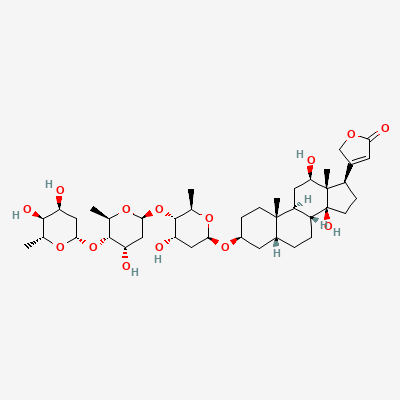
Digoxin 2D molecular structure
START
0.125-0.25 mg PO once daily (loading 0.5 mg then 0.25 q6h ×2 if rate-control urgent)
TYPICAL MAX
0.25 mg/day chronic (0.0625-0.125 if CKD/elderly/<60 kg)
STOP IF
Toxicity (serum >2 ng/mL or symptoms) · 2°-3° AV block without pacing · WPW with AF
WATCH
Level (target 0.5-0.9 ng/mL) · K⁺ · Mg²⁺ · creatinine · GI/visual symptoms
CDSCO approvedSchedule HNPPA price-controlledATC C01AA05
Dose laddermg/d
0.063elderly / CKD0.125standard adult0.25max chronic0.5ceiling
Renal dose adjustmenteGFR mL/min/1.73m²
FULL0.125-0.25 mg daily60REDUCE0.125 mg daily30REDUCE0.0625 mg daily or alternate days; ch…90

KDIGO 2024 + manufacturer label

Pharmacokineticsplasma · t hours
1hONSET4hPEAK1.5d4dDURATION
ONSET
1h · PO onset (IV: 30 min)
PEAK
4h · Cmax (rate-control peak 1-6h IV)
1.5d · plasma t½ (longer in CKD)
DURATION
4d · effect window after dose change
EXCRETION
60-80% renal unchanged · narrow therapeutic index
route + CYP
INTERACTIONS
12 major
SEVERE in our sources
PREGNANCY
Category C — used for fetal SVT; otherwise crosses placenta freely
FDA category + note
Top interactionssee all 12
  • FurosemideSevereTextbook-citedKDT 7e · p949
  • HydrochlorothiazideSevereTextbook-citedKDT 7e · p949
  • SpironolactoneSevereTextbook-citedKDT 7e · p949
  • Adrenergic DrugsSevereTextbookKDT 7e · p517
Available in India

20 branded formulations. Look up specific brands in the Drugs workspace.

Mechanism

Digoxin inhibits the Na+/K+-ATPase pump in myocardial cells, leading to increased intracellular sodium. This in turn reduces the activity of the Na+/Ca++ exchanger, increasing intracellular calcium concentration. The elevated calcium enhances myocardial contractility (positive inotropy) and prolongs the effective refractory period of the AV node, thus slowing ventricular rate in atrial fibrillation. It also increases vagal tone.

Indications

Heart Failure with reduced ejection fraction (HFrEF)Atrial Fibrillation with rapid ventricular response (rate control)heart failureatrial fibrillationTerminating reentrant arrhythmias involving the AV nodeControlling ventricular response in atrial fibrillationcongestive heart failure (CHF)control of ventricular rate in atrial fibrillation/flutteratrial flutter (AFl)paroxysmal supraventricular tachycardia (PSVT)Control of ventricular rate in atrial fibrillation (AF)Control of ventricular rate in atrial flutter (AFl)Control of ventricular rate in paroxysmal supraventricular tachycardia (PSVT)

Dosing

Adult
Digitalization (Rapid): 0.25-0.5 mg IV/oral loading dose, followed by 0.125-0.25 mg every 6-8 hours until desired effect (total 0.75-1.5 mg over 24 hours). Maintenance: 0.125-0.25 mg orally once daily, adjusted based on clinical response and serum levels (target 0.5-2 ng/mL).
Pediatric
Neonates: 10-30 mcg/kg oral loading dose (split over 24h); maintenance 5-10 mcg/kg/day. Infants (1 month-2 years): 30-50 mcg/kg oral loading; maintenance 10-15 mcg/kg/day. Children (>2 years): 20-35 mcg/kg oral loading; maintenance 5-10 mcg/kg/day. Doses are total cumulative for loading, given in divided doses over 24 hours, followed by daily maintenance. Adjust based on clinical response.
Renal adjustment
Critically important. Reduce dose or frequency based on creatinine clearance (CrCl). For CrCl 10-50 mL/min, administer 25-75% of usual dose or extend dosing interval. For CrCl <10 mL/min, administer 10-25% of usual dose or extend interval significantly (e.g., every 3-5 days). Monitor serum levels closely.
Hepatic adjustment
No dosage adjustment is typically required as hepatic metabolism is minimal.
Geriatric
Start with lower doses (e.g., 0.0625-0.125 mg daily) due to age-related decline in renal function and increased sensitivity. Monitor closely for toxicity.
Max dose
Not a strict maximum dose; doses rarely exceed 0.25 mg daily for maintenance in adults with normal renal function, aiming for a therapeutic serum level of 0.5-2 ng/mL.

Pharmacokinetics

Onset
IV: 5-30 minutes; Oral: 0.5-2 hours
Peak effect
IV: 1-4 hours; Oral: 2-8 hours
Duration
3-4 days
Half-life
36-48 hours (prolonged in renal impairment)
Bioavailability
Tablet: 60-80%; Elixir/Capsule: 90-100%
Protein binding
Approximately 20-30%
Metabolism
Minimal hepatic metabolism (less than 15%), primarily via gut flora
Excretion
Primarily renal (60-80% unchanged), some biliary

Contraindications

  • Ventricular fibrillation
  • Hypersensitivity to digoxin or other digitalis preparations
  • Ventricular tachycardia (unless due to congestive heart failure)
  • Second- or third-degree AV block (without a pacemaker)
  • Hypertrophic obstructive cardiomyopathy (HOCM) unless to treat atrial fibrillation and severe CHF
  • Wolff-Parkinson-White syndrome with atrial fibrillation (risk of accelerated conduction down accessory pathway)
  • Sinus or AV node dysfunction
  • Wolff-Parkinson-White syndrome (risk of extremely rapid rate if atrial fibrillation develops)
  • Aged are relatively intolerant
  • Do not give full loading dose if patient received within past week
  • hypokalemia
  • myocardial ischaemia
  • thyrotoxicosis
  • ventricular tachycardia
  • partial A-V block
  • acute myocarditis (diphtheria, acute rheumatic carditis, toxic carditis)
  • wolff-parkinson-white syndrome

Side effects

Common
NauseaVomitingDiarrheaAnorexiaHeadacheFatigueWeaknessDizzinessBlurred visionYellow/green vision (xanthopsia)visual disturbances (altered color perception, coronas)sleeplessnessDisturbances of cognitive functionBlurred or yellow visionabdominal painmalaisemental confusionrestlessnesshyperapnoeadisorientationpsychosisvisual disturbancesskin rashes (rare)gynaecomastia (rare)
Serious
  • Cardiac arrhythmias (e.g., severe bradycardia, AV block, ventricular ectopy, ventricular tachycardia/fibrillation)
  • Severe GI disturbances (abdominal pain, mesenteric ischemia)
  • Neurological disturbances (confusion, delirium, hallucinations, seizures)
  • Thrombocytopenia
  • Gynecomastia (rare, chronic use)
  • arrhythmias (ventricular extrasystoles, bigeminy, ventricular tachycardia, fibrillation, extreme bradycardia, AV block)
  • mesenteric artery ischemia or occlusion (rare but severe)
  • Arrhythmias (DAD-related tachycardias with sinus/AV node impairment, atrial tachycardia with AV block, ventricular bigeminy, AV junctional tachycardias, various degrees of AV block)
  • Severe hyperkalemia (with severe intoxication/overdose)
  • Precipitation of ventricular fibrillation by DC cardioversion (if elevated serum levels)
  • Mesenteric ischemia (due to direct arterial vasoconstriction with IV drug)
  • Coronary ischemia (due to direct arterial vasoconstriction with IV drug)
  • arrhythmic action (in hyperthyroid patients)
  • increased sensitivity (in hypothyroid patients)
  • increased sensitivity (in decompensated heart)
  • cardiac arrhythmias (in myocardial infarction patients)
  • complete A-V block (toxic effect)
  • pulsus bigeminus
  • nodal and ventricular extrasystoles
  • ventricular tachycardia
  • ventricular fibrillation
  • partial to complete A-V block
  • severe bradycardia
  • atrial extrasystoles
  • atrial fibrillation (AF)
  • atrial flutter (AFl)

Pregnancy & lactation

Pregnancy

Category C — used for fetal SVT; otherwise crosses placenta freely

Lactation

Digoxin is excreted into breast milk in small amounts. Generally considered compatible with breastfeeding, but monitor the infant for signs of toxicity (e.g., bradycardia, vomiting).

Drug interactions

Furosemide
Severe
Textbook-cited

Digoxin toxicity (arrhythmias, nausea, visual disturbances).

Co-prescribe potassium-sparing diuretic or potassium supplements

Source: KDT 7e · p949

Hydrochlorothiazide
Severe
Textbook-cited

Digoxin toxicity (arrhythmias, nausea, visual disturbances).

Co-prescribe potassium-sparing diuretic or potassium supplements

Source: KDT 7e · p949

Spironolactone
Severe
Textbook-cited

Digoxin toxicity (arrhythmias, nausea, visual disturbances).

Co-prescribe potassium-sparing diuretic or potassium supplements

Source: KDT 7e · p949

Adrenergic Drugs
Severe
Textbook

can induce arrhythmias

not specified

Source: KDT 7e · p517

Azoles
Severe
Textbook

Increased plasma levels of digoxin.

Source: Harrison 22e · p1742

Phenobarbitone
Severe
Textbook

Reduced oral bioavailability of digoxin.

Source: KDT 7e · p15

Adenosine
Severe
Database

Drug interaction classified as: synergy.

Source: DDInter

Amiodarone
Severe
Database

P-gp inhibition → doubled digoxin levels/toxicity

Halve digoxin dose; monitor levels

Source: Kimi deep-research + Cla

Amphotericin B
Severe
Database

Amphotericin hypokalaemia potentiates digoxin toxicity

Monitor K+ and digoxin; replete potassium

Source: Kimi deep-research + Cla

Arbutamine
Severe
Database

Drug interaction classified as: antagonism

Source: DDInter

Atazanavir
Severe
Database

Drug interaction classified as: synergy

Source: DDInter

Calcium Chloride
Severe
Database

Drug interaction classified as: synergy.

Source: DDInter

Related guidelines

Ask House about Digoxin

Continue into a citation-backed clinical answer with the drug context already attached.

Sources: KD Tripathi 7e, Goodman & Gilman 14e, Katzung, BNF·Verified: 2026-05-16 · House clinical team·Cockpit curated: 2026-05-16