Drug lookup
Drug reference

Ivabradine

Hyperpolarization-activated cyclic nucleotide-gated (HCN) channel blocker (If inhibitor) · Antihypertensive

Also known as Corlanor, Procoralan, Ivanode, Ivabrad
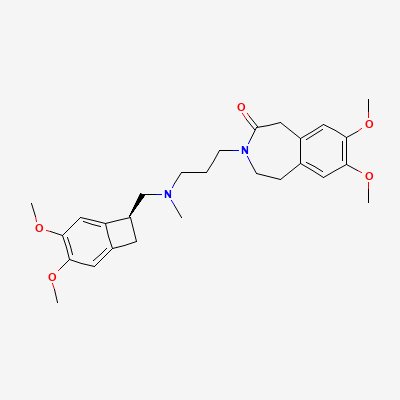
START
Confirm sinus rhythm, resting HR ≥70 bpm. Baseline ECG. Verify no CYP3A4 inhibitors. Counsel on phosphenes (usually mild, transient, not dangerous).
TYPICAL MAX
7.5mg BID. Do not use if HR <50 bpm at rest. If AF develops, consider discontinuing.
STOP IF
Resting HR <50 bpm or symptomatic bradycardia, new AF, second-degree AV block, severe visual disturbances, pregnancy.
WATCH
Resting HR at each visit (target 50-60 bpm). ECG if symptoms. Phosphenes are common but usually transient and harmless—reassure patients. AF risk increased by ~10%—monitor rhythm. Take WITH food (increases bioavailability).
CDSCO approvedATC C01EB17
Dose laddermg/d
2.5start5titrate7.5Max BID
Renal dose adjustmenteGFR mL/min/1.73m²
FULLNo adjustment15FULLNo adjustment (h…90

KDIGO 2024 + manufacturer label

Pharmacokineticsplasma · t hours
30minONSET1hPEAK11h12hDURATION
ONSET
30min · Onset ~30 min
PEAK
1h · Tmax ~1 hour
11h · Effective t½ ~11 hours
DURATION
12h · 12 hours (BID)
EXCRETION
Fecal as metabolites (~66%)
route + CYP
INTERACTIONS
12 major
incl. contraindicated
PREGNANCY
Contraindicated in pregnancy—animal studies show embryotoxicity and teratogenicity at high doses. Effective contraception required.
FDA category + note
Top interactionssee all 12
  • LopinavirContraindicatedTextbookKDT 7e · p554
  • Q T Prolonging DrugsContraindicatedTextbookKDT 7e · p554
  • Strong Cyp3a4 InhibitorsContraindicatedDatabaseKimi deep-research + Cla
  • AbarelixSevereDatabaseDDInter
Available in India

86 branded formulations and 15 fixed-dose combinations. Look up specific brands in the Drugs workspace.

Mechanism

Selectively inhibits the If ('funny') current in sinoatrial node cells, slowing the rate of spontaneous diastolic depolarization and reducing heart rate without affecting myocardial contractility, blood pressure, or intracardiac conduction. Pure heart rate reduction.

Indications

Chronic stable angina (in patients with normal sinus rhythm, intolerant or contraindicated to beta-blockers)Chronic heart failure with reduced ejection fraction (HFrEF, NYHA II-IV, sinus rhythm, HR ≥70 bpm, on maximally tolerated beta-blocker)Heart failure with preserved ejection fraction (off-label, limited evidence)

Dosing

Adult
5mg PO BID with meals initially; after 2 weeks, adjust to 7.5mg BID if resting HR >60 bpm and tolerated; reduce to 2.5mg BID if HR 50-60 bpm or bradycardia symptoms. Target resting HR 50-60 bpm.
Pediatric
Not approved in children.
Renal adjustment
No adjustment needed (hepatically metabolized).
Hepatic adjustment
Mild-moderate: no adjustment. Severe (Child-Pugh C): contraindicated.
Geriatric
Start 2.5mg BID; monitor for bradycardia and visual symptoms.
Max dose
7.5mg BID (15mg/day)

Pharmacokinetics

Onset
Heart rate reduction within hours
Peak effect
Tmax ~1 hour (fasted); steady-state in 2-3 days
Duration
12 hours (BID dosing)
Half-life
~2 hours (parent); ~6 hours (active metabolite, S18982); effective half-life ~11 hours
Bioavailability
~40% (food increases bioavailability)
Protein binding
~70%
Metabolism
Extensive hepatic via CYP3A4 (major) and oxidation; active metabolite S18982 contributes ~40% of activity
Excretion
~4% unchanged in urine; ~66% fecal (metabolites); remainder renal

Contraindications

  • Acute decompensated heart failure
  • Severe hepatic impairment (Child-Pugh C)
  • Sick sinus syndrome or sinoatrial block
  • Second or third-degree AV block without pacemaker
  • Resting heart rate <60 bpm before treatment
  • Concomitant strong CYP3A4 inhibitors
  • Pregnancy and breastfeeding
  • Acute cerebrovascular event

Side effects

Common
Luminous phenomena / phosphenes (transient brightness in visual field—~15%, dose-dependent, reversible)BradycardiaAtrial fibrillation (new onset or conversion—~10% increased risk)HeadacheDizziness
Serious
  • Severe bradycardia (<40 bpm)
  • Atrial fibrillation
  • Sinoatrial block
  • Ventricular arrhythmias
  • Severe visual disturbances

Pregnancy & lactation

Pregnancy

Contraindicated in pregnancy—animal studies show embryotoxicity and teratogenicity at high doses. Effective contraception required.

Lactation

Excreted in breast milk; contraindicated during breastfeeding.

Drug interactions

Lopinavir
Contraindicated
Textbook

Increased plasma levels and toxicity of ivabradine, leading to excessive bradycardia and other adverse effects.

Concurrent use of drugs which inhibit CYP3A4 is contraindicated.

Source: KDT 7e · p554

Q T Prolonging Drugs
Contraindicated
Textbook

Increased risk of Q-T prolongation and arrhythmias.

Concurrent use of drugs which prolong Q-T is contraindicated.

Source: KDT 7e · p554

Strong Cyp3a4 Inhibitors
Contraindicated
Database

Markedly increases ivabradine levels (~2-3 fold), causing severe bradycardia and heart block.

Contraindicated. Avoid grapefruit juice during treatment.

Source: Kimi deep-research + Cla

Abarelix
Severe
Database

Drug interaction classified as: synergy

Source: DDInter

Abiraterone
Severe
Database

Drug interaction classified as: synergy

Source: DDInter

Alfuzosin
Severe
Database

Drug interaction classified as: synergy

Source: DDInter

Alimemazine
Severe
Database

Drug interaction classified as: synergy

Source: DDInter

Amiodarone
Severe
Database

Drug interaction classified as: synergy

Source: DDInter

Amisulpride
Severe
Database

Drug interaction classified as: synergy

Source: DDInter

Amitriptyline
Severe
Database

Drug interaction classified as: synergy

Source: DDInter

Amoxapine
Severe
Database

Drug interaction classified as: synergy

Source: DDInter

Amprenavir
Severe
Database

Drug interaction classified as: metabolism

Source: DDInter

Related guidelines

Ask House about Ivabradine

Continue into a citation-backed clinical answer with the drug context already attached.

Sources: KD Tripathi 7e, Goodman & Gilman 14e, Harrison 22e, Katzung·Verified: 2026-05-19 · House clinical team·Cockpit curated: 2026-05-19