Drug lookup
Drug reference

Rabeprazole

Proton Pump Inhibitor · Antiulcer

Also known as Rabeprazole sodium, Aciphex, Pariet

START
20 mg PO once daily (most indications); 10 mg once daily for pediatric GERD
TYPICAL MAX
60 mg/dose (ZES); 120 mg/day (ZES only)
STOP IF
Severe hypersensitivity (anaphylaxis, SJS/TEN, DRESS), acute interstitial nephritis (rise in creatinine with rash/eosinophilia), C. difficile infection, magnesium <1.5 mg/dL on long-term therapy; avoid in severe hepatic impairment (Child-Pugh C)
WATCH
Magnesium levels (if on therapy >3 months), vitamin B12 (if >3 years), bone health/fracture risk (if long-term), INR if on warfarin, clopidogrel antiplatelet effect (CYP2C19 competition), signs of C. difficile
CDSCO approvedSchedule HJan AushadhiATC A02BC04
Dose laddermg/d
10start20titrate40titrate60titrate120ceiling
Renal dose adjustmenteGFR mL/min/1.73m²
FULLFull dose — no renal adjustment needed90

KDIGO 2024 + manufacturer label

Pharmacokineticsplasma · t hours
1hONSET3.5hPEAK1.5h1dDURATION
ONSET
1h · 1 h (antisecretory effect begins)
PEAK
3.5h · 2-5 h (plasma Cmax); 1-2 h (acid suppression)
1.5h · 1-2 h (plasma); prolonged antisecretory effect via irreversible binding
DURATION
1d · 24 h (once-daily dosing; irreversible pump inhibition)
EXCRETION
~90% renal as metabolites; no unchanged drug
route + CYP
INTERACTIONS
12 major
incl. contraindicated
PREGNANCY
Limited human data; no evidence of fetal harm in animal studies at clinically relevant doses. Use only if clearly needed and benefits outweigh risks. PPIs are generally considered safe in pregnancy when indicated.
FDA category + note
Top interactionssee all 12
  • RilpivirineContraindicatedDatabaseKimi deep-research + Cla
  • AcalabrutinibSevereDatabaseDDInter
  • AtazanavirSevereDatabaseKimi deep-research + Cla
  • ClopidogrelSevereDatabaseKimi deep-research + Cla
Available in India

2,120 branded formulations and 4,837 fixed-dose combinations. Look up specific brands in the Drugs workspace.

Jan Aushadhi — generic available at GoI pharmacies

Mechanism

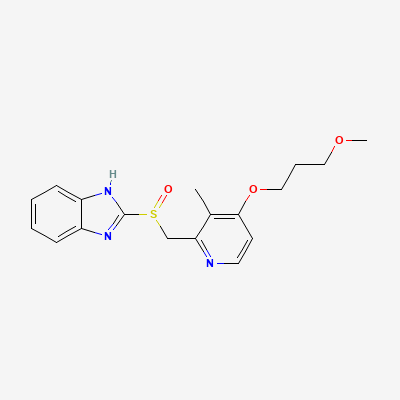
Rabeprazole is a substituted benzimidazole proton pump inhibitor (PPI) that irreversibly inhibits the H+/K+-ATPase (proton pump) at the secretory surface of gastric parietal cells. This blocks the final step of acid production, producing profound and long-lasting inhibition of gastric acid secretion regardless of stimulus. It requires acid-catalyzed activation to form a sulfenamide that covalently binds the pump.

Indications

Healing of erosive or ulcerative gastroesophageal reflux disease (GERD)Maintenance of healing of erosive or ulcerative GERDTreatment of symptomatic GERDHealing of duodenal ulcersHealing of gastric ulcersHelicobacter pylori eradication (in combination with amoxicillin and clarithromycin)Treatment of pathological hypersecretory conditions including Zollinger-Ellison syndromeNSAID-associated gastric ulcers (prevention and treatment)Short-term treatment of symptomatic GERD in adolescent patients 12 years of age and older

Dosing

Adult
GERD (erosive/ulcerative): 20 mg orally once daily for 4-8 weeks. Maintenance: 10-20 mg once daily. Duodenal ulcer: 20 mg once daily for 4 weeks. Gastric ulcer: 20 mg once daily for 6-8 weeks. H. pylori eradication: 20 mg BID for 7-14 days with amoxicillin + clarithromycin. Zollinger-Ellison syndrome: 60 mg once daily; titrate up to 100 mg/day or 60 mg BID if needed. GERD (symptomatic): 10-20 mg once daily for 4 weeks.
Pediatric
GERD (1-11 years): 10 mg orally once daily for up to 12 weeks. GERD (≥12 years): 20 mg orally once daily for up to 8 weeks.
Renal adjustment
No dosage adjustment necessary for renal impairment.
Hepatic adjustment
Mild–moderate impairment (Child-Pugh A/B): no dose adjustment. Severe impairment (Child-Pugh C): AVOID — no pharmacokinetic data; FDA label advises against use.
Geriatric
No specific dosage adjustment recommended based on age alone. Monitor for potential decreased hepatic function and polypharmacy interactions (especially clopidogrel, warfarin).
Max dose
60 mg/dose (Zollinger-Ellison); 120 mg/day (Zollinger-Ellison only, as 60 mg BID)

Pharmacokinetics

Onset
Antisecretory effect begins within 1 hour of oral administration; peak inhibition of gastric acidity within 1-2 hours.
Peak effect
2-5 hours (plasma Cmax); maximum acid suppression within 1-2 hours of first dose.
Duration
24-48 hours (due to irreversible pump binding; new pump synthesis required for acid recovery).
Half-life
1-2 hours (plasma elimination half-life of rabeprazole); 1.5 hours mean. Despite short plasma half-life, antisecretory effect persists much longer due to irreversible binding to H+/K+-ATPase.
Bioavailability
Approximately 52% (oral; increases to ~65% with repeated dosing). Absolute bioavailability is ~52% for a 20 mg oral tablet compared to IV.
Protein binding
96.3% bound to human plasma proteins (primarily albumin).
Metabolism
Extensive hepatic metabolism via two pathways: (1) non-enzymatic reduction to thioether (major), and (2) CYP2C19 (to desmethyl rabeprazole) and CYP3A4 (to rabeprazole sulfone). CYP2C19 poor metabolizers (especially Asians, 17-20%) show ~2-fold higher AUC. Thioether and sulfone metabolites are inactive.
Excretion
Approximately 90% excreted in urine (primarily as thioether carboxylic acid, glucuronide, and mercapturic acid metabolites); remainder in feces. No unchanged rabeprazole recovered in urine or feces.

Contraindications

  • Hypersensitivity to rabeprazole, other substituted benzimidazoles, or any component of the formulation
  • Patients receiving rilpivirine-containing products (reduced absorption due to increased gastric pH)
  • Concomitant use with products containing dasatinib, nilotinib, or pazopanib (reduced absorption due to increased gastric pH)
  • Hypersensitivity reactions may include anaphylaxis, anaphylactic shock, angioedema, bronchospasm, acute tubulointerstitial nephritis, and urticaria

Side effects

Common
HeadacheDiarrheaNauseaAbdominal painFlatulenceConstipationVomitingPharyngitisAstheniaInfection
Serious
  • Clostridioides difficile-associated diarrhea (CDAD)
  • Acute interstitial nephritis (AIN)
  • Bone fracture (osteoporosis-related: hip, wrist, spine) with long-term use
  • Hypomagnesemia with serious events (tetany, arrhythmias, seizures) with long-term use
  • Vitamin B12 deficiency with long-term use (>3 years)
  • Cutaneous and systemic lupus erythematosus
  • Severe cutaneous adverse reactions (Stevens-Johnson syndrome, toxic epidermal necrolysis, DRESS, AGEP)
  • Gastric fundic gland polyps (with long-term use)
  • Cyanocobalamin (vitamin B12) deficiency
  • Anaphylaxis and angioedema

Pregnancy & lactation

Pregnancy

Limited human data; no evidence of fetal harm in animal studies at clinically relevant doses. Use only if clearly needed and benefits outweigh risks. PPIs are generally considered safe in pregnancy when indicated.

Lactation

Excreted in rat milk; it is not known whether rabeprazole is excreted in human milk. Caution should be exercised when administering to a nursing woman. Consider the benefit of the drug to the mother versus potential risk to the infant.

Drug interactions

Rilpivirine
Contraindicated
Database

Rabeprazole increases gastric pH, which significantly reduces the solubility and absorption of rilpivirine (an HIV NNRTI that requires acidic pH for dissolution). Coadministration results in subtherapeutic rilpivirine plasma concentrations and risk of virologic failure and resistance.

CONTRAINDICATED. Do not coadminister. If PPI therapy is essential, consider alternative antiretroviral regimen (e.g., efavirenz- or dolutegravir-based).

Source: Kimi deep-research + Cla

Acalabrutinib
Severe
Database

Drug interaction classified as: absorption

Source: DDInter

Atazanavir
Severe
Database

Rabeprazole increases gastric pH, which reduces the solubility and absorption of atazanavir (a protease inhibitor that requires acidic conditions for dissolution). Results in subtherapeutic atazanavir concentrations and risk of virologic failure.

Avoid coadministration. If PPI is essential, use atazanavir 400 mg with ritonavir 100 mg once daily (but not recommended with rabeprazole >20 mg/day). Consider alternative antiretroviral or H2-blocker.

Source: Kimi deep-research + Cla

Clopidogrel
Severe
Database

Rabeprazole competitively inhibits CYP2C19, which is required to convert clopidogrel (a prodrug) to its active metabolite. This reduces antiplatelet effect and increases risk of cardiovascular events (MI, stent thrombosis).

Avoid combination if possible. If PPI is essential in a patient on dual antiplatelet therapy, consider pantoprazole (weakest CYP2C19 inhibitor among PPIs) at the lowest effective dose, or use an H2-blocker (e.g., famotidine) instead.

Source: Kimi deep-research + Cla

Dacomitinib
Severe
Database

Clinical effect not specified

Source: DDInter
Dasatinib
Severe
Database

Clinical effect not specified

Source: DDInter

Erlotinib
Severe
Database

Reduced plasma levels and potentially reduced efficacy of erlotinib.

Source: DDInter

Methotrexate
Severe
Database

PPIs may reduce renal clearance of methotrexate and/or displace it from protein binding, leading to increased methotrexate plasma concentrations and toxicity (bone marrow suppression, mucositis, renal failure).

Avoid PPIs in patients receiving high-dose methotrexate (≥15 mg/week). If unavoidable, monitor methotrexate levels closely, ensure adequate hydration, and consider leucovorin rescue. Use H2-blocker as alternative acid suppression.

Source: Kimi deep-research + Cla

Nelfinavir
Severe
Database

Significantly reduced plasma concentrations of nelfinavir, leading to loss of antiviral efficacy and potential development of drug resistance.

Concomitant use is generally not recommended. If a PPI is essential, consider alternative antiretroviral agents.

Source: DDInter

Neratinib
Severe
Database

Clinical effect not specified

Source: DDInter

Pazopanib
Severe
Database

Clinical effect not specified

Source: DDInter

Pexidartinib
Severe
Database

Clinical effect not specified

Source: DDInter

Related guidelines

Other Proton Pump Inhibitor drugs

Ask House about Rabeprazole

Continue into a citation-backed clinical answer with the drug context already attached.

Sources: KD Tripathi 7e, Goodman & Gilman 14e, Katzung, BNF·Verified: 2026-05-18 · House clinical team·Cockpit curated: 2026-05-18