Drug lookup
Drug reference

Tramadol

Opioid Analgesic · Analgesic

Also known as Tramadol hydrochloride, Ultram, Tramal, ConZip, Rybix ODT
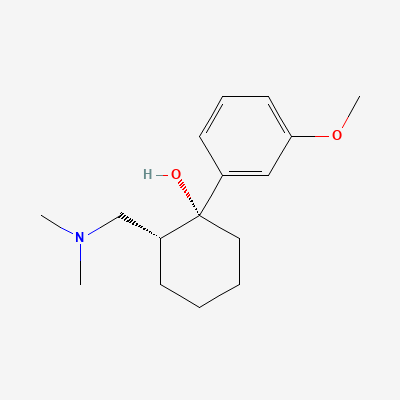
START
Confirm moderate-severe pain; screen for seizure history, serotonergic medications, renal/hepatic impairment, substance abuse history. Start 25 mg PO daily; titrate every 3 days.
TYPICAL MAX
400 mg/day (IR); 300 mg/day (ER). Reduce to 200 mg/day if CrCl <30. Do NOT exceed 400 mg/day (seizure threshold lowered).
STOP IF
Seizures, signs of serotonin syndrome (agitation, hyperthermia, clonus, autonomic instability), respiratory depression, severe hypersensitivity, lack of efficacy after 4 weeks
WATCH
Pain scores, sedation level, bowel function (constipation), seizure threshold (especially with SSRIs/SNRIs), renal function, signs of dependence/abuse. CYP2D6 phenotype if available (Asian populations have high frequency of intermediate metabolizers).
CDSCO approvedSchedule HJan AushadhiATC N02AX02
Dose laddermg/d
25start100titrate200titrate400ceiling
Renal dose adjustmenteGFR mL/min/1.73m²
FULLFull dose: 50-100 mg q4-6h PRN; max 400 mg/day30REDUCEIncrease interval to q12h; max 200 m…90

KDIGO 2024 + manufacturer label

Pharmacokineticsplasma · t hours
1hONSET2hPEAK6.5h6hDURATION
ONSET
1h · 30-60 min (analgesic onset)
PEAK
2h · 2 h (tramadol); 3 h (M1 metabolite)
6.5h · 6.3 h (tramadol); 7.4 h (M1)
DURATION
6h · 4-6 h (IR); 24 h (ER)
EXCRETION
~30% renal unchanged; 60% renal as metabolites
route + CYP
INTERACTIONS
12 major
incl. contraindicated
PREGNANCY
FDA PLLR: Can cause fetal harm and neonatal opioid withdrawal syndrome if used during pregnancy. Use only if benefit clearly outweighs risk. Avoid near term (risk of respiratory depression in newborn). Not recommended for prolonged use during pregnancy.
FDA category + note
Top interactionssee all 12
  • PhenelzineContraindicatedDatabaseDDInter
  • SelegilineContraindicatedDatabaseDDInter
  • Mao InhibitorsContraindicatedDatabaseKimi deep-research + Cla
  • AlcoholSevereDatabase
Available in India

591 branded formulations and 744 fixed-dose combinations. Look up specific brands in the Drugs workspace.

Jan Aushadhi — generic available at GoI pharmacies

Mechanism

Tramadol is a centrally-acting synthetic opioid analgesic with a dual mechanism of action. The (+)-enantiomer and its O-desmethyl metabolite (M1) are mu-opioid receptor (MOR) agonists with approximately 6000-fold lower affinity than morphine. Additionally, (+)-tramadol inhibits serotonin (5-HT) reuptake and (-)-tramadol inhibits norepinephrine (NE) reuptake. These complementary monoaminergic and opioid pathways produce synergistic analgesia for moderate to moderately severe pain. The M1 metabolite is 200-300 times more potent at MOR than parent tramadol and has a longer half-life (7.4 hours vs 6.3 hours).

Indications

Moderate to moderately severe pain in adultsAcute pain (postoperative, trauma)Chronic pain (osteoarthritis, low back pain, neuropathic pain — off-label but widely used)Cancer pain (as step 2 on WHO analgesic ladder)Fibromyalgia (off-label)Premature ejaculation (off-label, topical or oral)Restless legs syndrome (off-label)

Dosing

Adult
Immediate-release (IR): 50-100 mg PO every 4-6 hours as needed (max 400 mg/day). Start 25 mg PO daily, titrate by 25 mg every 3 days to 25 mg QID, then increase by 50 mg every 3 days as tolerated. Extended-release (ER): 100 mg PO daily; titrate by 100 mg every 5 days (max 300 mg/day). Do NOT split/crush ER tablets.
Pediatric
Not recommended <12 years. 12-18 years: same as adult IR dosing; avoid in post-tonsillectomy/adenoidectomy. CYP2D6 ultra-rapid metabolizers: increased seizure/respiratory depression risk — avoid or use lowest effective dose.
Renal adjustment
CrCl <30: increase dosing interval to every 12 hours; max 200 mg/day (IR). ER: not recommended if CrCl <30. HD: give dose post-dialysis (7% removed).
Hepatic adjustment
Severe hepatic impairment (Child-Pugh C): not recommended. Mild-moderate: reduce dose by 50%; monitor for sedation and respiratory depression.
Geriatric
Start at lowest dose (25 mg/day); titrate slowly. Increased risk of respiratory depression, falls, cognitive impairment. Reduce max dose to 300 mg/day. Monitor renal function.
Max dose
400 mg/day (IR); 300 mg/day (ER); 200 mg/day (CrCl <30)

Pharmacokinetics

Onset
Analgesic onset: 30-60 minutes (IR). Peak analgesia: 2-3 hours.
Peak effect
IR: peak plasma at 2 hours (tramadol), 3 hours (M1 metabolite). ER: peak at 12 hours (steady state).
Duration
IR: 4-6 hours. ER: 24 hours.
Half-life
Tramadol: 6.3 ± 1.4 hours. M1 metabolite: 7.4 ± 1.4 hours. Prolonged in renal/hepatic impairment and elderly.
Bioavailability
~75% (oral; due to first-pass metabolism). Food does not significantly affect absorption.
Protein binding
~20% (low; primarily to albumin).
Metabolism
Extensively hepatic via CYP2D6 (O-demethylation to active M1) and CYP3A4/CYP2B6 (N-demethylation to inactive M2). CYP2D6 polymorphism significantly affects efficacy: poor metabolizers (PM) have reduced analgesia; ultra-rapid metabolizers (UM) have increased M1 levels and toxicity risk.
Excretion
Renal: ~30% unchanged tramadol, ~60% metabolites (glucuronides and sulfates). Fecal: ~10%.

Contraindications

  • Hypersensitivity to tramadol or opioids
  • Children <12 years of age
  • Children <18 years post-tonsillectomy and/or adenoidectomy (risk of respiratory depression/death)
  • Children 12-18 years with risk factors for respiratory depression (obesity, OSA, severe lung disease)
  • Significant respiratory depression
  • Acute or severe bronchial asthma (in unmonitored settings or without resuscitative equipment)
  • Known or suspected gastrointestinal obstruction including paralytic ileus
  • Concurrent use of MAO inhibitors or within 14 days of MAOI discontinuation (serotonin syndrome risk)
  • Concurrent use of other serotonergic drugs (SSRIs, SNRIs, TCAs, triptans) — relative contraindication requiring caution

Side effects

Common
Nausea, vomiting, constipationDizziness, somnolence, headachePruritus, sweatingDry mouthFatigueDyspepsia
Serious
  • Respiratory depression (especially with CNS depressants, elderly, CYP2D6 ultra-rapid metabolizers)
  • Seizures (dose-dependent; risk increased at doses >400 mg/day, in epilepsy, head trauma, metabolic disorders, alcohol withdrawal, or with serotonergic drugs)
  • Serotonin syndrome (with SSRIs, SNRIs, MAOIs, triptans, linezolid — potentially fatal)
  • Opioid-induced hyperalgesia
  • Severe hypotension, syncope
  • Adrenal insufficiency
  • Androgen deficiency (long-term opioid use)
  • Neonatal opioid withdrawal syndrome (if used during pregnancy)
  • Anaphylaxis, angioedema
  • Suicidal ideation (rare)

Pregnancy & lactation

Pregnancy

FDA PLLR: Can cause fetal harm and neonatal opioid withdrawal syndrome if used during pregnancy. Use only if benefit clearly outweighs risk. Avoid near term (risk of respiratory depression in newborn). Not recommended for prolonged use during pregnancy.

Lactation

Excreted in breast milk (infant dose ~1-3% of maternal weight-adjusted dose). One reported infant death from tramadol exposure via breast milk (possible CYP2D6 ultra-rapid metabolizer mother or infant). Use with caution; monitor infant for excessive sedation, respiratory depression, poor feeding.

Drug interactions

Phenelzine
Contraindicated
Database

Serious drug interaction.

Avoid coadministration.

Source: DDInter

Selegiline
Contraindicated
Database

Serious drug interaction.

Avoid coadministration.

Source: DDInter

Mao Inhibitors
Contraindicated
Database

MAOIs + tramadol = high risk of serotonin syndrome and hypertensive crisis. Tramadol inhibits serotonin reuptake; MAOIs prevent serotonin breakdown.

Absolute contraindication. Do not use tramadol within 14 days of MAOI discontinuation. Choose alternative analgesia.

Source: Kimi deep-research + Cla

Alcohol
Severe
Database

Increased risk of respiratory depression, profound sedation, coma, and death

Advise patients to avoid alcohol consumption while taking tramadol.

Aldesleukin
Severe
Database

Drug interaction classified as: synergy

Source: DDInter

Alimemazine
Severe
Database

Drug interaction classified as: synergy

Source: DDInter

Almotriptan
Severe
Database

Drug interaction classified as: synergy

Source: DDInter

Alvimopan
Severe
Database

Drug interaction classified as: synergy

Source: DDInter

Amantadine
Severe
Database

Drug interaction classified as: synergy.

Source: DDInter

Amifampridine
Severe
Database

Drug interaction classified as: synergy

Source: DDInter

Aminophylline
Severe
Database

Drug interaction classified as: synergy

Source: DDInter

Amiodarone
Severe
Database

Drug interaction classified as: synergy.

Source: DDInter

Related guidelines

Other Opioid Analgesic drugs

Ask House about Tramadol

Continue into a citation-backed clinical answer with the drug context already attached.

Sources: KD Tripathi 7e, Goodman & Gilman 14e, Harrison 22e, Katzung·Verified: 2026-05-18 · House clinical team·Cockpit curated: 2026-05-18