Drug lookup
Drug reference

Alprazolam

Benzodiazepine · Anxiolytic/Sedative

Also known as Xanax, Alprax, Anxit, Restyl, Trizolam

START
Confirm anxiety or panic disorder diagnosis. Screen for substance use disorder, sleep apnea, COPD. Start 0.25 mg BID-TID (0.5 mg TID for panic). Titrate slowly (≤1 mg/day increase every 3-4 days).
TYPICAL MAX
4 mg/day (anxiety); 10 mg/day (panic). Elderly: max 2 mg/day. Shortest duration possible.
STOP IF
Suicidal ideation, paradoxical agitation, respiratory depression, signs of dependence/misuse, lack of efficacy after 4 weeks
WATCH
Anxiety/panic symptom scores, sedation level, signs of tolerance, mood (depression/suicidality), driving safety, fall risk (elderly), concurrent opioid/CNS depressant use
CDSCO approvedSchedule XATC N05BA12
Dose laddermg/d
0.25start0.5titrate4max10ceiling
Renal dose adjustmenteGFR mL/min/1.73m²
FULLNo adjustment required; use caution in severe renal impairment1590

KDIGO 2024 + manufacturer label

Pharmacokineticsplasma · t hours
30minONSET1.5hPEAK11h6hDURATION
ONSET
30min · 15-30 min (IR)
PEAK
1.5h · 1-2 h (IR); 5-11 h (XR)
11h · 6.3-26.9 h (mean 11.2 h)
DURATION
6h · 4-6 h (IR); 24 h (XR)
EXCRETION
Renal (glucuronide conjugates); hepatic CYP3A4 metabolism
route + CYP
INTERACTIONS
12 major
incl. contraindicated
PREGNANCY
FDA PLLR: Avoid during pregnancy, especially first trimester. Risk of congenital malformations (oral clefts), neonatal withdrawal syndrome (floppy infant syndrome, irritability, tremor, seizures), and long-term neurodevelopmental effects.
FDA category + note
Top interactionssee all 12
  • OpioidsContraindicatedDatabaseKimi deep-research + Cla
  • RitonavirContraindicatedDatabaseDDInter
  • Strong Cyp3a4 InhibitorsContraindicatedDatabaseKimi deep-research + Cla
  • AzolesSevereTextbookHarrison 22e · p1742
Available in India

661 branded formulations and 153 fixed-dose combinations. Look up specific brands in the Drugs workspace.

Mechanism

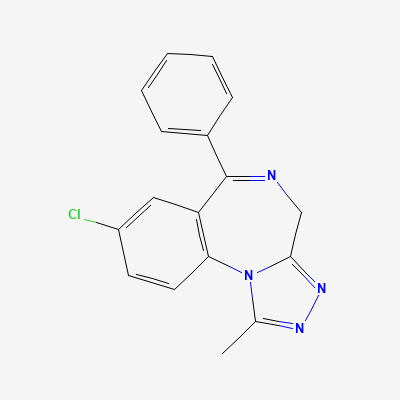
Alprazolam is a triazolobenzodiazepine that acts as a positive allosteric modulator at the GABA-A receptor complex. It binds to the benzodiazepine recognition site (at the interface of alpha and gamma subunits), enhancing GABA's affinity for its receptor and increasing the frequency of chloride channel opening. This results in neuronal hyperpolarization, reduced excitability, and anxiolytic, sedative, hypnotic, muscle relaxant, and anticonvulsant effects. The triazole ring incorporation confers higher potency and more rapid onset compared to classical 1,4-benzodiazepines like diazepam.

Indications

Generalized anxiety disorder (GAD)Panic disorder (with or without agoraphobia)Short-term relief of anxiety symptomsChemotherapy-induced nausea and vomiting (off-label)Insomnia (off-label)Premenstrual dysphoric disorder (off-label)Depression with anxiety features (off-label, adjunctive)Alcohol withdrawal (off-label, with caution)

Dosing

Adult
Anxiety (IR): 0.25-0.5 mg PO TID; titrate by ≤1 mg/day every 3-4 days; max 4 mg/day. Panic disorder (IR): 0.5 mg PO TID; titrate by ≤1 mg/day every 3-4 days; max 10 mg/day. Panic disorder (XR): 0.5-1 mg PO daily; max 10 mg/day.
Pediatric
Not recommended <18 years.
Renal adjustment
No specific adjustment. Use caution in severe renal impairment.
Hepatic adjustment
Severe hepatic impairment: start 0.25 mg BID-TID; titrate slowly. Mild-moderate: start at low end of range.
Geriatric
Start 0.25 mg BID-TID; max 2 mg/day. Increased risk of falls, sedation, cognitive impairment. Beers Criteria: potentially inappropriate (avoid if possible).
Max dose
4 mg/day (anxiety); 10 mg/day (panic); 2 mg/day (elderly)

Pharmacokinetics

Onset
IR: onset within 15-30 minutes. XR: onset within 1-2 hours.
Peak effect
IR: peak plasma at 1-2 hours. XR: peak at 5-11 hours (sustained release).
Duration
IR: 4-6 hours. XR: 24 hours.
Half-life
6.3-26.9 hours (mean 11.2 hours; highly variable). XR maintains therapeutic levels longer.
Bioavailability
>90% (oral).
Protein binding
~80% (bound to serum albumin).
Metabolism
Extensive hepatic via CYP3A4 (primary): hydroxylation to alpha-hydroxyalprazolam (active metabolite), then glucuronidation. Also metabolized by CYP2C19. The active metabolite contributes to pharmacological effects.
Excretion
Renal: primarily as glucuronide conjugates of alprazolam and metabolites.

Contraindications

  • Hypersensitivity to alprazolam or other benzodiazepines
  • Concurrent use with strong CYP3A4 inhibitors (ketoconazole, itraconazole — except ritonavir) [FDA label]
  • Acute narrow-angle glaucoma
  • Pregnancy (especially first trimester — congenital malformations risk)
  • Concurrent use with opioids (FDA black box warning — respiratory depression, coma, death)
  • Myasthenia gravis

Side effects

Common
Drowsiness, sedation, fatigueDizziness, lightheadednessImpaired coordination, ataxiaMemory impairment (anterograde amnesia)DepressionDry mouthHeadacheConstipation
Serious
  • Respiratory depression (especially with opioids, alcohol, CNS depressants)
  • Dependence, tolerance, withdrawal syndrome (seizures, agitation, insomnia, tremor — can be life-threatening if abrupt)
  • Paradoxical reactions (agitation, hallucinations, aggression, disinhibition — especially elderly)
  • Suicidal ideation
  • Severe hypersensitivity (anaphylaxis, angioedema)
  • Jaundice, hepatic dysfunction

Pregnancy & lactation

Pregnancy

FDA PLLR: Avoid during pregnancy, especially first trimester. Risk of congenital malformations (oral clefts), neonatal withdrawal syndrome (floppy infant syndrome, irritability, tremor, seizures), and long-term neurodevelopmental effects.

Lactation

Excreted in breast milk (infant plasma ~10% of maternal). May cause infant drowsiness, poor feeding, weight loss. Avoid breastfeeding if possible. If essential, monitor infant closely.

Drug interactions

Opioids
Contraindicated
Database

FDA black box warning: combined CNS depression at GABA-A and mu-opioid receptors causes profound respiratory depression, coma, and death.

Avoid concurrent use. If absolutely necessary in supervised settings, lowest doses, shortest duration, monitor respiratory rate and oxygen saturation. Naloxone availability.

Source: Kimi deep-research + Cla

Ritonavir
Contraindicated
Database

Profoundly increased alprazolam plasma concentrations, leading to severe and prolonged sedation, respiratory depression, and psychomotor impairment.

Concomitant use is contraindicated due to the risk of severe and potentially life-threatening adverse effects. Use an alternative benzodiazepine not metabolized by CYP3A4 or an alternative antiretroviral.

Source: DDInter

Strong Cyp3a4 Inhibitors
Contraindicated
Database

CYP3A4 inhibitors block alprazolam metabolism, dramatically increasing plasma levels, sedation, respiratory depression, and risk of overdose.

Contraindicated with ketoconazole/itraconazole per FDA label. With other strong inhibitors, reduce alprazolam dose by 50% or more, monitor closely. Avoid grapefruit juice.

Source: Kimi deep-research + Cla

Azoles
Severe
Textbook

Increased plasma levels of alprazolam.

Source: Harrison 22e · p1742

Methylnaltrexone
Severe
Textbook

Increased rates of accidental overdose and death.

Caution is advised, especially for patients with a history of drug abuse.

Source: G&G 14e

Nalmefene
Severe
Textbook

Increased rates of accidental overdose and death.

Caution is advised, especially for patients with a history of drug abuse.

Source: G&G 14e

Naloxone
Severe
Textbook

Increased rates of accidental overdose and death.

Caution is advised, especially for patients with a history of drug abuse.

Source: G&G 14e

Naltrexone
Severe
Textbook

Increased rates of accidental overdose and death.

Caution is advised, especially for patients with a history of drug abuse.

Source: G&G 14e

Other Cns Depressants
Severe
Textbook

Typically fatal if combined in overdose.

Use with extreme caution; avoid if possible.

Source: G&G 14e

Alcohol
Severe
Database

Additive CNS depression — enhanced sedation, impaired coordination, respiratory depression, memory blackouts, overdose risk.

Absolute alcohol avoidance during alprazolam therapy. Mandatory patient education. Document counseling.

Source: Kimi deep-research + Cla

Alfentanil
Severe
Database

Increased rates of accidental overdose and death.

Caution is advised, especially for patients with a history of drug abuse.

Source: DDInter

Benzhydrocodone
Severe
Database

Drug interaction classified as: synergy

Source: DDInter
Related guidelines

Other Benzodiazepine drugs

Ask House about Alprazolam

Continue into a citation-backed clinical answer with the drug context already attached.

Sources: KD Tripathi 7e, Goodman & Gilman 14e, Harrison 22e, Katzung·Verified: 2026-05-18 · House clinical team·Cockpit curated: 2026-05-18