Drug lookup
Drug reference

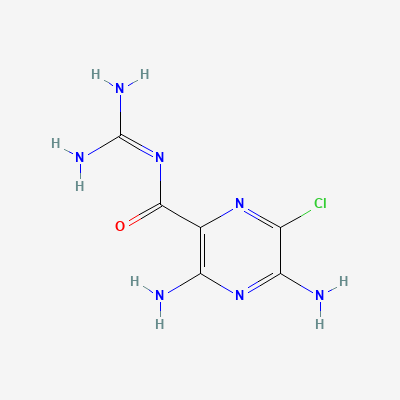
Amiloride

Potassium-sparing diuretic (ENaC blocker) · Antihypertensive

Also known as Amiloride hydrochloride
START
5 mg PO once daily
TYPICAL MAX
20 mg/day
STOP IF
K >5.5 mmol/L, rising creatinine, or hyponatraemia
WATCH
Serum potassium, sodium, renal function
CDSCO approvedSchedule HATC C03DB01
Dose laddermg/d
5start10usual20max/day
Renal dose adjustmenteGFR mL/min/1.73m²
CAUTIONUsual dose; monitor potassium30AVOIDAvoid — hyperkalaemia risk90

KDIGO 2024 + manufacturer label

Pharmacokineticsplasma · t hours
2hONSET8hPEAK7h1dDURATION
ONSET
2h · onset
PEAK
8h · peak effect
7h ·
DURATION
1d · once-daily
EXCRETION
Renal ~50% unchanged; faecal remainder
route + CYP
INTERACTIONS
12 major
SEVERE in our sources
PREGNANCY
Use only if clearly needed; limited data.
FDA category + note
Top interactionssee all 12
  • AcebutololSevereTextbookKDT 7e
  • AtenololSevereTextbookKDT 7e
  • BetaxololSevereTextbookKDT 7e
  • BisoprololSevereTextbookKDT 7e
Available in India

1 branded formulation. Look up specific brands in the Drugs workspace.

Mechanism

Blocks epithelial sodium channels (ENaC) in the distal tubule/collecting duct, producing mild natriuresis while reducing potassium and hydrogen secretion — a potassium-sparing diuretic.

Indications

Adjunct to thiazide/loop diuretics to conserve potassiumOedema (heart failure, cirrhosis with caution)Lithium-induced nephrogenic diabetes insipidus

Dosing

Adult
5 mg PO once daily; usual 5–10 mg/day; max 20 mg/day. Often combined with hydrochlorothiazide.
Pediatric
0.4–0.625 mg/kg/day (specialist).
Renal adjustment
Avoid if eGFR <30 / serum creatinine elevated (hyperkalaemia risk).
Hepatic adjustment
Caution in hepatic impairment (electrolyte shifts).
Geriatric
Start 5 mg; higher hyperkalaemia/AKI risk.
Max dose
20 mg/day

Pharmacokinetics

Onset
~2 h
Peak effect
~6–10 h
Duration
~24 h
Half-life
~6–9 h (longer in renal impairment)
Bioavailability
~50%
Protein binding
Low (~23%)
Metabolism
Not metabolised
Excretion
Renal (~50% unchanged); faecal remainder

Contraindications

  • Hyperkalaemia (K >5.5 mmol/L)
  • Severe renal impairment / anuria
  • Concomitant potassium supplements or other K-sparing diuretics
  • Addison disease

Side effects

Common
HyperkalaemiaNauseaHeadacheDizzinessFatigue
Serious
  • Severe hyperkalaemia / arrhythmia
  • Hyponatraemia
  • Acute kidney injury (volume depletion)

Pregnancy & lactation

Pregnancy

Use only if clearly needed; limited data.

Lactation

Limited data; caution.

Drug interactions

Acebutolol
Severe
Textbook

Hyperkalaemia more likely.

Source: KDT 7e

Atenolol
Severe
Textbook

Hyperkalaemia more likely.

Source: KDT 7e

Betaxolol
Severe
Textbook

Hyperkalaemia more likely.

Source: KDT 7e

Bisoprolol
Severe
Textbook

Hyperkalaemia more likely.

Source: KDT 7e

Bucindolol
Severe
Textbook

Hyperkalaemia more likely.

Source: KDT 7e

Carteolol
Severe
Textbook

Hyperkalaemia more likely.

Source: KDT 7e

Carvedilol
Severe
Textbook

Hyperkalaemia more likely.

Source: KDT 7e

Celiprolol
Severe
Textbook

Hyperkalaemia more likely.

Source: KDT 7e

Esmolol
Severe
Textbook

Hyperkalaemia more likely.

Source: KDT 7e

Esmolol Hydrochloride
Severe
Textbook

Hyperkalaemia more likely.

Source: KDT 7e

Imidapril
Severe
Textbook

Hyperkalaemia more likely.

Source: KDT 7e

Labetalol
Severe
Textbook

Hyperkalaemia more likely.

Source: KDT 7e

Related guidelines

Ask House about Amiloride

Continue into a citation-backed clinical answer with the drug context already attached.

Sources: KD Tripathi 7e, Goodman & Gilman 14e, Harrison 22e, BNF·Verified: 2026-05-20 · House clinical team·Cockpit curated: 2026-05-20