Drug lookup
Drug reference

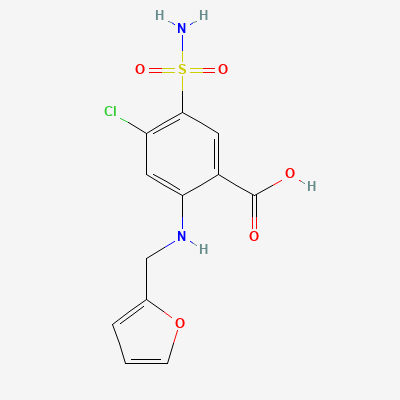
Furosemide

Loop Diuretic · Antihypertensive

Also known as Frusemide, Lasix, Frumil
START
20-40 mg PO/IV once-BID
TYPICAL MAX
600 mg/day (severe HF / CKD) — diminishing returns above 200 mg
STOP IF
Anuria · sulfa allergy (cross-react) · severe hypovolemia/hypokalemia
WATCH
K⁺ · Na⁺ · creatinine · urine output · hearing (high-dose IV)
CDSCO approvedH
Dose laddermg/d
20initial PO40standard daily80moderate HF160titrate600ceiling
Renal dose adjustmenteGFR mL/min/1.73m²
FULLStandard dose30CAUTIONHigher doses needed (200-600 mg/d) to…90

KDIGO 2024 + manufacturer label

Pharmacokineticsplasma · t hours
30minONSET1.5hPEAK1.5h6hDURATION
ONSET
30min · PO diuresis (IV 5 min)
PEAK
1.5h · Cmax
1.5h · plasma t½
DURATION
6h · diuretic effect window
EXCRETION
Renal tubular secretion · minimal CYP
route + CYP
INTERACTIONS
12 major
SEVERE in our sources
PREGNANCY
Category C — use only if benefit > risk
FDA category + note
Top interactionssee all 12
  • DigoxinSevereTextbook-citedKDT 7e · p949
  • LithiumSevereTextbook-citedKDT 7e · p949
  • MinocyclineSevereTextbook-citedKDT 7e · p949
  • StreptomycinSevereTextbook-citedKDT 7e · p949
Available in India

13 branded formulations and 44 fixed-dose combinations. Look up specific brands in the Drugs workspace.

Mechanism

Furosemide inhibits the Na+-K+-2Cl- cotransporter (NKCC2) in the thick ascending limb of the loop of Henle, preventing the reabsorption of sodium, potassium, and chloride. This leads to increased excretion of water, sodium, chloride, magnesium, and calcium. The potent diuretic effect reduces fluid overload, lowers blood pressure, and decreases cardiac preload.

Indications

Edema associated with congestive heart failureEdema associated with liver cirrhosisEdema associated with renal disease (including nephrotic syndrome)Hypertension (adjunct in severe or refractory cases)Acute pulmonary edemaHypercalcemia (off-label)Hyperkalemia (off-label)chronic congestive heart failurehypertension (in patients with GFR <30 mL/min or resistant hypertension)edema of nephrotic syndromeedema of liver cirrhosisascites of liver cirrhosisdrug overdose (to induce forced diuresis)hypercalcemia (with isotonic saline)life-threatening hyponatremia (with hypertonic saline)edema associated with chronic kidney diseaseacute pulmonary edema (intravenous)liver cirrhosischronic kidney diseasenephrotic syndromehyponatremiahypercalcemiahypertension with renal insufficiencyvolume management (in supportive care for PAH)Edema associated with heart failureEdema associated with nephrotic syndromeHypertension (especially in patients with azotemia or severe edema associated with vasodilators like minoxidil)Malignant hypertension (acutely)GFR <30-40 mL/minmobilizing edema fluid in CHFrapid symptomatic relief in acute left ventricular failurerestore diuretic response in refractory CHF (when combined with low-rate dopamine infusion)Adjunct in hypertensive emergencies if there is volume overload (acute LVF, pulmonary edema, CHF) or cerebral edema (in encephalopathy)Edema (cardiac, hepatic, renal, nephrotic, resistant, chronic renal failure)Impending acute renal failure (to decrease need for dialysis)Acute pulmonary edema (acute LVF, following MI)Cerebral edema (combined with osmotic diuretics)Hypertension (in presence of renal insufficiency, CHF, resistant cases, hypertensive emergencies)Along with blood transfusion in severe anaemia (to prevent volume overload)With hypertonic saline in hyponatraemiaHypercalcaemia of malignancyHypertensionCKD with GFR <30Symptomatic HFPulmonary edema

Dosing

Adult
Oral: Initial 20-80 mg once daily or in 2 divided doses; titrate up to 600 mg/day for severe cases. IV/IM: 20-40 mg administered over 1-2 minutes; may be increased by 20 mg increments every 2 hours until desired effect. For acute pulmonary edema, IV: 40 mg initially, followed by 80 mg if needed after 1 hour.
Pediatric
Oral: Initial 2 mg/kg once daily, may be increased by 1-2 mg/kg every 6-8 hours up to a maximum of 6 mg/kg/dose. IV/IM: Initial 1 mg/kg; may be increased by 1 mg/kg every 2 hours up to a maximum of 6 mg/kg/dose. Max 40 mg/day for infants <1 year, 80 mg/day for children >1 year.
Renal adjustment
**CrCl > 30 mL/min:** No dose adjustment for usual doses. **CrCl < 30 mL/min:** Higher doses may be required; initiate 40 mg orally/IV, with a maximum daily dose up to 120-160 mg. Avoid in anuric patients unresponsive to furosemide. **For dialysis patients:** Administer after dialysis sessions if needed for fluid control; supplemental doses are generally not required.
Max dose
80 mg/day oral (usual); up to 200 mg q6h IV in renal failure

Pharmacokinetics

Onset
Oral: 30-60 minutes; IV: 5 minutes
Peak effect
Oral: 1-2 hours; IV: 20-60 minutes
Duration
3–6 hours
Half-life
~1.5
Bioavailability
~60% (variable)
Protein binding
>95% (primarily albumin)
Metabolism
~35% metabolism (predominantly in the kidney)
Excretion
~65% renal excretion of intact drug

Contraindications

  • Anuria
  • Hypersensitivity to furosemide or sulfonamides
  • Hepatic coma and states of electrolyte depletion until condition is improved
  • Severe hypokalemia
  • Severe hyponatremia
  • Hypovolemia/dehydration
  • Severe renal failure with anuria unresponsive to furosemide
  • severe Na+ depletion
  • severe volume depletion
  • hypersensitivity to sulfonamides
  • anuria unresponsive to a trial dose of loop diuretic
  • sulfonamide hypersensitivity
  • patient may be hypovolemic due to pressure induced natriuresis (especially in eclampsia, pheochromocytoma)
  • Toxaemia of pregnancy

Side effects

Common
DehydrationElectrolyte disturbances (hypokalemia, hyponatremia, hypomagnesemia, hypochloremia, hypocalcemia)Orthostatic hypotensionIncreased urinationDizzinessHeadacheBlurred visionMuscle crampsTinnitusasymptomatic hyperuricemiahearing impairmentvertigosense of fullness in the earshyperglycemia (infrequently precipitating diabetes mellitus)increased plasma LDL cholesterolincreased plasma triglyceridesdecreased plasma HDL cholesterolskin rashesphotosensitivityparesthesiasGI disturbanceshypokalemiahyponatremiahypomagnesemiahyperuricemiahypocalcemiaglucose intolerancehypotensionreduction in GFRelectrolyte disturbancehypokalaemiaalkalosiscarbohydrate intoleranceIncreased K+ excretion (less than thiazides)Increased Ca2+ excretionIncreased Mg2+ excretionHyperuricaemia (lower than thiazides)Small rise in blood sugar level (less than thiazides)Mild alkalosis (at high doses)WeaknessFatigueNauseaVomitingDiarrhoeaGiddinessImpotenceVolume depletion
Serious
  • Ototoxicity (especially with rapid IV injection, high doses, or in renal impairment)
  • Severe hypotension
  • Hypovolemic shock
  • Cardiac arrhythmias (due to electrolyte imbalance)
  • Stevens-Johnson syndrome
  • Toxic epidermal necrolysis
  • Pancreatitis
  • Aplastic anemia
  • Agranulocytosis
  • depletion of total-body Na+
  • hyponatremia
  • extracellular fluid volume depletion
  • hypotension
  • reduced GFR
  • circulatory collapse
  • thromboembolic episodes
  • hepatic encephalopathy (in liver disease)
  • hypochloremic alkalosis
  • hypokalemia
  • cardiac arrhythmias (particularly with cardiac glycosides)
  • hypomagnesemia
  • hypocalcemia (rarely leading to tetany)
  • ototoxicity (usually reversible, most frequently with rapid intravenous administration)
  • gout (rarely)
  • bone marrow depression
  • nephrotoxicity
  • ototoxicity
  • Ototoxicity occurs at concentrations >25 µg/mL.
  • mental disorientation (due to hypokalemic alkalosis and increased ammonia in hepatic encephalopathy)
  • urinary retention (in prostatic hypertrophy)
  • Cardiac arrhythmias (due to hypokalaemia)
  • Hearing loss (rarely, in presence of renal insufficiency)
  • Rashes
  • Photosensitivity
  • Blood dyscrasias

Pregnancy & lactation

Pregnancy

Category C — use only if benefit > risk

Drug interactions

Digoxin
Severe
Textbook-cited

Digoxin toxicity (arrhythmias, nausea, visual disturbances).

Co-prescribe potassium-sparing diuretic or potassium supplements

Source: KDT 7e · p949

Lithium
Severe
Textbook-cited

Lithium toxicity.

Reduce lithium dose and monitor serum levels

Source: KDT 7e · p949

Minocycline
Severe
Textbook-cited

Severe vestibular toxicity (vertigo, dizziness).

Avoid concurrent use

Source: KDT 7e · p949

Streptomycin
Severe
Textbook-cited

Ototoxicity (hearing loss) and nephrotoxicity

Avoid concurrent use; if unavoidable, monitor renal function and audiometry

Source: KDT 7e · p949

Tobramycin
Severe
Textbook-cited

Ototoxicity (hearing loss) and nephrotoxicity.

Avoid concurrent use; if unavoidable, monitor renal function and audiometry

Source: KDT 7e · p949

Aminoglycosides
Severe
Textbook

Increased risk of ototoxicity (e.g., tinnitus, hearing impairment, deafness, vertigo).

Not explicitly stated, but implies careful monitoring or avoidance if possible.

Source: G&G 14e · p566

Digitalis Glycosides
Severe
Textbook

Increased digitalis-induced arrhythmias.

Not explicitly stated, but implies careful monitoring of potassium levels.

Source: G&G 14e · p566

Paclitaxel
Severe
Textbook

Increased risk of ototoxicity (e.g., tinnitus, hearing impairment, deafness, vertigo).

Not explicitly stated, but implies careful monitoring or avoidance if possible.

Source: G&G 14e · p566

Amikacin
Severe
Database

Additive ototoxicity. Loop diuretics increase aminoglycoside concentrations in the inner ear and kidney, enhancing both ototoxic and nephrotoxic effects.

Avoid concurrent use if possible. If unavoidable, monitor renal function daily, serum aminoglycoside levels, and hearing. Keep course as short as possible.

Source: Kimi deep-research + Cla · p949

Aminolevulinic Acid
Severe
Database

Drug interaction classified as: synergy

Source: DDInter

Amiodarone
Severe
Database

Drug interaction classified as: synergy.

Source: DDInter

Arsenic Trioxide
Severe
Database

Drug interaction classified as: synergy.

Source: DDInter

Related guidelines

Other Loop Diuretic drugs

Ask House about Furosemide

Continue into a citation-backed clinical answer with the drug context already attached.

Sources: KD Tripathi 7e, Goodman & Gilman 14e, Harrison 22e, Katzung·Verified: 2026-05-16 · House clinical team·Cockpit curated: 2026-05-16