Drug lookup
Drug reference

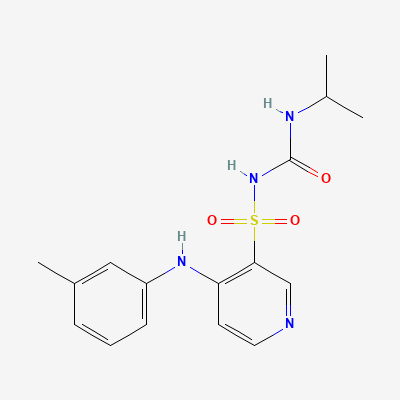
Torsemide

Loop Diuretic · Antihypertensive

Also known as Torasemide
START
Confirm edema or hypertension indication. Baseline electrolytes (K+, Na+, Mg2+, uric acid), creatinine, BUN, glucose, BP. Start 5-10 mg PO daily.
TYPICAL MAX
200 mg/day (edema); 10 mg/day (hypertension). Higher doses in CHF require close monitoring.
STOP IF
Severe hypokalemia (K+ <3.0), severe hyponatremia (Na+ <125), anuria, severe hypotension (SBP <90), severe dehydration, acute pancreatitis
WATCH
Electrolytes (K+, Na+, Mg2+) at baseline, 1 week, then monthly; creatinine/BUN; BP (sitting and standing); glucose; uric acid (gout); weight; signs of volume depletion
CDSCO approvedSchedule HJan AushadhiNPPA price-controlledATC C03CA04
Dose laddermg/d
5start10titrate40max200ceiling
Renal dose adjustmenteGFR mL/min/1.73m²
FULLFull dose: 10-200 mg daily; higher doses needed as GFR falls1590

KDIGO 2024 + manufacturer label

Pharmacokineticsplasma · t hours
1hONSET1.5hPEAK3.5h7hDURATION
ONSET
1h · 1 h (oral); 10 min (IV)
PEAK
1.5h · 1-2 h (oral); 30 min (IV)
3.5h · 3.5 h (normal); 6-12 h (CHF/cirrhosis)
DURATION
7h · 6-8 h (longer than furosemide)
EXCRETION
~20% renal unchanged; ~71% hepatic metabolism (CYP2C9); fecal
route + CYP
INTERACTIONS
7 major
SEVERE in our sources
PREGNANCY
FDA PLLR: Animal studies showed no teratogenicity. Limited human data. Crosses placenta. May cause fetal electrolyte disturbances and reduce placental perfusion. Use only if benefit clearly outweighs risk.
FDA category + note
Top interactionssee all 12
  • CarboplatinSevereTextbookG&G 14e · p566
  • CisplatinSevereTextbookG&G 14e · p566
  • Digitalis GlycosidesSevereTextbookG&G 14e · p566
  • PaclitaxelSevereTextbookG&G 14e · p566
Available in India

312 branded formulations and 3 fixed-dose combinations. Look up specific brands in the Drugs workspace.

Jan Aushadhi — generic available at GoI pharmacies

Mechanism

Torsemide is a high-ceiling (loop) diuretic that inhibits the Na+-K+-2Cl- cotransporter (NKCC2) in the thick ascending limb of the Loop of Henle in the kidney. By blocking this transporter, torsemide prevents reabsorption of sodium, potassium, and chloride ions, resulting in: (1) increased excretion of water, sodium, chloride, potassium, calcium, and magnesium; (2) reduced medullary hypertonicity, impairing urinary concentration; and (3) decreased vascular responsiveness to catecholamines (venodilation), reducing preload. Unlike furosemide, torsemide has a longer half-life, more predictable bioavailability, and some hepatic metabolism (CYP2C9), giving it a pharmacokinetic profile intermediate between furosemide and bumetanide. It also has mild antihypertensive effects independent of diuresis.

Indications

Edema associated with congestive heart failure (CHF)Edema associated with chronic renal failureEdema associated with hepatic cirrhosisEssential hypertension (monotherapy or combination)Acute pulmonary edema (off-label, IV)Ascites in cirrhosis (off-label, with spironolactone)Nephrotic syndrome (off-label)

Dosing

Adult
CHF edema: 10-20 mg PO once daily; titrate by doubling dose; max 200 mg/day. Chronic renal failure: 20 mg PO once daily; titrate; max 200 mg/day. Hepatic cirrhosis: 5-10 mg PO once daily with aldosterone antagonist; max 40 mg/day. Hypertension: 5 mg PO once daily; titrate to 10 mg; max 10 mg/day.
Pediatric
Not recommended <18 years (safety/efficacy not established).
Renal adjustment
No adjustment for mild-moderate renal impairment. Severe renal impairment: higher doses may be needed but efficacy decreases as GFR falls. Not dialyzable.
Hepatic adjustment
Start 5-10 mg/day; monitor electrolytes and mental status closely (risk of hepatic encephalopathy).
Geriatric
Start 5 mg/day; titrate slowly. Monitor electrolytes, renal function, and orthostatic BP.
Max dose
200 mg/day (edema); 10 mg/day (hypertension)

Pharmacokinetics

Onset
Oral: diuresis within 1 hour. IV: within 10 minutes.
Peak effect
Oral: peak diuresis at 1-2 hours. IV: peak at 30 minutes.
Duration
Oral/IV: 6-8 hours (longer than furosemide's 4-6 hours).
Half-life
~3.5 hours (normal); prolonged in CHF (6-8 hours), hepatic cirrhosis (up to 12 hours), and renal impairment.
Bioavailability
~80-90% (oral; more predictable than furosemide's variable 10-100%). Food does not significantly affect absorption.
Protein binding
~97-99% (highly bound to albumin).
Metabolism
Hepatic via CYP2C9 (primary — hydroxylation to M1 and M3 metabolites, both inactive) and CYP2C8/2C18/2C19 (minor pathways). ~20% excreted unchanged in urine.
Excretion
Renal: ~24% (20% unchanged, 4% as glucuronide conjugates). Hepatic/biliary: ~71% (as metabolites). Fecal: ~20-30%.

Contraindications

  • Hypersensitivity to torsemide, sulfonamides, or other loop diuretics
  • Anuria (no urine output)
  • Hepatic coma or precoma (electrolyte disturbances may worsen encephalopathy)
  • Severe electrolyte depletion (hypokalemia, hyponatremia, hypochloremic alkalosis)
  • Severe renal impairment with declining renal function (may worsen azotemia)

Side effects

Common
Hypokalemia (dose-related; most common electrolyte abnormality)HyponatremiaHypotension, orthostatic hypotensionDizziness, headacheDehydrationHyperglycemia (especially in diabetics)Hyperuricemia (gout risk)Tinnitus, hearing loss (rare, usually with rapid IV administration)Muscle cramps
Serious
  • Severe hypokalemia (arrhythmia risk, especially with digoxin)
  • Severe hyponatremia (seizures, confusion, cerebral edema)
  • Hypochloremic metabolic alkalosis
  • Ototoxicity (deafness, usually reversible — rapid IV, renal impairment, aminoglycoside co-administration)
  • Severe dehydration and prerenal azotemia
  • Pancreatitis (rare)
  • Agranulocytosis, thrombocytopenia (rare)
  • Hepatic encephalopathy (in cirrhosis)
  • Anaphylaxis, severe hypersensitivity (sulfonamide cross-reactivity)

Pregnancy & lactation

Pregnancy

FDA PLLR: Animal studies showed no teratogenicity. Limited human data. Crosses placenta. May cause fetal electrolyte disturbances and reduce placental perfusion. Use only if benefit clearly outweighs risk.

Lactation

Excreted in breast milk in low concentrations. May reduce milk production. Compatible with breastfeeding per AAP with monitoring. Monitor infant for dehydration and electrolyte disturbances.

Drug interactions

Carboplatin
Severe
Textbook

Increased risk of ototoxicity (e.g., tinnitus, hearing impairment, deafness, vertigo).

Not explicitly stated, but implies careful monitoring or avoidance if possible.

Source: G&G 14e · p566

Cisplatin
Severe
Textbook

Enhanced ototoxicity.

Not explicitly stated, but implies careful monitoring or avoidance if possible.

Source: G&G 14e · p566

Digitalis Glycosides
Severe
Textbook

Increased digitalis-induced arrhythmias.

Not explicitly stated, but implies careful monitoring of potassium levels.

Source: G&G 14e · p566

Paclitaxel
Severe
Textbook

Increased risk of ototoxicity (e.g., tinnitus, hearing impairment, deafness, vertigo).

Not explicitly stated, but implies careful monitoring or avoidance if possible.

Source: G&G 14e · p566

Aminoglycosides
Severe
Database

Additive ototoxicity and nephrotoxicity. Loop diuretics increase aminoglycoside concentrations in the inner ear and kidney. Both cause electrolyte disturbances that worsen each other's toxicity.

Avoid concurrent use if possible. If unavoidable, monitor renal function daily, serum aminoglycoside levels, and hearing. Keep course as short as possible.

Source: Kimi deep-research + Cla · p566

Digoxin
Severe
Database

Loop diuretics cause hypokalemia and hypomagnesemia, which increase myocardial digoxin sensitivity and risk of digoxin toxicity (arrhythmias, nausea, visual disturbances) even with therapeutic digoxin levels.

Monitor potassium and magnesium closely. Supplement K+ and Mg2+ to maintain K+ >4.0 and Mg2+ >1.8. Monitor digoxin levels and clinical signs of toxicity.

Source: Kimi deep-research + Cla · p949

Lithium
Severe
Database

Loop diuretics reduce renal lithium clearance by causing sodium depletion, which increases proximal tubular lithium reabsorption. Lithium levels can increase by 50-100%, causing toxicity (tremor, ataxia, confusion, nephrotoxicity, encephalopathy).

Avoid loop diuretics in patients on lithium if possible (thiazides are safer alternatives with lithium). If unavoidable, monitor lithium levels weekly and reduce lithium dose by 50%.

Source: Kimi deep-research + Cla · p949

Tetracycline
Moderate
Textbook-cited

Azotemia (elevated blood urea)

Avoid concurrent use

Source: KDT 7e · p949

Aceclofenac + Paracetamol
Moderate
Textbook

Blunted diuretic response; also, with high doses of salicylates, potential salicylate toxicity.

Not explicitly stated, but suggests caution or avoiding concomitant use.

Source: G&G 14e · p566

Aceclofenac
Moderate
Textbook

Blunted diuretic response; also, with high doses of salicylates, potential salicylate toxicity.

Not explicitly stated, but suggests caution or avoiding concomitant use.

Source: G&G 14e · p566

Amphotericin B
Moderate
Textbook

Increased risk of kidney damage and worsened electrolyte disturbances.

Not explicitly stated, but suggests careful monitoring or avoidance if possible.

Source: G&G 14e · p566

Aspirin
Moderate
Textbook

Blunted diuretic response; also, with high doses of salicylates, potential salicylate toxicity.

Not explicitly stated, but suggests caution or avoiding concomitant use.

Source: G&G 14e · p566

Related guidelines

Other Loop Diuretic drugs

Ask House about Torsemide

Continue into a citation-backed clinical answer with the drug context already attached.

Sources: Goodman & Gilman 14e, Harrison 22e, Katzung·Verified: 2026-05-18 · House clinical team·Cockpit curated: 2026-05-18