Drug lookup
Drug reference

Ivermectin

Anthelmintic · Antiparasitic

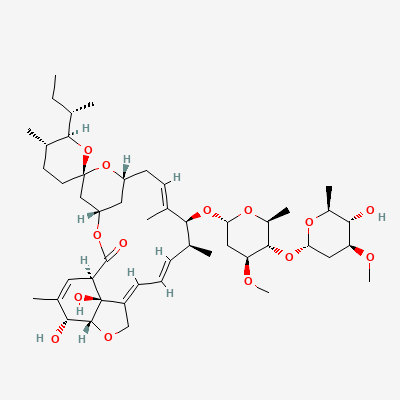
Ivermectin 2D molecular structure
START
Confirm parasitic infection (stool microscopy, skin snip, serology). Weigh patient accurately (dosing is weight-based). Rule out pregnancy. Screen for Loa loa co-infection if from endemic area (risk of encephalopathy).
TYPICAL MAX
200 mcg/kg single dose. Do not exceed for standard indications.
STOP IF
Signs of encephalopathy (confusion, seizures, severe headache), severe hypersensitivity, pregnancy
WATCH
Mazzotti reaction symptoms (pruritus, rash, fever, arthralgia — in onchocerciasis), Loa loa microfilarial load if co-infection suspected, neurological symptoms
CDSCO approvedSchedule HJan AushadhiATC P03AC01
Dose laddermg/d
150start200ceiling
Renal dose adjustmenteGFR mL/min/1.73m²
FULLNo adjustment required1590

KDIGO 2024 + manufacturer label

Pharmacokineticsplasma · t hours
1.1hONSET4.5hPEAK18h12.9wDURATION
ONSET
1.1h · absorption onset
PEAK
4.5h · 4-5 h (first peak); 6-12 h (enterohepatic)
18h · ~18 h (plasma); 2-3 days (terminal, tissue)
DURATION
12.9w · Months (tissue reservoir)
EXCRETION
~98% fecal (metabolites); <1% renal; CYP3A4 metabolism
route + CYP
INTERACTIONS
1 major
SEVERE in our sources
PREGNANCY
FDA PLLR: Safety not established. Animal studies showed teratogenicity at doses toxic to the mother. Avoid in pregnancy unless benefit clearly outweighs risk. Weight >15 kg for pediatric dosing.
FDA category + note
Top interactionssee all 12
  • DiethylcarbamazineSevereDatabaseKimi deep-research + Cla · p1822, p1824
Available in India

254 branded formulations and 468 fixed-dose combinations. Look up specific brands in the Drugs workspace.

Jan Aushadhi — generic available at GoI pharmacies

Mechanism

Ivermectin is a macrocyclic lactone derivative of avermectin B1 that acts as a positive allosteric modulator of glutamate-gated chloride channels (GluCl) in invertebrate nerve and muscle cells. It binds selectively and with high affinity to these channels, increasing chloride ion conductance, causing hyperpolarization of neuronal and muscular membranes, and resulting in flaccid paralysis and death of the parasite. It may also interact with gamma-aminobutyric acid (GABA)-gated chloride channels in nematodes. The selective toxicity is due to the absence of glutamate-gated chloride channels in mammals and the low affinity of ivermectin for mammalian ligand-gated chloride channels. Ivermectin does not readily cross the blood-brain barrier in humans (except in conditions with compromised blood-brain barrier).

Indications

Onchocerciasis (river blindness) — Onchocerca volvulus microfilariaeStrongyloidiasis (Strongyloides stercoralis) — intestinal and disseminatedLymphatic filariasis (Wuchereria bancrofti, Brugia malayi) — mass drug administrationScabies (Sarcoptes scabiei) — especially crusted scabiesHead lice (Pediculus humanus capitis)Ascariasis (Ascaris lumbricoides) — off-labelTrichuriasis (Trichuris trichiura) — off-labelLoiasis (Loa loa) — with caution (risk of encephalopathy in high microfilarial loads)

Dosing

Adult
Strongyloidiasis: 200 mcg/kg PO single dose; repeat if immunocompromised or persistent infection. Onchocerciasis: 150 mcg/kg PO single dose; repeat every 6-12 months. Scabies: 200 mcg/kg PO single dose (repeat at 7-14 days for crusted scabies). Filariasis (MDA): 150-200 mcg/kg + albendazole 400 mg PO annually.
Pediatric
≥15 kg: same as adult weight-based dosing. <15 kg: not recommended (safety not established). Head lice (≥6 months): 200 mcg/kg PO single dose.
Renal adjustment
No adjustment required.
Hepatic adjustment
No adjustment required; minimal hepatic metabolism.
Geriatric
No specific adjustment.
Max dose
200 mcg/kg/dose; single dose for most indications

Pharmacokinetics

Onset
Microfilaricidal effect: within 48 hours. Scabies: mite death within 1-2 days.
Peak effect
Oral: peak plasma at 4-5 hours; second peak at 6-12 hours (enterohepatic recycling).
Duration
Long tissue half-life in adipose tissue; antiparasitic effect persists months for onchocerciasis.
Half-life
~18 hours (plasma); terminal half-life 2-3 days due to extensive tissue distribution (adipose tissue, skin).
Bioavailability
~60% (oral on empty stomach; increased with food/fat).
Protein binding
~93% (bound primarily to plasma albumin).
Metabolism
Hepatic via CYP3A4 (primary) and CYP1A2. Extensively metabolized to at least 10 metabolites (demethylated, hydroxylated). Less than 1% excreted unchanged.
Excretion
Feces: ~98% (as metabolites). Urine: <1% (unchanged and metabolites).

Contraindications

  • Hypersensitivity to ivermectin or any component
  • Pregnancy (safety not established; avoid unless benefit clearly outweighs risk)
  • Breastfeeding (excreted in milk; avoid or suspend breastfeeding for 24 hours after dose)
  • Loiasis with high Loa loa microfilarial load (>30,000/mL) — risk of encephalopathy/meningoencephalitis

Side effects

Common
Mazzotti reaction (in onchocerciasis): pruritus, rash, edema, arthralgia, fever, lymphadenopathy — due to dying microfilariaeFatigueDizzinessNausea, diarrheaAbdominal pain
Serious
  • Neurotoxicity/encephalopathy (especially with high Loa loa microfilarial loads or compromised blood-brain barrier)
  • Severe hypersensitivity (anaphylaxis, angioedema)
  • Hepatotoxicity (rare)
  • Severe Mazzotti reaction (prostration, hypotension, high fever — requires corticosteroid management)
  • Retinal toxicity (rare, with prolonged use)
  • Teratogenicity concern (animal studies showed embryotoxicity at high doses)

Pregnancy & lactation

Pregnancy

FDA PLLR: Safety not established. Animal studies showed teratogenicity at doses toxic to the mother. Avoid in pregnancy unless benefit clearly outweighs risk. Weight >15 kg for pediatric dosing.

Lactation

Excreted in breast milk in low concentrations. Theoretical risk to nursing infant. AAP recommends suspending breastfeeding for 24 hours after single dose (pump and discard milk).

Drug interactions

Diethylcarbamazine
Severe
Database

Concurrent use with ivermectin in patients with high Loa loa microfilarial loads dramatically increases risk of fatal encephalopathy/meningoencephalitis. Both are microfilaricidal.

Do NOT co-administer ivermectin and DEC in Loa loa-endemic areas without first assessing Loa loa microfilarial load. If Loa loa load >30,000/mL, avoid both drugs or pretreat with albendazole to reduce load.

Source: Kimi deep-research + Cla · p1822, p1824

Levamisole
Moderate
Textbook

Increased plasma levels of ivermectin.

Source: G&G 14e · p1325-1334

Carbamazepine
Moderate
Database

May lead to increased carbamazepine levels and toxicity, or decreased levels and loss of seizure control.

Monitor carbamazepine levels and clinical response closely. Adjust carbamazepine dose as needed.

Clarithromycin
Moderate
Database

Increased ivermectin plasma concentrations, potentially leading to increased adverse effects (e.g., neurological toxicity).

Monitor for increased ivermectin side effects. Consider dose reduction of ivermectin if co-administration is necessary.

Source: DDInter

Diltiazem
Moderate
Database

Increased ivermectin plasma concentrations, potentially leading to increased adverse effects.

Monitor for increased ivermectin side effects. Consider dose reduction of ivermectin if co-administration is necessary.

Grapefruit Juice
Moderate
Database

Increased ivermectin plasma concentrations, potentially leading to increased adverse effects.

Advise patients to avoid consuming grapefruit juice while taking ivermectin.

Albendazole
Moderate
Database

Standard combination for lymphatic filariasis mass drug administration (MDA). No direct pharmacokinetic interaction of concern, but additive adverse effects (hepatotoxicity, GI upset) may occur.

Standard MDA regimen (ivermectin 150-200 mcg/kg + albendazole 400 mg annually). Monitor LFTs and adverse effects.

Source: Kimi deep-research + Cla

Cyp3a4 Inducers
Moderate
Database

CYP3A4 inducers increase ivermectin metabolism, reducing plasma levels and potentially causing treatment failure for parasitic infections.

Monitor for treatment failure (persistent parasites). May need higher ivermectin dose or repeat dosing. Consider alternative antiparasitic if concurrent CYP3A4 inducer cannot be stopped.

Source: Kimi deep-research + Cla

Cyp3a4 Inhibitors
Moderate
Database

CYP3A4 inhibitors reduce ivermectin metabolism, increasing plasma levels and risk of neurotoxicity (especially in patients with conditions that compromise the blood-brain barrier).

Monitor for CNS side effects (dizziness, ataxia, confusion). Use caution in patients with meningitis or other CNS conditions.

Source: Kimi deep-research + Cla

Ketoconazole
Moderate
Database

Increased ivermectin plasma concentrations, potentially leading to increased adverse effects (e.g., neurological toxicity).

Monitor for increased ivermectin side effects. Consider dose reduction of ivermectin if co-administration is necessary.

Source: DDInter

Midazolam
Moderate
Database

Increased midazolam exposure, potentially leading to enhanced sedation and respiratory depression.

Use with caution. Consider lower doses of midazolam and monitor for increased sedative effects.

Phenobarbital
Moderate
Database

Decreased ivermectin plasma concentrations, potentially leading to reduced efficacy.

Monitor for reduced ivermectin efficacy. Consider alternative anti-parasitic agents or increased ivermectin dose if co-administration is unavoidable.

Related guidelines

Other Anthelmintic drugs

Ask House about Ivermectin

Continue into a citation-backed clinical answer with the drug context already attached.

Sources: KD Tripathi 7e, Goodman & Gilman 14e, Harrison 22e, Katzung·Verified: 2026-05-18 · House clinical team·Cockpit curated: 2026-05-18