Drug lookup
Drug reference

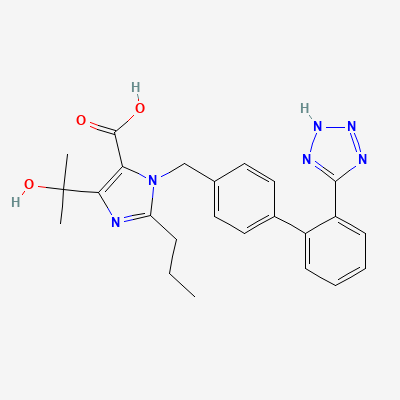
Olmesartan

ARB · Antihypertensive

Also known as Olmesartan Medoxomil, Benicar, Olmetec
START
Confirm hypertension diagnosis. Baseline creatinine, eGFR, potassium, sodium. Rule out bilateral renal artery stenosis. Pregnancy test for women of childbearing potential. Start 20 mg daily.
TYPICAL MAX
40 mg/day. No benefit from higher doses.
STOP IF
Pregnancy (discontinue immediately), severe diarrhea with weight loss (sprue-like enteropathy), angioedema, acute renal failure (Cr doubling), severe hyperkalemia (K+ >6.0)
WATCH
Blood pressure, renal function (creatinine, eGFR) at 2 weeks and periodically, serum potassium (especially with K+-sparing diuretics), signs of sprue-like enteropathy (chronic diarrhea, weight loss), pregnancy status
CDSCO approvedSchedule HJan AushadhiNPPA price-controlledATC C09CA08
Dose laddermg/d
10start20titrate40max: 40 mg daily
Renal dose adjustmenteGFR mL/min/1.73m²
FULLFull dose: 20-40 mg daily; monitor renal function and K+20CAUTIONUse caution; monitor cl…90

KDIGO 2024 + manufacturer label

Pharmacokineticsplasma · t hours
23minONSET1.5hPEAK13h1dDURATION
ONSET
23min · absorption onset
PEAK
1.5h · 1-2 h (oral)
13h · 10-15 h (mean 13 h)
DURATION
1d · 24 h (once-daily dosing)
EXCRETION
~35-50% fecal; ~35-40% renal; no CYP metabolism; non-CYP
route + CYP
INTERACTIONS
12 major
incl. contraindicated
PREGNANCY
FDA PLLR: Contraindicated in second and third trimesters. Can cause fetal death, oligohydramnios, fetal skull hypoplasia, anuria, and reversible/irreversible renal failure. Discontinue immediately if pregnancy detected. First trimester: use only if no alternative.
FDA category + note
Top interactionssee all 12
  • Sacubitril ValsartanContraindicatedTextbookG&G 14e · p602
  • AliskirenContraindicatedDatabaseKimi deep-research + Cla
  • Angiotensin Converting Enzyme InhibitorsSevereTextbookHarrison 22e · p2396
  • EnalaprilatSevereTextbookG&G 14e
Available in India

349 branded formulations and 390 fixed-dose combinations. Look up specific brands in the Drugs workspace.

Jan Aushadhi — generic available at GoI pharmacies

Mechanism

Olmesartan medoxomil is a prodrug that is rapidly and completely bioactivated by ester hydrolysis during absorption from the GI tract to olmesartan, a selective angiotensin II type 1 (AT1) receptor antagonist. Angiotensin II is a potent vasoconstrictor and the primary vasoactive hormone of the renin-angiotensin-aldosterone system (RAAS). Olmesartan blocks the binding of angiotensin II to AT1 receptors in vascular smooth muscle and the adrenal gland, inhibiting vasoconstriction and aldosterone secretion. This results in vasodilation, reduced peripheral resistance, decreased blood pressure, and reduced sodium/water retention. The medoxomil moiety is rapidly hydrolyzed by non-CYP esterases during absorption — no CYP-mediated metabolism of the active drug.

Indications

Hypertension (essential hypertension) — monotherapy or combinationHypertension with diabetes mellitus (nephroprotection — reduces proteinuria)Heart failure with reduced ejection fraction (off-label, alternative to ACE inhibitors)Chronic kidney disease with proteinuria (off-label, nephroprotection)

Dosing

Adult
Hypertension: 20 mg PO once daily initially; titrate to 40 mg once daily after 2 weeks if needed. Max 40 mg/day. Can be taken with or without food.
Pediatric
6-16 years (≥20 kg): 10 mg PO daily (20-35 kg); 20 mg PO daily (≥35 kg). <6 years: not recommended.
Renal adjustment
No initial adjustment in mild–moderate impairment. Safety/efficacy not established at CrCl ≤30 mL/min (FDA §8.6); monitor renal function and potassium.
Hepatic adjustment
No dose adjustment for mild-to-severe hepatic impairment (FDA — olmesartan AUC ↑~60% in moderate impairment; monitor). Not contraindicated.
Geriatric
No specific adjustment. Start at 20 mg daily. Monitor renal function and potassium.
Max dose
40 mg/day

Pharmacokinetics

Onset
Antihypertensive effect begins within 1-2 hours of first dose.
Peak effect
Peak plasma at 1-2 hours (rapid conversion from prodrug). Steady-state by day 7-10.
Duration
24 hours (supports once-daily dosing). Trough levels ~10-25% of peak.
Half-life
10-15 hours (mean ~13 hours; terminal elimination).
Bioavailability
~26% (olmesartan medoxomil); food does not significantly affect absorption.
Protein binding
~99% (highly bound to plasma proteins; does not penetrate RBCs).
Metabolism
Olmesartan medoxomil is rapidly converted to olmesartan by non-CYP esterases during absorption. The active olmesartan moiety does NOT undergo further CYP-mediated metabolism. No CYP drug interactions.
Excretion
Feces: ~35-50% (unchanged drug). Urine: ~35-40% (unchanged drug). Biliary excretion and direct intestinal secretion contribute to fecal elimination.

Contraindications

  • Hypersensitivity to olmesartan or any component
  • Pregnancy (second and third trimesters — fetal toxicity: oligohydramnios, fetal skull hypoplasia, anuria, reversible/irreversible renal failure, death)
  • Concomitant use with aliskiren in patients with diabetes mellitus
  • Bilateral renal artery stenosis or single kidney with renal artery stenosis (risk of acute renal failure)
  • Severe hepatic impairment and/or cholestasis

Side effects

Common
DizzinessHeadacheFatigueUpper respiratory tract infectionHyperkalemia (mild)
Serious
  • Sprue-like enteropathy (severe chronic diarrhea with weight loss and villous atrophy — mimics celiac disease; reversible on discontinuation; FDA warning 2013)
  • Acute renal failure (especially in renal artery stenosis, severe CHF, volume depletion)
  • Hyperkalemia (severe, especially with K+-sparing diuretics, ACE inhibitors, or renal impairment)
  • Angioedema (rare but potentially fatal — facial, laryngeal swelling)
  • Hypotension and syncope (first dose, especially with diuretics or volume depletion)
  • Fetal toxicity (pregnancy Category D equivalent — contraindicated in 2nd/3rd trimester)

Pregnancy & lactation

Pregnancy

FDA PLLR: Contraindicated in second and third trimesters. Can cause fetal death, oligohydramnios, fetal skull hypoplasia, anuria, and reversible/irreversible renal failure. Discontinue immediately if pregnancy detected. First trimester: use only if no alternative.

Lactation

Excretion in breast milk unknown. Due to potential for serious adverse effects in nursing infants, consider discontinuing breastfeeding or discontinuing olmesartan.

Drug interactions

Sacubitril Valsartan
Contraindicated
Textbook

Potentially excessive hypotension, increased risk of adverse effects.

Do not use in conjunction with other ARBs.

Source: G&G 14e · p602

Aliskiren
Contraindicated
Database

Dual RAAS blockade (ARB + direct renin inhibitor) increases risk of hyperkalemia, hypotension, and renal impairment. Contraindicated in patients with diabetes mellitus.

Do not co-prescribe aliskiren with olmesartan in diabetic patients. In non-diabetic patients, use with caution and close monitoring of renal function and potassium.

Source: Kimi deep-research + Cla

Angiotensin Converting Enzyme Inhibitors
Severe
Textbook

Greater incidence of acute kidney injury (AKI) and adverse cardiac events.

The combination of these two classes should be avoided.

Source: Harrison 22e · p2396

Enalaprilat
Severe
Textbook

Increased worsening of renal function, hypotension, syncope, and hyperkalemia without increased efficacy.

Not recommended for the treatment of hypertension. Previous studies indicate more harm than benefit.

Source: G&G 14e

Imidapril
Severe
Textbook

Greater incidence of acute kidney injury (AKI) and adverse cardiac events.

The combination of these two classes should be avoided.

Source: Harrison 22e · p2396

Amiloride
Severe
Database

Hyperkalemia.

Monitor K+ levels.

Source: DDInter

Benazepril
Severe
Database

Increased worsening of renal function, hypotension, syncope, and hyperkalemia without increased efficacy.

Not recommended for the treatment of hypertension. Previous studies indicate more harm than benefit.

Source: DDInter

Captopril
Severe
Database

Increased worsening of renal function, hypotension, syncope, and hyperkalemia without increased efficacy.

Not recommended for the treatment of hypertension. Previous studies indicate more harm than benefit.

Source: DDInter

Enalapril
Severe
Database

Increased worsening of renal function, hypotension, syncope, and hyperkalemia without increased efficacy.

Not recommended for the treatment of hypertension. Previous studies indicate more harm than benefit.

Source: DDInter

Fosinopril
Severe
Database

Increased worsening of renal function, hypotension, syncope, and hyperkalemia without increased efficacy.

Not recommended for the treatment of hypertension. Previous studies indicate more harm than benefit.

Source: DDInter

Lisinopril
Severe
Database

Increased worsening of renal function, hypotension, syncope, and hyperkalemia without increased efficacy.

Not recommended for the treatment of hypertension. Previous studies indicate more harm than benefit.

Source: DDInter

Lithium Carbonate
Severe
Database

.

Source: DDInter

Related guidelines

Other ARB drugs

Ask House about Olmesartan

Continue into a citation-backed clinical answer with the drug context already attached.

Sources: KD Tripathi 7e, Goodman & Gilman 14e, Harrison 22e, Katzung·Verified: 2026-05-18 · House clinical team·Cockpit curated: 2026-05-18