Drug lookup
Drug reference

Telmisartan

ARB · Antihypertensive

Also known as Micardis, Telma, Telsartan, Pritor
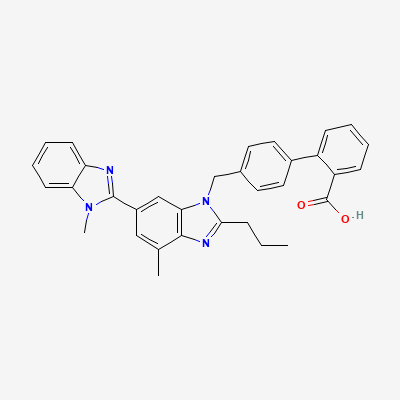
START
40 mg PO once daily
TYPICAL MAX
80 mg/day
STOP IF
Pregnancy · bilateral RAS · hyperkalemia
WATCH
K⁺ · creatinine · BP
CDSCO approvedSchedule HJan AushadhiNPPA price-controlledATC C09CA07
Dose laddermg/d
20low40standard80max
Renal dose adjustmenteGFR mL/min/1.73m²
FULLFull dose; monitor K⁺ and Cr 1-2 weeks after start30CAUTIONUse with caution; AKI risk90

KDIGO 2024 + manufacturer label

Pharmacokineticsplasma · t hours
3hONSET1hPEAK1d1dDURATION
ONSET
3h · BP effect onset
PEAK
1h · Cmax
1d · longest ARB t½
DURATION
1d · once-daily dosing window
EXCRETION
Biliary/fecal · negligible CYP metabolism
route + CYP
INTERACTIONS
12 major
incl. contraindicated
PREGNANCY
Category D — contraindicated; fetal renal injury
FDA category + note
Top interactionssee all 12
  • Sacubitril ValsartanContraindicatedTextbookG&G 14e · p602
  • AliskirenContraindicatedDatabaseDDInter
  • Angiotensin Converting Enzyme InhibitorsSevereTextbookHarrison 22e · p2396
  • EnalaprilatSevereTextbookG&G 14e
Available in India

1,411 branded formulations and 1,538 fixed-dose combinations. Look up specific brands in the Drugs workspace.

Jan Aushadhi — generic available at GoI pharmacies

Mechanism

Telmisartan selectively blocks the binding of angiotensin II to the AT1 receptor found in many tissues, including vascular smooth muscle and the adrenal gland. This blockade prevents the vasoconstrictive and aldosterone-secreting effects of angiotensin II, leading to peripheral vasodilation, decreased blood pressure, and inhibition of sodium and water reabsorption. Its partial PPAR-gamma agonism may also contribute to some metabolic benefits.

Indications

Hypertension (management of essential hypertension)Reduction of cardiovascular morbidity and mortality in patients 55 years or older at high risk of cardiovascular events who are unable to take ACE inhibitors (e.g., history of coronary artery disease, stroke, peripheral arterial disease, or diabetic nephropathy with end-organ damage)Diabetic nephropathy (off-label, often used when ACEIs are not tolerated)hypertensionheart failurediabetic nephropathyCongestive heart failure (CHF)Myocardial infarction (MI)

Dosing

Adult
Hypertension: Initial 40 mg orally once daily. Titrate to maximum 80 mg once daily if needed. The antihypertensive effect is substantially present within 2 weeks and maximal within 4 weeks. Cardiovascular risk reduction: 80 mg orally once daily.
Pediatric
Not recommended for use in children under 18 years due to insufficient data on efficacy and safety.
Renal adjustment
No dose adjustment is generally required for mild to moderate renal impairment. For severe renal impairment or end-stage renal disease, initiate with caution and monitor renal function and potassium levels closely.
Hepatic adjustment
In patients with mild to moderate hepatic impairment, the maximum daily dose should not exceed 40 mg once daily. Contraindicated in severe hepatic impairment.
Geriatric
No dose adjustment is necessary based on age; however, consider lower starting doses (e.g., 20 mg) and careful titration for elderly patients who may be more sensitive to hypotensive effects.
Max dose
80 mg once daily

Pharmacokinetics

Onset
Antihypertensive effect within 3 hours
Peak effect
Peak plasma concentrations reached within 0.5-1 hour after oral administration. Peak antihypertensive effect within 4-8 hours.
Duration
24 hours
Half-life
Approximately 24 hours
Bioavailability
Dose-dependent; ~42% for 40 mg and ~58% for 160 mg
Protein binding
>99.5% (primarily to albumin and alpha-1 acid glycoprotein)
Metabolism
Conjugated to glucuronide; does not appear to be metabolized by cytochrome P450 enzymes.
Excretion
Primarily eliminated unchanged via bile into feces (>97%). Less than 1% excreted renally.

Contraindications

  • Hypersensitivity to telmisartan or any component of the formulation
  • Pregnancy (especially 2nd and 3rd trimesters)
  • Biliary obstructive disorders (due to its primary biliary excretion)
  • Severe hepatic impairment
  • Concomitant use with aliskiren in patients with diabetes mellitus or renal impairment (eGFR <60 mL/min/1.73 m2)
  • Bilateral renal artery stenosis (relative contraindication due to risk of acute kidney injury)

Side effects

Common
Dizzinessfatiguehypotensionorthostatic hypotensionback painupper respiratory tract infectionpharyngitissinusitisdiarrheanauseaabdominal paincough (less common than with ACEIs)hyperkalemiaskin rash
Serious
  • Angioedema
  • hyperkalemia
  • acute renal failure
  • symptomatic hypotension
  • rhabdomyolysis (rare)
  • hepatic dysfunction/jaundice
  • anaphylactic reaction
  • anaphylaxis
  • abnormal hepatic function
  • hepatitis
  • neutropenia
  • leukopenia
  • agranulocytosis
  • pruritus
  • urticaria
  • hyponatremia
  • alopecia
  • vasculitis
  • anemia
  • fetopathic syndrome
  • hepatic failure (rare)
  • agranulocytosis (rare)

Pregnancy & lactation

Pregnancy

Category D — contraindicated; fetal renal injury

Lactation

Not recommended during breastfeeding. It is unknown if telmisartan is excreted in human milk, but due to the potential for adverse effects on the nursing infant, a decision should be made whether to discontinue nursing or discontinue the drug, taking into account the importance of the drug to the mother.

Drug interactions

Sacubitril Valsartan
Contraindicated
Textbook

Potentially excessive hypotension, increased risk of adverse effects.

Do not use in conjunction with other ARBs.

Source: G&G 14e · p602

Aliskiren
Contraindicated
Database

Increased risk of hypotension, hyperkalemia, and renal impairment.

Avoid concomitant use.

Source: DDInter

Angiotensin Converting Enzyme Inhibitors
Severe
Textbook

Greater incidence of acute kidney injury (AKI) and adverse cardiac events.

The combination of these two classes should be avoided.

Source: Harrison 22e · p2396

Enalaprilat
Severe
Textbook

Increased worsening of renal function, hypotension, syncope, and hyperkalemia without increased efficacy.

Not recommended for the treatment of hypertension. Previous studies indicate more harm than benefit.

Source: G&G 14e

Imidapril
Severe
Textbook

Greater incidence of acute kidney injury (AKI) and adverse cardiac events.

The combination of these two classes should be avoided.

Source: Harrison 22e · p2396

Amiloride
Severe
Database

Hyperkalemia.

Monitor K+ levels.

Source: DDInter

Benazepril
Severe
Database

Increased worsening of renal function, hypotension, syncope, and hyperkalemia without increased efficacy.

Not recommended for the treatment of hypertension. Previous studies indicate more harm than benefit.

Source: DDInter

Captopril
Severe
Database

Increased worsening of renal function, hypotension, syncope, and hyperkalemia without increased efficacy.

Not recommended for the treatment of hypertension. Previous studies indicate more harm than benefit.

Source: DDInter

Enalapril
Severe
Database

Increased worsening of renal function, hypotension, syncope, and hyperkalemia without increased efficacy.

Not recommended for the treatment of hypertension. Previous studies indicate more harm than benefit.

Source: DDInter

Fosinopril
Severe
Database

Increased worsening of renal function, hypotension, syncope, and hyperkalemia without increased efficacy.

Not recommended for the treatment of hypertension. Previous studies indicate more harm than benefit.

Source: DDInter

Lisinopril
Severe
Database

Increased worsening of renal function, hypotension, syncope, and hyperkalemia without increased efficacy.

Not recommended for the treatment of hypertension. Previous studies indicate more harm than benefit.

Source: DDInter

Lithium Carbonate
Severe
Database

Clinical effect not specified

Source: DDInter

Related guidelines

Other ARB drugs

Ask House about Telmisartan

Continue into a citation-backed clinical answer with the drug context already attached.

Sources: KD Tripathi 7e, Goodman & Gilman 14e, Katzung, BNF·Verified: 2026-05-16 · House clinical team·Cockpit curated: 2026-05-16