Drug lookup
Drug reference

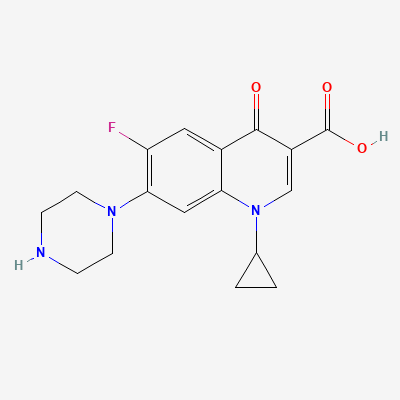
Ciprofloxacin

Fluoroquinolone · Antibiotic

Also known as Cipro, Ciproxin, Ciprofloxacin Hydrochloride, Cifran

START
500 mg PO BID
TYPICAL MAX
750 mg BID (complicated infection)
STOP IF
Tendon rupture history · aortic aneurysm risk · age <18 unless mandatory
WATCH
Tendons · QTc · CNS effects · C. difficile · glucose
CDSCO approvedJan AushadhiNPPA price-controlledATC J01MA02
Dose laddermg/d
250start500standard BID750max1.5kceiling
Renal dose adjustmenteGFR mL/min/1.73m²
FULLFull dose50CAUTIONStandard dose q12h (no c…30REDUCE250-500 mg q12-18h90

KDIGO 2024 + manufacturer label

Pharmacokineticsplasma · t hours
1hONSET1.5hPEAK4h12hDURATION
ONSET
1h · tissue distribution
PEAK
1.5h · Cmax
4h · plasma t½
DURATION
12h · BID dosing window
EXCRETION
50-70% renal unchanged · CYP1A2 inhibitor
route + CYP
INTERACTIONS
12 major
incl. contraindicated
PREGNANCY
Category C — avoid; arthropathy in juveniles
FDA category + note
Top interactionssee all 12
  • CilostazoleContraindicatedTextbookKDT 7e · p555
  • CelecoxibSevereTextbook-citedKDT 7e · p949
  • DiclofenacSevereTextbook-citedKDT 7e · p949
  • IbuprofenSevereTextbook-citedKDT 7e · p949
Available in India

1,259 branded formulations and 509 fixed-dose combinations. Look up specific brands in the Drugs workspace.

Jan Aushadhi — generic available at GoI pharmacies

Mechanism

Ciprofloxacin inhibits bacterial DNA gyrase (topoisomerase II) and topoisomerase IV, enzymes essential for bacterial DNA replication, transcription, repair, and recombination. By blocking these enzymes, it causes breaks in the bacterial DNA, leading to cell death and a bactericidal effect.

Indications

Urinary Tract Infections (UTIs)Respiratory Tract InfectionsSkin and Soft Tissue InfectionsBone and Joint InfectionsInfectious DiarrheaIntra-abdominal InfectionsTyphoid FeverAnthrax (post-exposure prophylaxis and treatment)PlagueGonorrhea (note: increasing resistance, not first-line)Cystic Fibrosis exacerbations (off-label)Acute diarrhea (first-line for traveler's diarrhea)Small intestinal bacterial overgrowth (SIBO)adjunctive treatment with other medications for active IBD in severe cases where there is concern about coexisting sepsistreatment for perforating or fistulizing complications of Crohn’s diseaseprophylaxis for recurrence in postoperative Crohn’s diseasepediatric Crohn’s disease (mild-to-moderate)Urinary tract infectionsProstatitisTraveler's diarrheaIntra-abdominal infections (with metronidazole)Pseudomonas infectionsAnthrax (prophylaxis)TularemiaPlague (due to Yersinia pestis)ChancroidconjunctivitiskeratitiskeratoconjunctivitisblepharitisblepharoconjunctivitismeibomianitisdacryocystitisPseudomonas infected orthopedic prosthesisPrevention of acute exacerbations in chronic obstructive lung disease (doubtful value)Prevention of acute exacerbations in chronic bronchitis (doubtful value)urinary tract infections (complicated cases, indwelling catheters, prostatitis)gonorrhoea (single 500 mg dose, if strain is sensitive, but no longer first line)chancroid (second line alternative, 500 mg BD for 3 days)bacterial gastroenteritis (empirical therapy of severe diarrhoea by EPEC, Shigella, Salmonella, Campy. jejuni, also reduces stool volume in cholera)typhoid fever (one of the first choice drugs, prevents carrier state)bone, soft tissue, gynaecological and wound infections (caused by resistant Staph. and gram-negative bacteria, e.g., osteomyelitis, joint infections, diabetic foot)respiratory infections (Mycoplasma, Legionella, H. influenzae, Branh. catarrhalis, some streptococcal and pneumococcal infections)inhalational anthrax (post-exposure treatment, US-FDA approved)tuberculosis (second line for multidrug resistant TB)gram-negative septicaemias (parenteral, may be combined with a third generation cephalosporin or an aminoglycoside)meningitis (gram-negative bacterial meningitis, especially in immunocompromised or with CSF shunts)prophylaxis of infections (in neutropenic/cancer and other susceptible patients)conjunctivitis (by gram-negative bacteria, topical therapy)uncomplicated acute UTIcomplicated cases of UTIUTI with prostatitisUTI with indwelling cathetersUTI with bacteria resistant to cotrimoxazole/ampicillinchronic UTIpenicillinase producing gonorrhoea (alternative)chancroid (alternative)Atypical mycobacteria infections (more active against atypical mycobacteria than Lfx)MAC infectionM. fortuitum infectionProsthetic-joint infections (in combination with rifampin)Nontypeable H. influenzae infections (general class effect)Exacerbations of COPD in adults (for H. influenzae)ShigellosisAdjunctive antibiotic for patients with moderate or severe dehydration due to cholera (in areas with confirmed susceptibility)Moderate or severe Vibrio parahaemolyticus–associated gastrointestinal illnessExtraintestinal non-O1/O139 V. cholerae infections (in vitro sensitive)Vibrio vulnificus primary sepsis (as a fluoroquinolone option, combined with a third-generation cephalosporin)Brucellosis (potential alternative, but controversial and not first-line)Brucella endocarditis (as an optional add-on)

Dosing

Adult
Dosing varies by indication. For uncomplicated UTI: 250 mg orally every 12 hours for 3 days. For complicated UTI/Pyelonephritis: 500 mg orally every 12 hours or 400 mg IV every 8-12 hours for 7-14 days. For Respiratory Tract Infections: 500-750 mg orally every 12 hours or 400 mg IV every 8-12 hours for 7-14 days.
Pediatric
Generally reserved for severe infections (e.g., complicated UTI, anthrax) where benefits outweigh risks of arthropathy. For complicated UTI/Pyelonephritis (1-17 years): 10-20 mg/kg orally every 12 hours (max 750 mg/dose) or 6-10 mg/kg IV every 8 hours (max 400 mg/dose).
Renal adjustment
CrCl 30-50 mL/min: Administer usual dose every 12 hours or reduce oral dose to 250-500 mg. CrCl <30 mL/min (including hemodialysis/peritoneal dialysis): Administer usual dose every 24 hours, or half the usual dose every 12 hours. Dosing should occur after dialysis on dialysis days.
Hepatic adjustment
No dosage adjustment is generally required for mild to moderate hepatic impairment. Use with caution and monitor in severe hepatic impairment.
Geriatric
Use with caution due to potential for decreased renal function and increased risk of tendon rupture and QTc prolongation. Monitor renal function and use lower end of dosing range.
Max dose
Oral: 1500 mg/day (in divided doses for specific severe infections); typically 1000 mg/day. IV: 1200 mg/day.
Pharmacokinetics

Onset
Oral: 0.5-2 hours; IV: Rapid
Peak effect
Oral: 1-2 hours; IV: 30-60 minutes after infusion
Duration
8-12 hours
Half-life
3-5 hours (increases with renal impairment)
Bioavailability
Oral: 70-80%
Protein binding
20-40%
Metabolism
Partially metabolized in the liver (approx. 15-30%) by CYP1A2 to several metabolites, some with minor activity.
Excretion
Primarily renal (50-70% as unchanged drug); 15-20% via feces.

Contraindications

  • Hypersensitivity to ciprofloxacin or other fluoroquinolones.
  • Concurrent use with Tizanidine.
  • History of tendinitis or tendon rupture associated with quinolone use.
  • Myasthenia Gravis (may exacerbate muscle weakness).
  • Known QTc prolongation or uncorrected hypokalemia/hypomagnesemia.
  • Uncontrolled epilepsy or other seizure disorders (relative).
  • Children (not routinely recommended)
  • patients with myasthenia gravis
  • Pregnancy (increased risk to foetus)
  • pregnancy
  • children (caution due to potential cartilage damage, though used in pressing situations like Pseudomonas pneumonia in cystic fibrosis and multi-resistant typhoid)
  • patients with predisposing factors for CNS toxicity at high doses
  • pregnant women
  • Children
  • Pregnant women (due to possible effects on articular cartilage)

Side effects

Common
NauseaDiarrheaVomitingAbdominal painHeadacheDizzinessRestlessnessRashAbnormal liver function testsGI disturbancesAbdominal discomfortHeadachesInsomniaAnxietyHypersensitivity reactionsbad tasteanorexiaimpairment of concentration and dexteritypruritusphotosensitivityurticariaswelling of lips
Serious
  • Tendinitis and tendon rupture (especially Achilles tendon)
  • Peripheral neuropathy (irreversible in some cases)
  • CNS effects (seizures, psychosis, suicidal ideation, confusion, tremors)
  • Clostridioides difficile-associated diarrhea (CDAD)
  • QTc prolongation and Torsades de Pointes
  • Aortic aneurysm rupture or dissection
  • Severe hypersensitivity reactions (anaphylaxis, Stevens-Johnson Syndrome)
  • Dysglycemia (hypoglycemia or hyperglycemia)
  • tendinopathy
  • tendon rupture
  • peripheral neuropathy
  • CNS effects
  • Optic neuritis
  • Tendinitis
  • QT interval prolongation (lowest risk among quinolones)
  • drug-related corneal deposits
  • Haemolysis (in G-6-PD deficient patients)
  • tremor
  • seizures (rare)
  • tendon rupture (risk higher in >60 years and with corticosteroids)
  • serious cutaneous reactions (rare)
  • CNS stimulatory effects (including seizures)
  • Glucose dysregulation
  • Tendinopathy (including Achilles tendon rupture, especially in older patients, organ transplant recipients, and those on glucocorticoids)
  • Increased risk of aortic aneurysm
  • Worsening of myasthenia gravis
  • QTc interval prolongation (moxifloxacin more likely)

Pregnancy & lactation

Pregnancy

Category C — avoid; arthropathy in juveniles

Lactation

Ciprofloxacin is excreted into breast milk. Due to the potential for serious adverse reactions (e.g., arthropathy) in the infant, a decision should be made whether to discontinue nursing or discontinue the drug, taking into account the importance of the drug to the mother.

Drug interactions

Cilostazole
Contraindicated
Textbook

Increased plasma levels and toxicity of cilostazole.

Should not be administered along with inhibitors of CYP3A4.

Source: KDT 7e · p555

Celecoxib
Severe
Textbook-cited

Enhanced CNS toxicity including seizures.

Avoid concurrent use

Source: KDT 7e · p949

Diclofenac
Severe
Textbook-cited

Enhanced CNS toxicity including seizures.

Avoid concurrent use

Source: KDT 7e · p949

Ibuprofen
Severe
Textbook-cited

Enhanced CNS toxicity including seizures.

Avoid concurrent use

Source: KDT 7e · p949

Indomethacin
Severe
Textbook-cited

Enhanced CNS toxicity including seizures.

Avoid concurrent use

Source: KDT 7e · p949

Ketorolac
Severe
Textbook-cited

Enhanced CNS toxicity including seizures.

Avoid concurrent use

Source: KDT 7e · p949

Mefenamic Acid
Severe
Textbook-cited

Enhanced CNS toxicity including seizures

Avoid concurrent use

Source: KDT 7e · p949

Naproxen
Severe
Textbook-cited

Enhanced CNS toxicity including seizures.

Avoid concurrent use

Source: KDT 7e · p949

Piroxicam
Severe
Textbook-cited

Enhanced CNS toxicity including seizures.

Avoid concurrent use

Source: KDT 7e · p949

Theophylline
Severe
Textbook-cited

Theophylline toxicity (nausea, seizures, arrhythmias).

Monitor theophylline levels and reduce dose

Source: KDT 7e · p948

Warfarin
Severe
Textbook-cited

Increased anticoagulant effect and bleeding risk.

Monitor INR and reduce warfarin dose

Source: KDT 7e · p948

Aceclofenac + Paracetamol
Severe
Textbook

Enhanced CNS toxicity, seizures reported.

Source: KDT 7e

Related guidelines

Other Fluoroquinolone drugs

Ask House about Ciprofloxacin

Continue into a citation-backed clinical answer with the drug context already attached.

Sources: KD Tripathi 7e, Goodman & Gilman 14e, Harrison 22e, Katzung·Verified: 2026-05-17 · House clinical team·Cockpit curated: 2026-05-16