Drug lookup
Drug reference

Clopidogrel

Antiplatelet

Also known as Clopidogrel bisulfate, Plavix, Clopilet, Deplatt
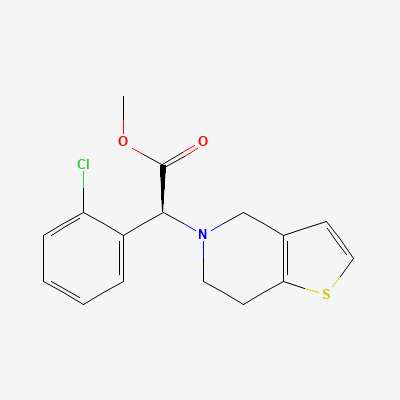
START
75 mg PO once daily (300-600 mg load for ACS/PCI)
TYPICAL MAX
75 mg/day maintenance
STOP IF
Active bleed · 5 days pre-CABG · severe hepatic impairment
WATCH
Bleeding · TTP (rare) · poor metabolizers (CYP2C19)
CDSCO approvedSchedule HJan AushadhiNPPA price-controlledATC B01AC04
Dose laddermg/d
75maintenance300ACS loading dose600PCI loading dose
Renal dose adjustmenteGFR mL/min/1.73m²
FULLNo renal adjustment (hepatic prodrug activation)90

KDIGO 2024 + manufacturer label

Pharmacokineticsplasma · t hours
2hONSET1hPEAK8h1.4wDURATION
ONSET
2h · platelet effect onset (loading dose)
PEAK
1h · active metabolite Cmax
8h · active metabolite t½
DURATION
1.4w · irreversible platelet effect (5-10 days)
EXCRETION
CYP2C19 prodrug activation · renal + biliary metabolites
route + CYP
INTERACTIONS
12 major
SEVERE in our sources
PREGNANCY
Category B — limited data, use only if essential
FDA category + note
Top interactionssee all 12
  • Aceclofenac + ParacetamolSevereTextbookG&G 14e
  • AceclofenacSevereTextbookG&G 14e
  • AnticoagulantsSevereTextbookG&G 14e
  • CapsaicinSevereTextbookG&G 14e
Available in India

213 branded formulations and 496 fixed-dose combinations. Look up specific brands in the Drugs workspace.

Jan Aushadhi — generic available at GoI pharmacies

Mechanism

Clopidogrel is a prodrug that requires hepatic activation, primarily by the CYP2C19 enzyme, to form an active metabolite. This active metabolite irreversibly binds to the P2Y12 ADP receptor on platelets, preventing ADP-mediated platelet activation and subsequent aggregation. This action effectively reduces the formation of blood clots, mitigating the risk of thrombotic cardiovascular events.

Indications

Acute Coronary Syndrome (Unstable Angina, NSTEMI, STEMI)Recent Myocardial InfarctionRecent StrokeEstablished Peripheral Arterial DiseasePrevention of atherothrombotic events in patients with atrial fibrillation who are unsuitable for Vitamin K Antagonists (VKAs) and have at least one risk factor for vascular events, in combination with aspirin (off-label/specific guidelines recommendation)Prevention of stent thrombosis following percutaneous coronary intervention (PCI) with stent placement, in combination with aspirinantiplatelet therapyprevention of stent thrombosissecondary prevention of stroke (somewhat better than aspirin)prevention of recurrent ischemia in unstable angina (in combination with aspirin)reduce the rate of stroke, myocardial infarction, and death in patients with recent myocardial infarction, ischemic stroke, established peripheral artery disease, or acute coronary syndromeused in combination with aspirin after coronary stent implantationacute coronary syndromesecondary prevention in patients with myocardial infarction, stroke, or peripheral artery diseaseProphylaxis of thromboembolic disordersPrevention of ischaemic eventsPrevention of restenosis of stented coronaries (with aspirin)Acute coronary syndromes (unstable angina, NSTEMI)Coronary artery disease (alternative to aspirin)Post-MI patients (prevents reinfarction, reduces mortality)Cerebrovascular disease (stroke prevention in TIAs, persistent atrial fibrillation, history of stroke)Dual antiplatelet therapy (DAPT) with aspirin for NSTE-ACS (when no PCI planned, or as part of triple therapy in patients requiring long-term anticoagulation and undergoing PCI)Prevention of thrombotic complications during Percutaneous Coronary Intervention (PCI)Component of dual antiplatelet therapy (DAPT) post-PCI

Dosing

Adult
For Acute Coronary Syndrome (UA/NSTEMI): Loading dose of 300 mg (or 600 mg for patients undergoing PCI) orally, followed by 75 mg once daily with aspirin. For STEMI (medical management without PCI): Loading dose of 300 mg orally, followed by 75 mg once daily with aspirin. For Recent MI, Recent Stroke, or Established Peripheral Arterial Disease: 75 mg orally once daily.…
Pediatric
Safety and efficacy have not been established in pediatric patients.
Renal adjustment
No dose adjustment is required for mild to moderate renal impairment. For severe renal impairment (eGFR <30 mL/min), use with caution and close monitoring for bleeding; specific dose adjustments are not formally established.
Max dose
75 mg/day (maintenance); 600 mg loading dose for PCI

Pharmacokinetics

Onset
Platelet inhibition begins within 2 hours of a 300 mg loading dose (30% inhibition); maximal inhibition (40-60%) within 3-7 days with 75 mg daily dosing.
Peak effect
Peak plasma concentration of active metabolite occurs in approximately 30-60 minutes. Maximal antiplatelet effect is typically seen within 3-7 days with chronic 75 mg daily dosing.
Bioavailability
Protein binding
Approximately 98% bound to plasma proteins (parent drug and main inactive metabolite).
Metabolism
metabolic activation in the liver (affected by polymorphisms in CYP2C19)
Excretion

Contraindications

  • Active pathological bleeding (e.g., peptic ulcer, intracranial hemorrhage)
  • Hypersensitivity to the active substance or to any of the excipients
  • Severe hepatic impairment

Side effects

Common
Bleeding (e.g., epistaxis, bruising, gastrointestinal hemorrhage)DyspepsiaAbdominal painDiarrheaRashPruritusHeadacheDizzinessbleeding (increased risk, particularly when combined with aspirin or an anticoagulant)DiarrhoeaEpigastric painRashesBleeding
Serious
  • Severe bleeding (e.g., intracranial hemorrhage, major gastrointestinal bleeding requiring transfusion)
  • Thrombotic Thrombocytopenic Purpura (TTP)
  • Agranulocytosis
  • Neutropenia
  • Aplastic anemia
  • Stevens-Johnson Syndrome (SJS)
  • Toxic Epidermal Necrolysis (TEN)
  • Hepatitis
  • Hypersensitivity reactions (e.g., angioedema)
  • increased stent thrombosis (in CYP2C19 poor metabolizers due to decreased antiplatelet effects)
  • thrombotic thrombocytopenic purpura (rare)
  • Bleeding (increased incidence, especially with aspirin)
  • Neutropenia (rare)
  • Thrombocytopenia (rare)
  • Bone marrow toxicity (rare)
  • Increased major bleeding events (absolute 1% increase when added to aspirin)

Pregnancy & lactation

Pregnancy

Category B — limited data, use only if essential

Lactation

Animal studies indicate clopidogrel and/or its metabolites are excreted in milk. It is unknown whether clopidogrel is excreted in human milk. A decision should be made whether to discontinue nursing or to discontinue the drug, taking into account the importance of the drug to the mother.

Drug interactions

Aceclofenac + Paracetamol
Severe
Textbook

Increased bleeding risk.

Exercise extra caution and monitor for signs of bleeding.

Source: G&G 14e

Aceclofenac
Severe
Textbook

Increased bleeding risk.

Exercise extra caution and monitor for signs of bleeding.

Source: G&G 14e

Anticoagulants
Severe
Textbook

Increased bleeding risk.

Exercise extra caution and monitor for signs of bleeding.

Source: G&G 14e

Capsaicin
Severe
Textbook

Increased bleeding risk.

Exercise extra caution and monitor for signs of bleeding.

Source: G&G 14e

Dapoxetine
Severe
Textbook

Increased bleeding risk.

Exercise extra caution and monitor for signs of bleeding.

Source: G&G 14e

Diclofenac + Paracetamol
Severe
Textbook

Increased bleeding risk.

Exercise extra caution and monitor for signs of bleeding.

Source: G&G 14e

Escitalopram + Clonazepam
Severe
Textbook

Increased bleeding risk.

Exercise extra caution and monitor for signs of bleeding.

Source: G&G 14e

Etoricoxib
Severe
Textbook

Increased bleeding risk.

Exercise extra caution and monitor for signs of bleeding.

Source: G&G 14e

Ibuprofen + Paracetamol
Severe
Textbook

Increased bleeding risk.

Exercise extra caution and monitor for signs of bleeding.

Source: G&G 14e

Paracetamol
Severe
Textbook

Increased bleeding risk.

Exercise extra caution and monitor for signs of bleeding.

Source: G&G 14e

Paracetamol + Caffeine + Phenylephrine
Severe
Textbook

Increased bleeding risk.

Exercise extra caution and monitor for signs of bleeding.

Source: G&G 14e

Tenoxicam
Severe
Textbook

Increased bleeding risk.

Exercise extra caution and monitor for signs of bleeding.

Source: G&G 14e

Related guidelines

Other Antiplatelet drugs

Ask House about Clopidogrel

Continue into a citation-backed clinical answer with the drug context already attached.

Sources: KD Tripathi 7e, Goodman & Gilman 14e, Harrison 22e, Katzung·Verified: 2026-05-17 · House clinical team·Cockpit curated: 2026-05-16