Drug lookup
Drug reference

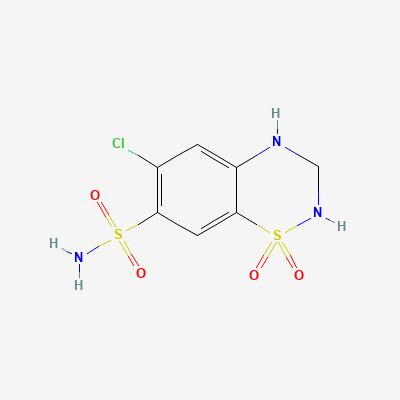
Hydrochlorothiazide

Thiazide Diuretic · Antihypertensive

Also known as HCTZ, Esidrix, Hydrodiuril, Microzide
START
12.5-25 mg PO once daily
TYPICAL MAX
50 mg/day (no added BP benefit above 25 mg)
STOP IF
Anuria · sulfa allergy · severe hyponatremia/hypokalemia
WATCH
Na⁺ · K⁺ · uric acid · glucose · Ca²⁺ (rises)
CDSCO approvedSchedule HJan AushadhiATC C03AA03
Dose laddermg/d
12.5elderly start25standard50max
Renal dose adjustmenteGFR mL/min/1.73m²
FULLEffective at full dose30AVOIDIneffective — switch to loop diuretic90

KDIGO 2024 + manufacturer label

Pharmacokineticsplasma · t hours
2hONSET4hPEAK10h12hDURATION
ONSET
2h · diuresis onset
PEAK
4h · Cmax
10h · plasma t½
DURATION
12h · diuretic effect window
EXCRETION
Renal unchanged · minimal CYP
route + CYP
INTERACTIONS
12 major
incl. contraindicated
PREGNANCY
Category B (older D) — use only when essential
FDA category + note
Top interactionssee all 12
  • QuinidineContraindicatedTextbookG&G 14e · p567
  • CotrimoxazoleSevereTextbook-citedKDT 7e · p948
  • DigoxinSevereTextbook-citedKDT 7e · p949
  • LithiumSevereTextbook-citedKDT 7e · p949
Available in India

20 branded formulations and 87 fixed-dose combinations. Look up specific brands in the Drugs workspace.

Jan Aushadhi — generic available at GoI pharmacies

Mechanism

Hydrochlorothiazide primarily acts on the distal convoluted tubule of the nephron, inhibiting the sodium-chloride symporter. This prevents the reabsorption of sodium and chloride ions, leading to increased excretion of water, sodium, chloride, and potassium. Its antihypertensive effect is also mediated by reducing peripheral vascular resistance through unknown mechanisms.

Indications

Hypertension (alone or in combination)Edema (associated with congestive heart failure, hepatic cirrhosis, corticosteroid and estrogen therapy, renal dysfunction such as nephrotic syndrome and acute glomerulonephritis)Diabetes insipidus (off-label)Hypercalciuria (off-label)edema associated with diseases of the heart (CHF)edema associated with diseases of the liver (hepatic cirrhosis)edema associated with diseases of the kidney (nephrotic syndrome, chronic renal failure, acute glomerulonephritis)hypertensionCa2+ nephrolithiasisosteoporosisnephrogenic diabetes insipidusBr− intoxicationedema associated with congestive heart failureliver cirrhosischronic kidney diseasenephrotic syndromekidney stones caused by Ca2+ crystalshypercalciuriaEdema associated with heart failureEdema associated with liver cirrhosisEdema associated with chronic kidney diseaseEdema associated with nephrotic syndromeantihypertensiveEdema (mild-to-moderate, maintenance in cardiac edema)Diabetes insipidus (nephrogenic and pituitary origin)Hypercalciuria with recurrent calcium stonesAntidiuretic effect in diabetes insipidus (both pituitary and renal origin), especially valuable for renal DI

Dosing

Adult
Hypertension: Initially 12.5 mg to 25 mg orally once daily. May be increased to 50 mg once daily. Edema: Initially 25 mg to 100 mg orally once daily or intermittently.
Pediatric
Hypertension/Edema (children >6 months): 0.5-1 mg/kg/day orally once daily or divided BID; Max 50 mg/day.
Renal adjustment
CrCl 30-80 mL/min: No dosage adjustment generally needed, but monitor closely. CrCl <30 mL/min: Not effective as a diuretic; avoid use. Loop diuretics are preferred.
Hepatic adjustment
Use with caution in patients with impaired hepatic function or progressive liver disease, as minor fluid and electrolyte alterations may precipitate hepatic coma. No specific dose adjustment guidelines exist, but lower doses may be considered.
Geriatric
Start at the lower end of the dosing range (e.g., 12.5 mg once daily) due to potential for decreased renal function and increased sensitivity to diuretic effects and electrolyte disturbances. Monitor electrolytes closely.
Max dose
25 mg/day (hypertension, per KDT); 100 mg/day (edema)

Pharmacokinetics

Onset
Diuretic effect: ~2 hours
Peak effect
Diuretic effect: 4-6 hours; Antihypertensive effect: 3-4 days
Duration
Diuretic effect: 6-12 hours
Half-life
5.6-14.8 hours (terminal half-life)
Bioavailability
65-75%
Protein binding
40-60%
Metabolism
Not metabolized significantly; largely excreted unchanged.
Excretion
Primarily renal (unchanged drug)

Contraindications

  • Anuria
  • Hypersensitivity to hydrochlorothiazide or other sulfonamide-derived drugs
  • Severe renal impairment (CrCl <30 mL/min)
  • Electrolyte imbalance (e.g., severe hyponatremia, hypokalemia)
  • hypersensitive to sulfonamides
  • sulfonamide hypersensitivity
  • Gout
  • Pregnancy
  • Toxaemia of pregnancy

Side effects

Common
Dizzinesslightheadednessheadachenauseavomitingdiarrheaconstipationanorexiamuscle crampsweaknessfatigueorthostatic hypotensionphotosensitivityhypokalemiahyponatremiahypomagnesemiahyperuricemiahyperglycemiavertigoskin rasheserectile dysfunctiondecreased glucose toleranceincreased plasma LDL cholesterolincreased plasma total cholesterolincreased plasma total triglycerideshypercalcemiaglucose intoleranceChanges in plasma lipidsIncreased K+ excretionIncreased HCO3¯ excretionIncreased PO43¯ excretionReduced g.f.r.Decreased renal Ca2+ excretionIncreased Mg2+ excretionGreater reduction in urate excretion than furosemideSlowly developing fall in BP (in hypertensives)Elevation of blood sugar (due to decreased insulin release/hypokalaemia)HypokalaemiaDiarrhoeaGiddinessParesthesiasImpotenceAlkalosis (with hypokalaemia)Magnesium depletionDyslipidemia
Serious
  • Aplastic anemia
  • hemolytic anemia
  • thrombocytopenia
  • pancreatitis
  • cholecystitis
  • hepatic coma
  • renal failure (acute)
  • acute angle-closure glaucoma (rare)
  • Stevens-Johnson syndrome
  • toxic epidermal necrolysis
  • lupus erythematosus exacerbation
  • severe allergic reactions
  • systemic lupus erythematosus
  • sulfa allergic reactions
  • extracellular volume depletion
  • hypotension
  • hyponatremia (severe, potentially fatal)
  • hypochloremia
  • metabolic alkalosis
  • hypomagnesemia
  • hypercalcemia
  • unmask latent diabetes mellitus
  • Ventricular arrhythmias (due to K+ depletion)
  • Sudden death (dose-dependent increase at doses >25 mg daily)
  • Skin cancers (squamous skin cell carcinoma, nonmelanoma basal cell carcinoma)
  • Cardiac arrhythmias (due to hypokalaemia)
  • Acute saline depletion (dehydration, marked fall in BP, haemoconcentration, peripheral venous thrombosis)
  • Dilutional hyponatraemia
  • Rashes
  • Photosensitivity
  • Blood dyscrasias
  • Aggravated renal insufficiency
  • Mental disturbances and hepatic coma (in cirrhotics)

Pregnancy & lactation

Pregnancy

Category B (older D) — use only when essential

Lactation

Excreted into breast milk. Should be used with caution, and generally avoided if possible, especially during initial lactation, due to potential for reduced milk supply and electrolyte disturbances in the infant. A safer alternative may be preferred.

Drug interactions

Quinidine
Contraindicated
Textbook

Fatal ventricular arrhythmias.

Avoid coadministration or ensure strict potassium management.

Source: G&G 14e · p567

Cotrimoxazole
Severe
Textbook-cited

Increased incidence of thrombocytopenia

Avoid concurrent use

Source: KDT 7e · p948

Digoxin
Severe
Textbook-cited

Digoxin toxicity (arrhythmias, nausea, visual disturbances).

Co-prescribe potassium-sparing diuretic or potassium supplements

Source: KDT 7e · p949

Lithium
Severe
Textbook-cited

Lithium toxicity.

Reduce lithium dose and monitor serum levels

Source: KDT 7e · p949

Sulfonamides
Severe
Textbook-cited

Increased incidence of thrombocytopenia

Avoid concurrent use

Source: KDT 7e · p948

Aminolevulinic Acid
Severe
Database

Drug interaction classified as: synergy

Source: DDInter

Amiodarone
Severe
Database

Drug interaction classified as: synergy.

Source: DDInter

Arsenic Trioxide
Severe
Database

Fatal ventricular arrhythmias.

Avoid coadministration or ensure strict potassium management.

Source: DDInter

Cisapride
Severe
Database

Drug interaction classified as: synergy.

Source: DDInter

Dofetilide
Severe
Database

Fatal ventricular arrhythmias.

Avoid coadministration or ensure strict potassium management.

Source: DDInter

Dolasetron
Severe
Database

.

Source: DDInter

Dronedarone
Severe
Database

.

Source: DDInter

Related guidelines

Other Thiazide Diuretic drugs

Ask House about Hydrochlorothiazide

Continue into a citation-backed clinical answer with the drug context already attached.

Sources: KD Tripathi 7e, Goodman & Gilman 14e, Harrison 22e, Katzung·Verified: 2026-05-16 · House clinical team·Cockpit curated: 2026-05-16