Drug lookup
Drug reference

Itraconazole

Antifungal

Also known as Itraconazole Hydrochloride, Sporanox
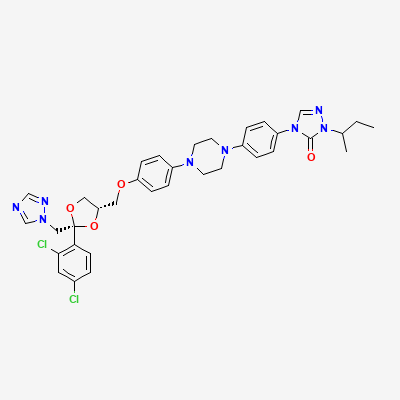
START
200 mg daily (most infections); 200 mg BID (loading for systemic mycoses first 3 days)
TYPICAL MAX
400 mg/day (continuous); 600 mg/day (loading dose)
STOP IF
Signs of CHF (dyspnea, edema, weight gain), hepatotoxicity (jaundice, ALT >5x ULN), QTc >500 ms, SJS/TEN, anaphylaxis, hearing loss
WATCH
Liver function tests (baseline and periodically), ECG (if on other QT-prolonging drugs or cardiac disease), signs of heart failure (edema, dyspnea), drug interactions (CYP3A4 substrate/p inhibitor check), potassium and adrenal function (if prolonged high-dose therapy)
CDSCO approvedSchedule HJan AushadhiATC J02AC02
Dose laddermg/d
200start400titrate600ceiling
Renal dose adjustmenteGFR mL/min/1.73m²
FULLFull dose — no renal adjustment needed (primarily hepatic metabolism)30CAUTIONUse oral solution instead of capsule…90

KDIGO 2024 + manufacturer label

Pharmacokineticsplasma · t hours
4hONSET3.5hPEAK22h1dDURATION
ONSET
4h · 3-5 h (capsule Cmax); days-weeks for clinical effect
PEAK
3.5h · 3-5 h (capsule with food); 1.5-2 h (solution fasting)
22h · 16-28 h (terminal; steady state)
DURATION
1d · 24 h (once-daily dosing; tissue accumulation)
EXCRETION
Hepatic CYP3A4; ~54% feces, ~35% renal metabolites
route + CYP
INTERACTIONS
12 major
incl. contraindicated
PREGNANCY
Risk cannot be ruled out. Animal studies have shown teratogenic effects (skeletal malformations). Contraindicated for onychomycosis in pregnant patients. Use for systemic mycoses only if benefit clearly outweighs risk. Effective contraception is required during therapy and for 2 months after discontinuation.
FDA category + note
Top interactionssee all 12
  • AstemizoleContraindicatedTextbook-citedKDT 7e · p948
  • TerfenadineContraindicatedTextbook-citedKDT 7e · p948
  • CilostazoleContraindicatedTextbookKDT 7e · p555
  • Class Iii AntiarrhythmicsContraindicatedTextbookKDT 7e · p795
Available in India

2,471 branded formulations and 32 fixed-dose combinations. Look up specific brands in the Drugs workspace.

Jan Aushadhi — generic available at GoI pharmacies

Mechanism

Itraconazole is a triazole antifungal that selectively inhibits fungal cytochrome P450-dependent enzyme lanosterol 14-alpha-demethylase. This inhibition blocks the conversion of lanosterol to ergosterol, a vital component of the fungal cell membrane. The resulting depletion of ergosterol and accumulation of 14-alpha-methyl sterols disrupts fungal cell membrane integrity and function, increasing membrane permeability and inhibiting fungal growth. Itraconazole is fungistatic against most susceptible organisms; fungicidal activity may occur at high concentrations against certain organisms.

Indications

Onychomycosis of the toenail and fingernail due to dermatophytes (tinea unguium)Oropharyngeal candidiasisEsophageal candidiasisVulvovaginal candidiasisSystemic mycoses: histoplasmosis (mild to moderate)Systemic mycoses: blastomycosis (mild to moderate)Systemic mycoses: aspergillosis (in patients intolerant of or refractory to amphotericin B)Systemic mycoses: coccidioidomycosis (chronic, non-meningeal)Systemic mycoses: sporotrichosis (lymphocutaneous and pulmonary)Cryptococcosis (maintenance therapy after amphotericin B induction)Pityriasis versicolorDermatophytoses (tinea corporis, tinea cruris, tinea pedis) resistant to topical therapyParacoccidioidomycosisChromoblastomycosisPrevention of fungal infections in immunocompromised patients (e.g., febrile neutropenia, bone marrow transplant recipients, AIDS patients with CD4 <200)

Dosing

Adult
Onychomycosis (continuous): 200 mg once daily for 6 weeks (fingernails) or 12 weeks (toenails). Onychomycosis (pulse): 200 mg BID for 1 week, then 3 weeks off; repeat once for fingernails (2 pulses total) or twice for toenails (3 pulses total). Vulvovaginal candidiasis: 200 mg BID for 1 day OR 200 mg once daily for 3 days. Oropharyngeal candidiasis: 200 mg once daily for 7-14 days. Esophageal candidiasis: 200 mg once daily for a minimum of 3 weeks (continue 2 weeks after symptom resolution). Histoplasmosis/blastomycosis: 200 mg once daily to BID; may increase to 200 mg TID for first 3 days (loading). Aspergillosis: 200 mg BID. Prophylaxis (immunocompromised): 200 mg once daily.
Pediatric
Safety and efficacy not established in pediatric patients for most indications. For life-threatening systemic fungal infections, doses of 5-10 mg/kg/day (max 400 mg/day) divided BID have been used off-label under specialist supervision.
Renal adjustment
CrCl <30 mL/min: Bioavailability of oral capsules may be reduced. Use oral solution instead of capsules for better absorption. Monitor for therapeutic efficacy. No specific dose reduction required, but consider dose increase if clinical response is inadequate. Itraconazole is not dialyzable.
Hepatic adjustment
Use with caution. Consider dose reduction in moderate hepatic impairment. Monitor liver function tests closely. Contraindicated in severe hepatic impairment (Child-Pugh Class C).
Geriatric
Use with caution; start at the low end of the dosing range due to potential decreased hepatic, renal, or cardiac function, and increased risk of drug interactions from polypharmacy. Monitor for signs of congestive heart failure.
Max dose
400 mg/day (continuous dosing); 600 mg/day (loading dose for first 3 days in severe systemic infections)

Pharmacokinetics

Onset
Variable; clinical improvement may take days to weeks depending on infection. Onychomycosis requires months for visual improvement due to nail growth time.
Peak effect
Oral capsules: 3-5 hours with food (take with food for optimal absorption). Oral solution: 1.5-2 hours fasting. Steady-state plasma concentrations typically achieved after 10-14 days of continuous dosing.
Duration
Clinical effects persist post-treatment due to accumulation in tissues (keratinous tissues, adipose tissue). For onychomycosis, therapeutic drug levels in nail plates persist for 6-9 months after completing therapy.
Half-life
Biphasic elimination: Initial half-life ~1-2 hours; terminal elimination half-life 16-28 hours at steady state (due to extensive tissue distribution). In severe renal impairment, terminal half-life may be prolonged.
Bioavailability
Oral capsules: 55% (highly variable; increased with food and acidic gastric pH). Oral solution: 55% (better absorption than capsules in patients with reduced gastric acidity or on acid-suppressing therapy). IV formulation: 100%.
Protein binding
99.8% (primarily to albumin).
Metabolism
Extensive hepatic metabolism primarily via CYP3A4 to numerous metabolites, including hydroxyitraconazole (the major metabolite, which has antifungal activity comparable to parent drug). CYP3A4 inhibition by itraconazole leads to significant drug-drug interactions.
Excretion
Approximately 35% excreted in urine (<0.03% as unchanged drug); 54% in feces (as inactive metabolites). Negligible renal clearance of unchanged drug. Itraconazole is not removed by hemodialysis.

Contraindications

  • Hypersensitivity to itraconazole or any component of the formulation
  • Concurrent administration with CYP3A4 substrates that can prolong QT interval: cisapride, pimozide, quinidine, dofetilide, levacetylmethadol (levomethadyl)
  • Concurrent administration with HMG-CoA reductase inhibitors (statins) metabolized by CYP3A4: simvastatin, lovastatin (risk of rhabdomyolysis)
  • Concurrent administration with midazolam (oral) or triazolam (prolonged sedation)
  • Concurrent administration with ergot alkaloids (dihydroergotamine, ergonovine, ergotamine, methylergonovine) — risk of ergotism
  • Concurrent administration with felodipine, nisoldipine, eplerenone, irinotecan, lurasidone, ranolazine, ticagrelor, naloxegol
  • Concurrent administration with colchicine in patients with renal or hepatic impairment
  • Left ventricular dysfunction or history of congestive heart failure (negative inotropic effect; do not use for onychomycosis in these patients)
  • Treatment of onychomycosis in pregnant patients or women contemplating pregnancy
  • Severe hepatic impairment (Child-Pugh Class C)

Side effects

Common
Nausea (11%)Headache (4%)Abdominal pain (2%)Diarrhea (3%)Vomiting (5%)DyspepsiaFlatulenceConstipationRash (9%)Pruritus (3%)Dizziness (2%)Peripheral edema (4%)Fatigue (3%)Fever (3%)Hypertension (3%)
Serious
  • Congestive heart failure / negative inotropic effect (do not use in patients with LV dysfunction or CHF)
  • Hepatotoxicity including acute liver failure (some fatal) — monitor liver function tests
  • Severe cutaneous adverse reactions (Stevens-Johnson syndrome, toxic epidermal necrolysis, DRESS syndrome)
  • QT prolongation and torsades de pointes (especially with concomitant QT-prolonging drugs)
  • Anaphylaxis and hypersensitivity reactions
  • Pancreatitis
  • Peripheral neuropathy (with prolonged use >1 month)
  • Hearing loss (transient or permanent)
  • Hypokalemia, adrenal insufficiency (with high doses or prolonged use)
  • Pulmonary edema (especially in patients with cardiac disease)

Pregnancy & lactation

Pregnancy

Risk cannot be ruled out. Animal studies have shown teratogenic effects (skeletal malformations). Contraindicated for onychomycosis in pregnant patients. Use for systemic mycoses only if benefit clearly outweighs risk. Effective contraception is required during therapy and for 2 months after discontinuation.

Lactation

Itraconazole is excreted in human breast milk (concentration approximately 10-20% of maternal plasma). Potential for serious adverse effects in breastfed infants. Not recommended during breastfeeding. If treatment is essential, consider temporary discontinuation of nursing or use formula feeding.

Drug interactions

Astemizole
Contraindicated
Textbook-cited

Dangerous ventricular arrhythmia (QT prolongation, torsades de pointes)

Concurrent use is contraindicated

Source: KDT 7e · p948

Terfenadine
Contraindicated
Textbook-cited

Dangerous ventricular arrhythmia (QT prolongation, torsades de pointes)

Concurrent use is contraindicated

Source: KDT 7e · p948

Cilostazole
Contraindicated
Textbook

Increased plasma levels and toxicity of cilostazole.

Should not be administered along with inhibitors of CYP3A4.

Source: KDT 7e · p555

Class Iii Antiarrhythmics
Contraindicated
Textbook

Ventricular arrhythmias.

Source: KDT 7e · p795

Finerenone
Contraindicated
Textbook

Increased plasma levels of finerenone.

These drugs should not be administered concomitantly.

Source: G&G 14e · p570

Levomethadyl
Contraindicated
Textbook

Inducing potentially fatal cardiac arrhythmias.

Avoid coadministration.

Source: G&G 14e · p1201

Cisapride
Contraindicated
Database

Itraconazole is a potent CYP3A4 inhibitor. Cisapride is metabolized by CYP3A4; inhibition leads to markedly elevated cisapride plasma concentrations, causing QT prolongation and torsades de pointes, which can be fatal.

CONTRAINDICATED. Do not coadminister under any circumstances. If prokinetic therapy is needed, consider metoclopramide or domperidone (with caution) as alternatives.

Source: Kimi deep-research + Cla · p948

Domperidone
Contraindicated
Database

Increased domperidone plasma levels, leading to increased risk of QT prolongation and Torsades de Pointes (TdP)

Concomitant use is contraindicated. Avoid co-administration.

Ergotamine
Contraindicated
Database

Ergotism

Contraindicated.

Source: DDInter

Midazolam
Contraindicated
Database

Itraconazole inhibits CYP3A4 metabolism of oral midazolam and triazolam, leading to profound and prolonged sedation, respiratory depression, and psychomotor impairment. Effects can persist for days after itraconazole discontinuation due to long half-life.

CONTRAINDICATED. Avoid concurrent use. If benzodiazepine sedation is needed, consider lorazepam, oxazepam, or temazepam (glucuronidated, not CYP3A4-dependent) as alternatives. IV midazolam may be used with caution in monitored settings.

Source: Kimi deep-research + Cla

Midazolam (oral)
Contraindicated
Database

Profound and prolonged sedation, respiratory depression.

Concomitant use of oral midazolam is contraindicated. If a benzodiazepine is required, consider one not metabolized by CYP3A4 or use parenteral midazolam with extreme caution and dose reduction.

Silodosin
Contraindicated
Database

Significantly increased plasma concentrations of silodosin, leading to an increased risk of orthostatic hypotension and other dose-dependent adverse effects.

Concomitant use is contraindicated. An alternative alpha-blocker or antifungal should be considered.

Source: DDInter

Related guidelines

Other Antifungal drugs

Ask House about Itraconazole

Continue into a citation-backed clinical answer with the drug context already attached.

Sources: KD Tripathi 7e, Goodman & Gilman 14e, Harrison 22e, Katzung·Verified: 2026-05-18 · House clinical team·Cockpit curated: 2026-05-18