Drug lookup
Drug reference

Carbamazepine

Antiepileptic

Also known as Tegretol, Carbatrol, Epitol, CBZ
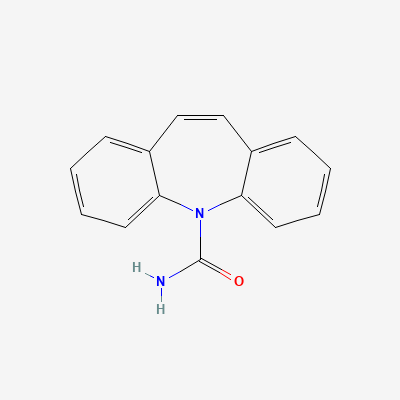
START
100-200 mg PO BID; titrate by 100-200 mg/week
TYPICAL MAX
1,600 mg/day (some seizure indications) · 1,200 mg/day typical
STOP IF
HLA-B*1502 positive without trial (SJS) · AV block · porphyria · bone marrow suppression
WATCH
CBC · Na⁺ (hyponatremia) · level (4-12 µg/mL) · rash · LFTs
CDSCO approvedSchedule HJan AushadhiATC N03AF01
Dose laddermg/d
200start400early titration600moderate1ktitrate1.6kmax daily
Renal dose adjustmenteGFR mL/min/1.73m²
FULLNo renal adjustment (hepatic CYP3A4)90

KDIGO 2024 + manufacturer label

Pharmacokineticsplasma · t hours
4hONSET6hPEAK1d12hDURATION
ONSET
4h · absorption (slow)
PEAK
6h · Cmax (XR: 6-8h)
1d · initial t½ (autoinduces to 10-20h)
DURATION
12h · BID dosing window after autoinduction
EXCRETION
Hepatic CYP3A4 · self-induces · 30% renal metabolites
route + CYP
INTERACTIONS
12 major
SEVERE in our sources
PREGNANCY
Category D — neural tube defects; folate 5 mg pre-conception
FDA category + note
Top interactionssee all 12
  • AtazanavirSevereTextbook-citedKDT 7e · p948
  • ChloramphenicolSevereTextbook-citedKDT 7e · p949
  • ClarithromycinSevereTextbook-citedKDT 7e · p948
  • DarunavirSevereTextbook-citedKDT 7e · p948
Available in India

170 branded formulations. Look up specific brands in the Drugs workspace.

Jan Aushadhi — generic available at GoI pharmacies

Mechanism

Carbamazepine primarily acts by stabilizing the inactivated state of voltage-gated sodium channels in neuronal membranes, thereby inhibiting repetitive firing of action potentials. This reduces the propagation of abnormal electrical impulses in the brain. It may also affect calcium channels and enhance central noradrenergic and serotonergic transmission.

Indications

Epilepsy (partial seizures with complex symptomatology, generalized tonic-clonic seizures, mixed seizure patterns)Trigeminal neuralgiaBipolar disorder (as a mood stabilizer)Diabetic neuropathy (off-label)Acute maniabipolar maintenanceAnticonvulsantAlcohol withdrawal treatmentSedative withdrawal detoxificationtrigeminal neuralgia (drug of choice)complex partial seizures (most effective)GTCSSPSmanic depressive illness (alternative to lithium)acute mania (alternative to lithium)Prolong remission in bipolar disorderAdjunct to lithium in bipolar disorderReduce urine volume in DI of pituitary origin

Dosing

Adult
Epilepsy: Initial 200 mg twice daily (immediate-release) or 100 mg twice daily (extended-release). Increase by 200 mg/day at weekly intervals to a maintenance dose of 800-1200 mg/day in 2-4 divided doses. Max 1600 mg/day.Trigeminal Neuralgia: Initial 100 mg twice daily. Increase by 100 mg every 12 hours until pain relief, typically 400-800 mg/day.…
Pediatric
Epilepsy (≥6 years): Initial 100 mg twice daily or 10 mg/kg/day in 2-3 divided doses. Increase by 100 mg/day weekly to 400-800 mg/day; Max 1000 mg/day (for children 6-12 years). Children >12 years follow adult dosing.
Renal adjustment
No specific dose adjustment recommended for mild-moderate renal impairment. Use with caution in severe renal impairment (CrCl <10 mL/min). Carbamazepine and its active metabolite are dialyzable; supplemental doses may be required post-dialysis.
Hepatic adjustment
Use with caution. Dose reduction may be necessary in severe hepatic impairment. Liver function tests should be monitored regularly.
Geriatric
Initiate with lower doses (e.g., 100 mg twice daily) and titrate slowly due to increased sensitivity to adverse effects (e.g., dizziness, ataxia, hyponatremia) and potential for drug interactions. Careful monitoring is essential.
Max dose
Generally 1200-1600 mg/day (for epilepsy).

Pharmacokinetics

Onset
Varies; clinical effect for seizure control typically seen within hours to days with titration.
Peak effect
Immediate-release: 4-8 hours; Extended-release: 3-12 hours
Duration
Immediate-release: 8-12 hours; Extended-release: 12-24 hours
Half-life
Initial: 25-65 hours; Chronic therapy (due to autoinduction): 12-17 hours
Bioavailability
80% (oral)
Protein binding
75-80%
Metabolism
Primarily hepatic, mainly by CYP3A4, to its active metabolite, carbamazepine-10,11-epoxide. Carbamazepine is a potent autoinducer of its own metabolism.
Excretion
Primarily renal (72%), with a smaller portion excreted via feces (28%)

Contraindications

  • Hypersensitivity to carbamazepine or tricyclic antidepressants
  • History of bone marrow depression
  • Concomitant use with monoamine oxidase inhibitors (MAOIs) or within 14 days of discontinuing MAOIs
  • History of hepatic porphyria
  • Concomitant use with delavirdine (due to CYP3A4 inhibition)
  • Severe cardiac conduction abnormalities
  • HLA-B*1502 allele positive patients (genetic screening recommended for Asian ancestry due to serious skin reactions)
  • cannot be loaded or rapidly titrated (due to adverse effects like dizziness or ataxia)
  • clozapine (due to rare bone marrow effects)
  • Combined with alcohol use
  • diabetic neuropathic pain
  • traumatic neuropathic pain
  • other forms of neuropathic pain

Side effects

Common
DizzinessDrowsinessAtaxiaNauseaVomitingBlurred visionDiplopiaHyponatremiaSkin rash (often benign)Dry mouthleukopeniasedationataxia (with rapid titration)ataxia (as intolerance)vertigoataxia (dose-related neurotoxicity)diarrhoeaworsening of seizures (with higher doses)water retentionhyponatremia (in the elderly, enhances ADH action)Poorly tolerated if high doses initiated
Serious
  • Stevens-Johnson syndrome (SJS)
  • Toxic epidermal necrolysis (TEN)
  • Aplastic anemia
  • Agranulocytosis
  • Leukopenia
  • Thrombocytopenia
  • Hepatotoxicity
  • Pancreatitis
  • Syndrome of Inappropriate Antidiuretic Hormone Secretion (SIADH)
  • Cardiac conduction abnormalities (e.g., AV block)
  • Suicidal ideation
  • Exacerbation of seizures in some patients (e.g., absence seizures)
  • Serious and potentially fatal skin reactions (Stevens-Johnson syndrome, toxic epidermal necrolysis)
  • neural tube defects (teratogenic)
  • assorted abnormalities (teratogenic)
  • coma
  • convulsions
  • cardiovascular collapse (acute intoxication)
  • rashes
  • photosensitivity
  • hepatitis
  • lupus like syndrome
  • agranulocytosis (rarely)
  • aplastic anaemia (rarely)
  • leucopenia (more common due to hypersensitivity)
  • increased incidence of minor foetal malformations (doubles teratogenic frequency when combined with valproate)
  • Neurotoxicity with high initial doses
  • Marked adverse effects at doses needed for antidiuretic effect

Pregnancy & lactation

Pregnancy

Category D — neural tube defects; folate 5 mg pre-conception

Lactation

Carbamazepine is excreted into breast milk. The American Academy of Pediatrics considers it

Drug interactions

Atazanavir
Severe
Textbook-cited

Carbamazepine toxicity (diplopia, ataxia, drowsiness)

Avoid concurrent use or adjust dose with monitoring

Source: KDT 7e · p948

Chloramphenicol
Severe
Textbook-cited

Reduced chloramphenicol efficacy

Avoid concurrent use or increase dose with monitoring

Source: KDT 7e · p949

Clarithromycin
Severe
Textbook-cited

Carbamazepine toxicity (diplopia, ataxia, drowsiness).

Avoid concurrent use or adjust dose with monitoring

Source: KDT 7e · p948

Darunavir
Severe
Textbook-cited

Carbamazepine toxicity (diplopia, ataxia, drowsiness)

Avoid concurrent use or adjust dose with monitoring

Source: KDT 7e · p948

Desogestrel
Severe
Textbook-cited

Contraceptive failure

Advise alternative or higher-dose contraception

Source: KDT 7e · p949

Doxycycline
Severe
Textbook-cited

Sub-therapeutic doxycycline levels; treatment failure.

Avoid concurrent use or increase dose

Source: KDT 7e · p949

Erythromycin
Severe
Textbook-cited

Carbamazepine toxicity (diplopia, ataxia, drowsiness).

Avoid concurrent use or adjust dose with monitoring

Source: KDT 7e · p948

Fluconazole
Severe
Textbook-cited

Carbamazepine toxicity (diplopia, ataxia, drowsiness).

Avoid concurrent use or adjust dose with monitoring

Source: KDT 7e · p948

Glibenclamide
Severe
Textbook-cited

Loss of glycemic control; hyperglycemia.

Increase sulfonylurea dose or switch to non-interacting agent

Source: KDT 7e · p949

Gliclazide
Severe
Textbook-cited

Loss of glycemic control; hyperglycemia.

Increase sulfonylurea dose or switch to non-interacting agent

Source: KDT 7e · p949

Glimepiride
Severe
Textbook-cited

Loss of glycemic control; hyperglycemia.

Increase sulfonylurea dose or switch to non-interacting agent

Source: KDT 7e · p949

Glipizide
Severe
Textbook-cited

Loss of glycemic control; hyperglycemia.

Increase sulfonylurea dose or switch to non-interacting agent

Source: KDT 7e · p949

Related guidelines

Other Antiepileptic drugs

Ask House about Carbamazepine

Continue into a citation-backed clinical answer with the drug context already attached.

Sources: KD Tripathi 7e, Goodman & Gilman 14e, Harrison 22e, Katzung·Verified: 2026-05-16 · House clinical team·Cockpit curated: 2026-05-16