Drug lookup
Drug reference

Phenytoin

Antiepileptic

Also known as Phenytoin Sodium, Diphenylhydantoin, Eptoin, Dilantin
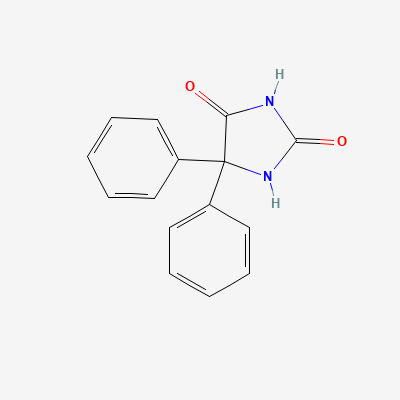
START
Load 15-20 mg/kg IV at ≤50 mg/min (or fosphenytoin), then maintenance 3-5 mg/kg/day PO divided BID-TID
TYPICAL MAX
individualized — target free phenytoin 1-2 µg/mL (or total 10-20 if albumin normal)
STOP IF
Hypersensitivity · sinus bradycardia · 2°-3° AV block · porphyria
WATCH
Levels · CBC · LFTs · gum hyperplasia · ataxia/nystagmus · skin rash
CDSCO approvedSchedule HJan AushadhiNPPA price-controlledATC N03AB02
Dose laddermg/d
100start300titrate400titrate1kceiling
Renal dose adjustmenteGFR mL/min/1.73m²
CAUTIONNo renal adjustment for clearance; CHECK FREE level in CKD/hypoalbuminemia90

KDIGO 2024 + manufacturer label

Pharmacokineticsplasma · t hours
1hONSET4hPEAK22h1dDURATION
ONSET
1h · PO onset; IV peak within hour
PEAK
4h · PO Cmax
22h · plasma t½ (Michaelis-Menten — dose-dependent)
DURATION
1d · BID-TID dosing window
EXCRETION
Hepatic CYP2C9/2C19 · saturable (Michaelis-Menten)
route + CYP
INTERACTIONS
12 major
SEVERE in our sources
PREGNANCY
Category D — fetal hydantoin syndrome; folate supplementation 5 mg/d pre-conception
FDA category + note
Top interactionssee all 12
  • AspirinSevereTextbook-citedKDT 7e · p949
  • AtazanavirSevereTextbook-citedKDT 7e · p948
  • CelecoxibSevereTextbook-citedKDT 7e · p949
  • ClarithromycinSevereTextbook-citedKDT 7e · p948
Available in India

106 branded formulations and 24 fixed-dose combinations. Look up specific brands in the Drugs workspace.

Jan Aushadhi — generic available at GoI pharmacies

Mechanism

Phenytoin stabilizes neuronal membranes and reduces seizure propagation by modulating voltage-gated sodium channels, thereby inhibiting repetitive firing of action potentials. It also enhances the efflux of sodium ions from neurons and influences calcium channels, contributing to its antiseizure effects.

Indications

Generalized tonic-clonic seizures (Grand Mal)Complex partial seizures (Psychomotor or Temporal Lobe)Prevention and treatment of seizures during or after neurosurgeryStatus epilepticus (IV administration)Trigeminal neuralgia (off-label)focal epilepsystatus epilepticusfocal seizures with and without tonic-clonic generalizationEpilepsygeneralized tonic-clonic seizuressimple partial seizurescomplex partial seizurestrigeminal neuralgia (second choice)status epilepticus (occasionally, but fosphenytoin has replaced it)

Dosing

Adult
Oral: Initial 100 mg 2-3 times daily, may increase to 300-400 mg daily in 2-3 divided doses. IV: Loading dose of 15-20 mg/kg infused at 50 mg/min, followed by maintenance 100 mg orally or IV every 6-8 hours (or 5 mg/kg/day in 2-3 divided doses).
Pediatric
Oral: Initial 5 mg/kg/day in 2-3 divided doses; maintenance 4-8 mg/kg/day. IV: Loading dose of 15-20 mg/kg infused at 1-3 mg/kg/min, followed by maintenance 5-7 mg/kg/day in 2-3 divided doses.
Renal adjustment
No specific dose adjustment for renal impairment, but careful monitoring of plasma phenytoin concentrations is recommended due to altered protein binding in uremia. Use lower end of dosing range and titrate based on response and levels. Unbound phenytoin levels may be more accurate in severe renal dysfunction.…
Max dose
400 mg/day

Pharmacokinetics

Onset
IV: 30-60 minutes; Oral: 2-24 hours (variable due to absorption)
Peak effect
Oral: 3-12 hours (standard capsules), 4-24 hours (extended-release); IV: 20-30 minutes after completion of infusion
Duration
Variable, typically 12-24 hours depending on dose and metabolism
Half-life
Dose-dependent, 7-42 hours (average approximately 22 hours)
Bioavailability
Highly variable, ~70-90% (oral)
Protein binding
~90% (primarily to albumin)
Metabolism
Primarily hepatic metabolism via cytochrome P450 enzymes (CYP2C9 and CYP2C19), exhibits saturable (non-linear) kinetics
Excretion
Mainly renal excretion of inactive metabolites (approximately 95%)

Contraindications

  • Hypersensitivity to phenytoin or other hydantoins
  • Sinus bradycardia
  • Sinoatrial block
  • Second-degree and third-degree atrioventricular (AV) block
  • Adams-Stokes syndrome
  • History of acute hepatic porphyria
  • absence seizures

Side effects

Common
NystagmusAtaxiaSlurred speechConfusionGingival hyperplasiaHirsutismRash (morbilliform)NauseaVomitingConstipationDizzinessHeadacheTremorInsomniaOsteoporosis (with long-term use)gum hypertrophy (20% incidence, more in younger patients, due to overgrowth of gingival collagen fibres)coarsening of facial featuresacneepigastric painvomiting (minimized by taking drug with meals)
Serious
  • Stevens-Johnson syndrome (SJS)
  • Toxic epidermal necrolysis (TEN)
  • Drug reaction with eosinophilia and systemic symptoms (DRESS) syndrome
  • Hepatotoxicity
  • Aplastic anemia
  • Leukopenia
  • Thrombocytopenia
  • Cardiac arrhythmias (with rapid IV infusion, especially bradycardia, hypotension, AV block)
  • Purple glove syndrome (with IV extravasation)
  • Lymphadenopathy
  • Folate deficiency
  • Pseudolymphoma
  • Peripheral neuropathy (with long-term use)
  • Hypersensitivity reactions
  • Fatal skin reactions
  • toxicity (due to accumulation and narrow therapeutic range)
  • Stevens-Johnson syndrome
  • toxic epidermal necrolysis
  • toxicity at usual doses (due to inability to hydroxylate)
  • hypoplastic phalanges (teratogenic)
  • cleft lip/palate (teratogenic)
  • microcephaly (teratogenic)
  • ataxia
  • vertigo
  • diplopia
  • nystagmus (cerebellar and vestibular manifestations, at high plasma levels)
  • drowsiness
  • behavioral alterations
  • mental confusion
  • hallucinations
  • disorientation
  • rigidity (at high plasma levels)
  • rashes
  • DLE
  • lymphadenopathy (hypersensitivity reactions)
  • neutropenia (rare, requires discontinuation)
  • megaloblastic anaemia (decreases folate absorption and increases excretion)
  • osteomalacia (interferes with metabolic activation of vit D and with calcium absorption/metabolism)
  • inhibition of insulin release and hyperglycaemia
  • foetal hydantoin syndrome (hypoplastic phalanges, cleft palate, hare lip, microcephaly) if used during pregnancy
  • local vascular injury (intimal damage, thrombosis of the vein, edema, discolouration) with IV injection if rate exceeds 50 mg/min or extravasation occurs
  • fall in BP and cardiac arrhythmias with IV injection (requires continuous ECG monitoring)

Pregnancy & lactation

Pregnancy

Category D — fetal hydantoin syndrome; folate supplementation 5 mg/d pre-conception

Lactation

Phenytoin is excreted into breast milk. Monitor breastfed infants for sedation, feeding difficulties, poor weight gain, and jaundice. The amount transferred is relatively small, but caution is advised, and the lowest effective dose should be used. Consider monitoring infant plasma levels in specific cases.

Drug interactions

Aspirin
Severe
Textbook-cited

Phenytoin toxicity.

Avoid concurrent use; use paracetamol as substitute

Source: KDT 7e · p949

Atazanavir
Severe
Textbook-cited

Phenytoin toxicity

Avoid concurrent use or adjust phenytoin dose with monitoring

Source: KDT 7e · p948

Celecoxib
Severe
Textbook-cited

Phenytoin toxicity.

Avoid concurrent use; use paracetamol as substitute

Source: KDT 7e · p949

Clarithromycin
Severe
Textbook-cited

Phenytoin toxicity.

Avoid concurrent use or adjust phenytoin dose with monitoring

Source: KDT 7e · p948

Cotrimoxazole
Severe
Textbook-cited

Phenytoin toxicity (nystagmus, ataxia, sedation)

Avoid concurrent use; if unavoidable, monitor phenytoin levels

Source: KDT 7e · p948

Darunavir
Severe
Textbook-cited

Phenytoin toxicity

Avoid concurrent use or adjust phenytoin dose with monitoring

Source: KDT 7e · p948

Desogestrel
Severe
Textbook-cited

Contraceptive failure

Advise alternative or higher-dose contraception

Source: KDT 7e · p949

Diclofenac
Severe
Textbook-cited

Phenytoin toxicity.

Avoid concurrent use; use paracetamol as substitute

Source: KDT 7e · p949

Doxycycline
Severe
Textbook-cited

Sub-therapeutic doxycycline levels; treatment failure.

Avoid concurrent use or increase dose

Source: KDT 7e · p949

Erythromycin
Severe
Textbook-cited

Phenytoin toxicity.

Avoid concurrent use or adjust phenytoin dose with monitoring

Source: KDT 7e · p948

Glibenclamide
Severe
Textbook-cited

Loss of glycemic control; hyperglycemia.

Increase sulfonylurea dose or switch to non-interacting agent

Source: KDT 7e · p949

Gliclazide
Severe
Textbook-cited

Loss of glycemic control; hyperglycemia

Increase sulfonylurea dose or switch to non-interacting agent

Source: KDT 7e · p949

Related guidelines

Other Antiepileptic drugs

Ask House about Phenytoin

Continue into a citation-backed clinical answer with the drug context already attached.

Sources: KD Tripathi 7e, Goodman & Gilman 14e, Harrison 22e, Katzung·Verified: 2026-05-17 · House clinical team·Cockpit curated: 2026-05-16