Drug lookup
Drug reference

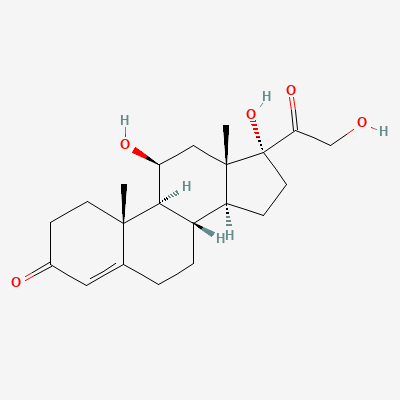
Hydrocortisone

Corticosteroid · Anti-inflammatory

START
15-25 mg/day PO in 2-3 divided doses (physiologic replacement)
TYPICAL MAX
100 mg IV q6h (acute adrenal crisis / shock)
STOP IF
Systemic fungal infection · live vaccine within 4 weeks
WATCH
BP · K⁺ · glucose · weight · sick-day rules
CDSCO approvedSchedule H
Dose laddermg/d
5start15titrate25titrate100max400ceiling
Renal dose adjustmenteGFR mL/min/1.73m²
FULLNo renal adjustment (hepatic clearance)90

KDIGO 2024 + manufacturer label

Pharmacokineticsplasma · t hours
1hONSET1hPEAK2h8hDURATION
ONSET
1h · IV peak rapid; PO 1-2h
PEAK
1h · Cmax
2h · plasma t½ (biological 8-12h)
DURATION
8h · BID-TID dosing window
EXCRETION
Hepatic 11β-HSD1 · renal metabolites
route + CYP
INTERACTIONS
12 major
incl. contraindicated
PREGNANCY
Category C — preferred steroid in pregnancy (placental 11β-HSD2 inactivates 80%)
FDA category + note
Top interactionssee all 12
  • HeparinContraindicatedTextbookKDT 7e · p58
  • AspirinSevereTextbook-citedKDT 7e · p950
  • CelecoxibSevereTextbook-citedKDT 7e · p950
  • DiclofenacSevereTextbook-citedKDT 7e · p950

Mechanism

Hydrocortisone (cortisol) is the endogenous glucocorticoid that binds to the cytoplasmic glucocorticoid receptor (GR), and the ligand-receptor complex translocates to the nucleus where it modulates transcription of hundreds of genes — suppressing pro-inflammatory mediators (NF-κB, AP-1) and inducing anti-inflammatory proteins (lipocortin-1, IL-10). Unlike synthetic glucocorticoids, hydrocortisone retains significant mineralocorticoid activity (sodium retention, potassium excretion) due to equal affinity for the mineralocorticoid receptor. Non-genomic effects including rapid membrane stabilization contribute to its acute anti-inflammatory action.

Indications

To induce remission in patients with a first presentation or a single inflammatory exacerbation of Crohn’s disease in a 12-month period (intravenous).To induce remission in patients with acute severe ulcerative colitis (at first presentation or an exacerbation) (intravenous).Pretreatment to prevent mild to moderate infusion-related reactions.physiological replacement therapy in adrenal insufficiencyacute adrenal insufficiencycritical illness-related cortisol insufficiency (CIRCI)congenital adrenal hyperplasia (replacement)eczematous eruption (topical)rheumatoid arthritis (intra-articular injection)autoimmune destruction of erythrocytes (hemolytic anemia)moderate-to-severe IBDinduction of remission in moderate-to-severe Crohn’s disease and ulcerative colitis (for severe cases, given intravenously)distal proctitis (as a foam suspension)severe/recurrent cases of anaphylaxisprolonged allergic reactionsallergic reactions in asthmaticstype II allergic reactionstype III allergic reactionstype IV allergic reactionsbronchospasm attending drug hypersensitivityStatus asthmaticusAcute asthma exacerbationThyroid storm (to tide over crisis, cover any attendant adrenal insufficiency, and inhibit conversion of T4 to T3 in periphery)replacement therapy in adrenal insufficiencyshockulcerative colitis (as enema)thyroid stormseptic shock (low-dose for adrenal deficient patients)Variety of dermatological conditions

Dosing

Adult
Acute: IV 100-300 mg for anaphylaxis/severe asthma. Adrenal insufficiency: oral 20-30 mg daily in 2 divided doses (larger AM). Status asthmaticus: 100 mg IV every 6h. Septic shock: 50 mg IV every 6h.
Pediatric
Acute hypersensitivity: 1-5 months 25 mg, 6 months-5 years 50 mg, 6-11 years 100 mg, 12-17 years 200 mg IV every 6h. Status asthma: 4 mg/kg every 6h (max 100 mg/dose).
Max dose
500 mg single IV dose (acute emergency)

Pharmacokinetics

Duration
short (8–12 h)
Half-life
plasma t½ 1.5 hours (biological t½ longer)
Bioavailability
Hydrocortisone exhibits high first-pass metabolism.
Protein binding
>90% (primarily to corticosteroid-binding globulin and albumin)
Metabolism
sequential additions of O or H atoms, followed by conjugation (sulfate or glucuronide) in liver and kidney. Reduced to inactive 11-keto derivative cortisone by 11β-HSD2 (mainly kidney); reactivated by 11β-HSD1 (mainly liver).
Excretion
urine

Contraindications

  • Systemic infection (unless specific antimicrobial therapy given)
  • Live vaccines in immunosuppressed patients
  • peptic ulcer
  • diabetes mellitus
  • hypertension
  • viral infections
  • fungal infections
  • tuberculosis
  • other infections
  • osteoporosis
  • herpes simplex keratitis
  • psychosis
  • epilepsy
  • congestive heart failure
  • renal failure

Side effects

Common
Fluid retentionWeight gainHyperglycaemiaImmunosuppressionAdrenal suppressionPeptic ulcerationedemahypokalemiaalkalosisrise in blood pressurecushing's habitusfragile skinpurple striaeeasy bruisingtelangiectasishirsutismcutaneous atrophyglycosuriamuscular weaknessdyspeptic symptomsmild euphorianervousnessdecreased sleepmood changesThinning of epidermisDermal atrophyTelangiectasiaStriaeHypopigmentationDelayed wound healingFungal and bacterial infections
Serious
  • Osteoporosis
  • Avascular necrosis
  • Myopathy
  • Psychosis
  • Adrenal crisis on withdrawal
  • Cushing syndrome
  • HPA axis suppression (with long-term use)
  • adrenal insufficiency (upon withdrawal)
  • fluid and electrolyte abnormalities
  • hypertension
  • hyperglycemia
  • increased susceptibility to infection
  • peptic ulcers
  • behavioral disturbances
  • cataracts
  • growth arrest (in children)
  • fat redistribution
  • striae
  • ecchymoses
  • osteonecrosis
  • pseudotumor cerebri (upon withdrawal)
  • acute adrenal insufficiency (upon abrupt cessation)
  • peptic ulcer
  • precipitation of diabetes
  • susceptibility to infection
  • delayed healing
  • peptic ulceration (bleeding, silent perforation)
  • compression fractures of vertebrae
  • spontaneous fracture of long bones
  • avascular necrosis of head of femur, humerus, or knee joint
  • posterior subcapsular cataract
  • glaucoma
  • growth retardation in children
  • intrauterine growth retardation
  • gestational diabetes
  • pregnancy induced hypertension
  • preeclampsia
  • manic psychosis
  • depressive illness
  • suppression of hypothalamo-pituitary-adrenal (HPA) axis
  • withdrawal syndrome
  • acute adrenal insufficiency
  • Adrenal pituitary suppression (with large, repeated amounts)
  • Cushing’s syndrome (rarely)

Pregnancy & lactation

Pregnancy

Category C — preferred steroid in pregnancy (placental 11β-HSD2 inactivates 80%)

Drug interactions

Heparin
Contraindicated
Textbook

Incompatibility and potential loss of drug effect.

Do not mix in the same syringe/infusion bottle.

Source: KDT 7e · p58

Aspirin
Severe
Textbook-cited

Significantly increased GI bleeding risk.

Concurrent use is contraindicated; if unavoidable, add PPI

Source: KDT 7e · p950

Celecoxib
Severe
Textbook-cited

Significantly increased GI bleeding risk.

Concurrent use is contraindicated; if unavoidable, add PPI

Source: KDT 7e · p950

Diclofenac
Severe
Textbook-cited

Significantly increased GI bleeding risk.

Concurrent use is contraindicated; if unavoidable, add PPI

Source: KDT 7e · p950

Ibuprofen
Severe
Textbook-cited

Significantly increased GI bleeding risk.

Concurrent use is contraindicated; if unavoidable, add PPI

Source: KDT 7e · p950

Indomethacin
Severe
Textbook-cited

Significantly increased GI bleeding risk.

Concurrent use is contraindicated; if unavoidable, add PPI

Source: KDT 7e · p950

Ketorolac
Severe
Textbook-cited

Significantly increased GI bleeding risk.

Concurrent use is contraindicated; if unavoidable, add PPI

Source: KDT 7e · p950

Mefenamic Acid
Severe
Textbook-cited

Significantly increased GI bleeding risk

Concurrent use is contraindicated; if unavoidable, add PPI

Source: KDT 7e · p950

Naproxen
Severe
Textbook-cited

Significantly increased GI bleeding risk.

Concurrent use is contraindicated; if unavoidable, add PPI

Source: KDT 7e · p950

Piroxicam
Severe
Textbook-cited

Significantly increased GI bleeding risk

Concurrent use is contraindicated; if unavoidable, add PPI

Source: KDT 7e · p950

Ampicillin
Severe
Textbook

Loss of ampicillin's antibacterial activity.

Do not mix hydrocortisone and ampicillin in the same IV solution.

Source: KDT 7e · p723

Adalimumab
Severe
Database

Drug interaction classified as: synergy.

Source: DDInter

Related guidelines

Other Corticosteroid drugs

Ask House about Hydrocortisone

Continue into a citation-backed clinical answer with the drug context already attached.

Sources: KD Tripathi 7e, Goodman & Gilman 14e, BNF·Verified: 2026-05-16 · House clinical team·Cockpit curated: 2026-05-16