Drug lookup
Drug reference

Budesonide

Corticosteroid

Also known as Budesonida, Pulmicort, Rhinocort, Entocort, Budecort, Symbicort (in combination)
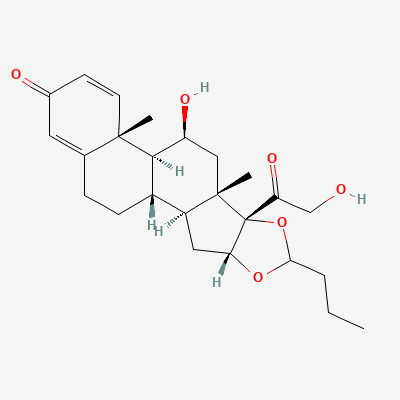
START
200-400 µg inhaled BID (or 100-200 µg if ICS-formoterol MART)
TYPICAL MAX
1,600 µg/day (high-dose ICS)
STOP IF
Active untreated oral candidiasis · severe COPD without LABA
WATCH
Oral candidiasis · dysphonia · adrenal suppression with high dose
CDSCO approvedSchedule HJan AushadhiATC R03BA02
Dose laddermg/d
0.2start0.4titrate0.8titrate1.6max (1,600 µg/d)
Renal dose adjustmenteGFR mL/min/1.73m²
FULLNo adjustment (inhaled · first-pass hepatic)90

KDIGO 2024 + manufacturer label

Pharmacokineticsplasma · t hours
1dONSET1wPEAK3h12hDURATION
ONSET
1d · anti-inflammatory effect at 1-2 days
PEAK
1w · max benefit at 1-2 weeks
3h · plasma t½
DURATION
12h · BID dosing window
EXCRETION
CYP3A4 hepatic · renal metabolites
route + CYP
INTERACTIONS
12 major
SEVERE in our sources
PREGNANCY
Category B — ICS of choice in pregnancy
FDA category + note
Top interactionssee all 12
  • RifampinSevereTextbookG&G 14e · p1592
  • AdalimumabSevereDatabaseDDInter
  • AmprenavirSevereDatabaseDDInter
  • AtazanavirSevereDatabaseDDInter
Available in India

75 branded formulations. Look up specific brands in the Drugs workspace.

Jan Aushadhi — generic available at GoI pharmacies

Mechanism

Budesonide is a potent synthetic glucocorticoid that exerts its anti-inflammatory effects by binding to intracellular glucocorticoid receptors. This binding leads to the formation of a receptor-steroid complex that translocates to the nucleus, modulating gene expression. It inhibits the release of inflammatory mediators (e.g., cytokines, chemokines, prostaglandins, leukotrienes) and reduces the activity and number of inflammatory cells, such as eosinophils, mast cells, and lymphocytes, thereby suppressing the inflammatory response.

Indications

Asthma (maintenance treatment)Chronic Obstructive Pulmonary Disease (COPD) (maintenance, often in combination)Allergic RhinitisCrohn's Disease (mild to moderate, active)Ulcerative Colitis (mild to moderate, active)Eosinophilic Esophagitis (off-label)Asthma (in combination with LABA)mild-to-moderate colonic or terminal ileal Crohn’s diseasemild-to-moderate ulcerative colitisshort-term maintenance of remission (up to 3 months)AsthmaNasal polyposis

Dosing

Adult
Asthma (Inhalation): 200-800 mcg twice daily. Maintenance: 200-400 mcg twice daily. COPD (Inhalation, nebulized): 1 mg twice daily initially, then 0.5 mg twice daily. Crohn's Disease (Oral): 9 mg once daily in the morning for up to 8 weeks; then taper to 6 mg once daily for 2 weeks if required. Allergic Rhinitis (Nasal): 32 mcg or 64 mcg per nostril once daily.
Pediatric
Asthma (Inhalation): Children > 6 years: 200-400 mcg twice daily. Children 12 months to 8 years (nebulized): 0.25-0.5 mg twice daily. Crohn's Disease (Oral): Children > 8 years and > 25 kg: 9 mg once daily for up to 8 weeks, then taper.
Renal adjustment
No dose adjustment generally required.
Hepatic adjustment
Use with caution and consider dose reduction in severe hepatic impairment due to increased systemic exposure.
Geriatric
Generally same as adult dose. Monitor for increased susceptibility to side effects (e.g., osteoporosis, cataracts, glaucoma).
Max dose
Varies by indication. For asthma, up to 1600 mcg/day is often used. Oral for Crohn's is 9 mg/day for induction.

Pharmacokinetics

Onset
Inhaled (asthma): Within 24 hours, full effect in 1-2 weeks. Oral (Crohn's): Within 2 weeks.
Peak effect
Inhaled: 15-30 minutes for lung levels, clinical effect peaks over several days to weeks. Oral: Approximately 5 hours.
Duration
12-24 hours
Half-life
Approximately 2-3 hours (systemic)
Bioavailability
Oral: Approximately 10-15% (due to extensive first-pass metabolism). Inhaled: Approximately 34% (lung deposition).
Protein binding
85-90%
Metabolism
Extensive first-pass metabolism in the liver by CYP3A4 to inactive metabolites.
Excretion
Primarily renal (approximately 60% as metabolites), fecal (approximately 30-40% as metabolites).

Contraindications

  • Hypersensitivity to budesonide or any components
  • Primary treatment of status asthmaticus or other acute episodes of asthma where intensive measures are required
  • Systemic fungal infections
  • Active untreated infections (viral, bacterial, fungal, parasitic, or tuberculosis) if not on appropriate therapy
  • Presence of infection (intranasal)
  • Nasal ulcers (intranasal)

Side effects

Common
Oral candidiasis (thrush)CoughHoarsenessThroat irritationHeadacheUpper respiratory tract infectionNauseaAbdominal painDyspepsiaFatigueAcneNasal irritationEpistaxisDry nosePharyngitisSimilar profile of adverse events to conventional glucocorticoids, but with lower incidence due to extensive first-pass hepatic metabolism.Nasal irritation (especially in the beginning with nasal spray)Sneezing (especially in the beginning with nasal spray)Crusting (especially in the beginning with nasal spray)Itching of throat (especially in the beginning with nasal spray)Dryness (especially in the beginning with nasal spray)
Serious
  • Adrenal suppression
  • Growth retardation in children
  • Osteoporosis
  • Cataracts
  • Glaucoma
  • Hyperglycemia
  • Psychiatric disturbances (e.g., mood changes, depression)
  • Hypersensitivity reactions
  • Increased susceptibility to infections
  • Cushing's syndrome (with high systemic absorption)
  • Add Cataracts and Glaucoma to KDT's list of potential significant systemic side effects, or qualify their prominence for inhaled steroids.
  • Clarify the type of increased infection susceptibility (e.g., systemic vs. local), or reconcile with KDT's statement regarding lack of increased chest infections.

Pregnancy & lactation

Pregnancy

Category B — ICS of choice in pregnancy

Lactation

Budesonide is excreted into human milk. However, at therapeutic inhaled doses, the systemic exposure to the nursing infant is expected to be low. Oral budesonide may result in slightly higher exposure. Generally considered compatible with breastfeeding, but caution is advised, especially with high doses or prolonged use.

Drug interactions

Rifampin
Severe
Textbook

budesonide AUC decreased by 99.7% (AUCR 0.003).

coadministration generally contraindicate[d] or at least require[s] dosage adjustment.

Source: G&G 14e · p1592

Adalimumab
Severe
Database

Drug interaction classified as: synergy.

Source: DDInter

Amprenavir
Severe
Database

Drug interaction classified as: metabolism

Source: DDInter

Atazanavir
Severe
Database

Drug interaction classified as: metabolism

Source: DDInter

Baricitinib
Severe
Database

Drug interaction classified as: others

Source: DDInter

Bempedoic Acid
Severe
Database

Drug interaction classified as: synergy

Source: DDInter

Boceprevir
Severe
Database

Drug interaction classified as: metabolism

Source: DDInter

Brexucabtagene Autoleucel
Severe
Database

Drug interaction classified as: others

Source: DDInter

Ceritinib
Severe
Database

Drug interaction classified as: metabolism

Source: DDInter

Certolizumab
Severe
Database

Drug interaction classified as: synergy.

Source: DDInter

Cladribine
Severe
Database

Drug interaction classified as: synergy

Source: DDInter

Clarithromycin
Severe
Database

Drug interaction classified as: metabolism.

Source: DDInter

Related guidelines

Other Corticosteroid drugs

Ask House about Budesonide

Continue into a citation-backed clinical answer with the drug context already attached.

Sources: KD Tripathi 7e, Goodman & Gilman 14e, Katzung, BNF·Verified: 2026-05-16 · House clinical team·Cockpit curated: 2026-05-16